
Burgas exhibition shows Bulgarian Revival goldsmiths' work and religious prints
The exhibition "Spirit and Matter. The Goldsmith's Art in the Bulgarian Lands" runs at the Sea Casino Cultural Centre in Burgas until 30 October 2026. The opening is on 17 September at 6pm in the Alexander Georgiev – Kodzhakafaliyata hall.
How it all started: Exhibition of goldsmith jewelry and Revival era stamps opens in Burgas
On 15 September the centre said it would show items from the Bulgarian National Revival that bring together skill, beauty, faith and symbolism.
The jewellery and prints come from the collection of Antonio Vasilev. He is a collector, deputy chairman of the Union of Collectors in Bulgaria and one of its founders. The Revival is his main interest, and his collections have been shown in various towns and cities across Bulgaria.
The organisers say the exhibition shows the link between the material and the spiritual, and that the items carry memory, symbols and messages.
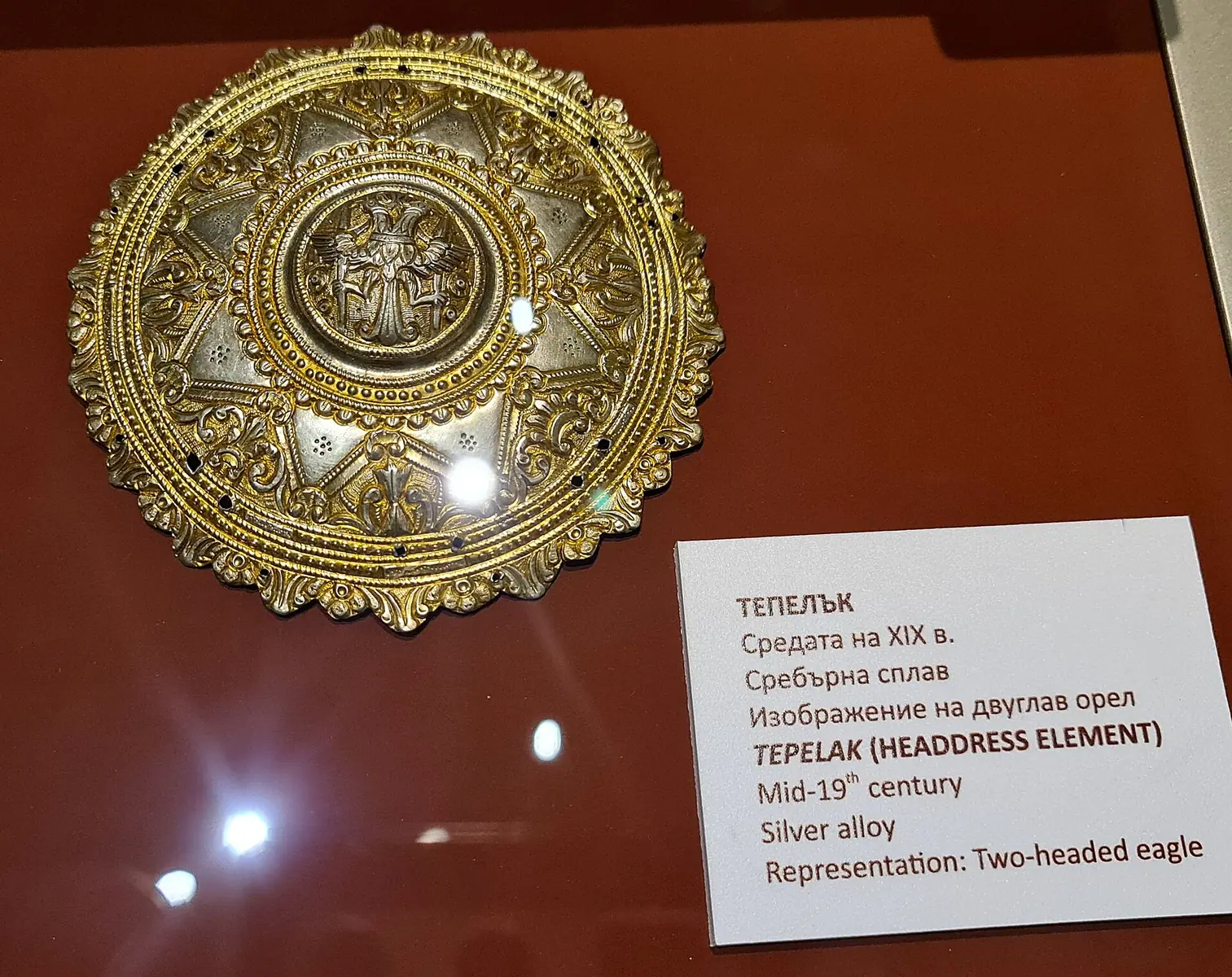
Women's jewellery makes up most of the collection: belt buckles, chin ornaments, headpieces and bracelets. Besides being decoration, they were a sign of belonging, identity and social status. Travellers in the Revival period described women in such jewellery and traditional dress as "queens".
Craftsmen made the jewellery by casting, hammering, filigree and cloisonné enamel, in Chiprovtsi, Vratsa, Vidin, Sliven, Panagyurishte, Pazardzhik, Teteven and other centres. Amulet boxes and snuff boxes, decorated with engraved plants and animals, are displayed separately.
The prints are paper icons showing the Virgin Mary, Jesus Christ, saints and monasteries. People bought them on pilgrimages to monasteries in Bulgaria and on Mount Athos. Wandering monks known as taxidiots also sold them.
People carried them folded or rolled up. At home they put them in a wooden frame and hung them in a prominent place in the best room. The organisers say the prints were a sign of faith and religious identity, and supported patriotic education.
The organisers link the output of the goldsmiths' workshops to the spiritual upsurge of the Revival period. They say the exhibition is part of efforts to bring cultural heritage to more people, and raises the question of what role collectors play in protecting it.
The exhibition's stay in Burgas is part of the city's cultural programme and supports its bid to be European Capital of Culture in 2032.
The exhibition is open from 9am to 8pm. Entry is free at the opening. On other days visitors need a ticket.
Comments (0)
No comments yet.