
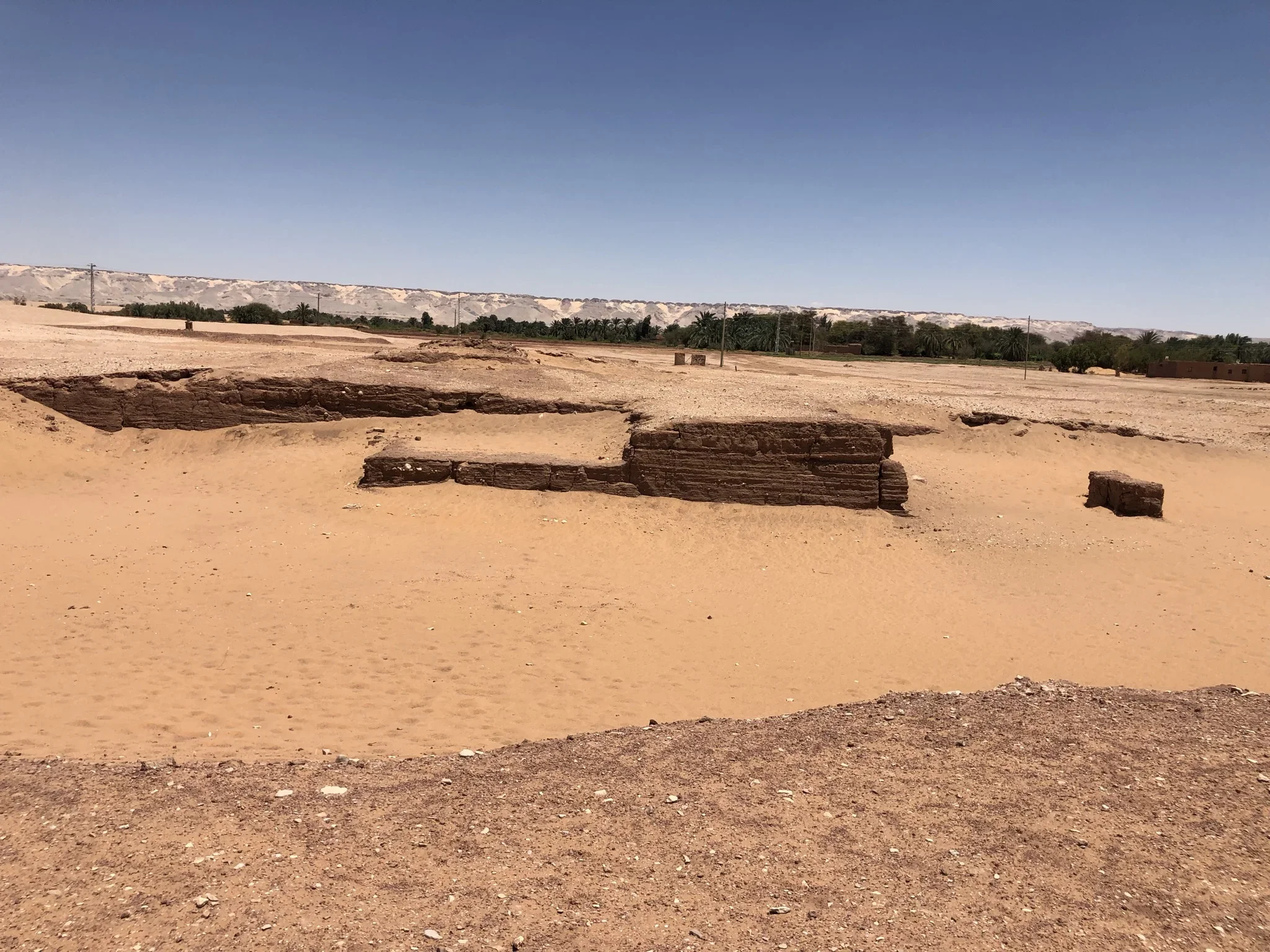
Egypt's Ministry of Tourism and Antiquities announced on Saturday the discovery of "18 new Greco-Roman tombs" at the Marina el-Alamein archaeological site, located about "100 kilometers west of Alexandria" along the Mediterranean coast. Among the impressive finds are a "sealed granite sarcophagus" approximately "2.5 meters" long, which, according to preliminary data, has not been opened for nearly "two thousand years," as well as "24 golden items" placed in the mouths of the deceased as part of an ancient burial rite.
Tombs sealed since antiquity
Excavations led by Egyptian archaeologist "Eman Abdel-Khalik" have uncovered "11 rock-cut tombs" with an average depth of about "eight meters," as well as "seven ground tombs" built of limestone blocks. In some of the burial chambers, the stone sealing slabs were found "untouched," indicating that they had not been disturbed since antiquity.
The granite sarcophagus with its lid intact contained "bone remains," which are currently being analyzed by specialists. Near it, archaeologists also found "fragments of a gypsum sphinx statue," adding to the picture of the necropolis's rich symbolic design.
Golden "tongues" and burial offerings
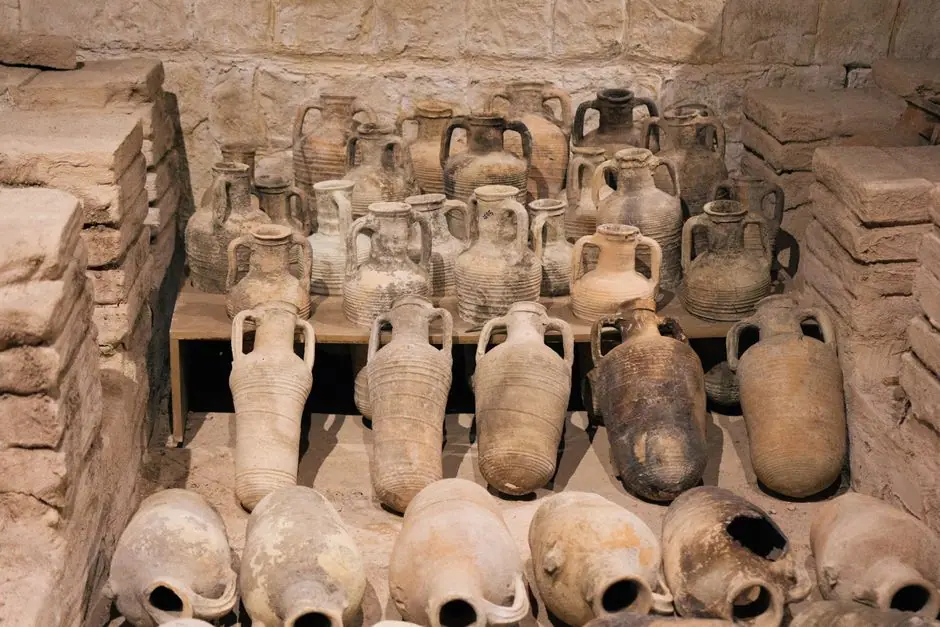
Among the discovered artifacts are "whole and nearly whole ceramic vessels, amphorae, oil lamps, plates, limestone altars, and cups," as well as architectural elements belonging to the tombs themselves. Particularly notable are "24 gold plaques" found in the mouths of several of the buried individuals.
These plaques correspond to a rite known as the "golden tongue," linked to concepts of the afterlife during the Greco-Roman period. It is believed that the "golden tongue" was intended to grant the soul the ability to speak in the world of the gods and to defend itself before the judges in the afterlife.
The lost port city comes to light again
The new discovery increases the total number of known tombs at the site to "44" since Marina el-Alamein was identified in "1986" during construction work. Archaeologists believe the site corresponds to the ancient port city of "Leucaspis," which flourished from the Hellenistic era to the Byzantine period.
The city was an important trade and cultural hub along the Mediterranean coast, with the new tombs and artifacts providing a more complete picture of the life and burial practices of the local population during this long period.
Parallel discovery in a Byzantine settlement in the Dakhla Oasis
The announcement of the findings near Marina el-Alamein was made in parallel with information about another significant discovery – a well-preserved "Byzantine-era residential settlement" in Egypt's Western Desert, in the "Dakhla Oasis." There, archaeologists found about "200 pottery fragments with Coptic and Greek inscriptions," "bronze coins" bearing the portraits of Byzantine emperors, and "gold coins" dating to the reign of Emperor "Constantius II" (337–361 AD).
These findings complement the picture of the cultural ties between Egypt and the rest of the Mediterranean world in late antiquity and early Christianity.
The broader context: Marina el-Alamein as a crossroads of cultures
Marina el-Alamein has been the subject of archaeological research since the "1990s." The monument includes extensive remains of a port city that existed from the "2nd century BC" to the "6th century AD." The Minister of Tourism and Antiquities, "Sherif Fathy," described the latest findings as important for a "deeper understanding of the role of this place as a cultural crossroads" between Ancient Egypt and the Mediterranean world as a whole.
The sealed tombs, the golden "tongues," and the rich array of burial offerings show how local communities combined Egyptian and Greco-Roman traditions, while the port city served as a gateway between the desert, the Nile, and the Mediterranean Sea.
Comments (8)
Абе, харааа! 😲 Тоя златния език - 24 броя ли казаха?! Бахти майката! Значи тогава са били сериозни с отвъдния живот, нали? Ама дееба и аз... 2000 години, бе! Да не би да има и други такива, ама все още скрити под пясъка? 🤔
Уау, сериозно! 😲 2000 години?! Това е яко откритие, наистина. Представям си какви истории пазят тия гробници... Интересно дали ще намерят още нещо ценно и къде ще ги изложат тези артефакти? Да 🔥
Евала за откритието! 😲 Пак доказват, че историята ни е безкрайна и пълна с изненади. Дано 😡
бум! 🤩 и аз съм шашнат! златни езици?!
Аби... тая новина я гледам и аз. Златни пластини, а? Добре де, да са си ги открили. Все пак Египет е пълен с подобни неща. Дано поне не се окаже някаква измислица за