
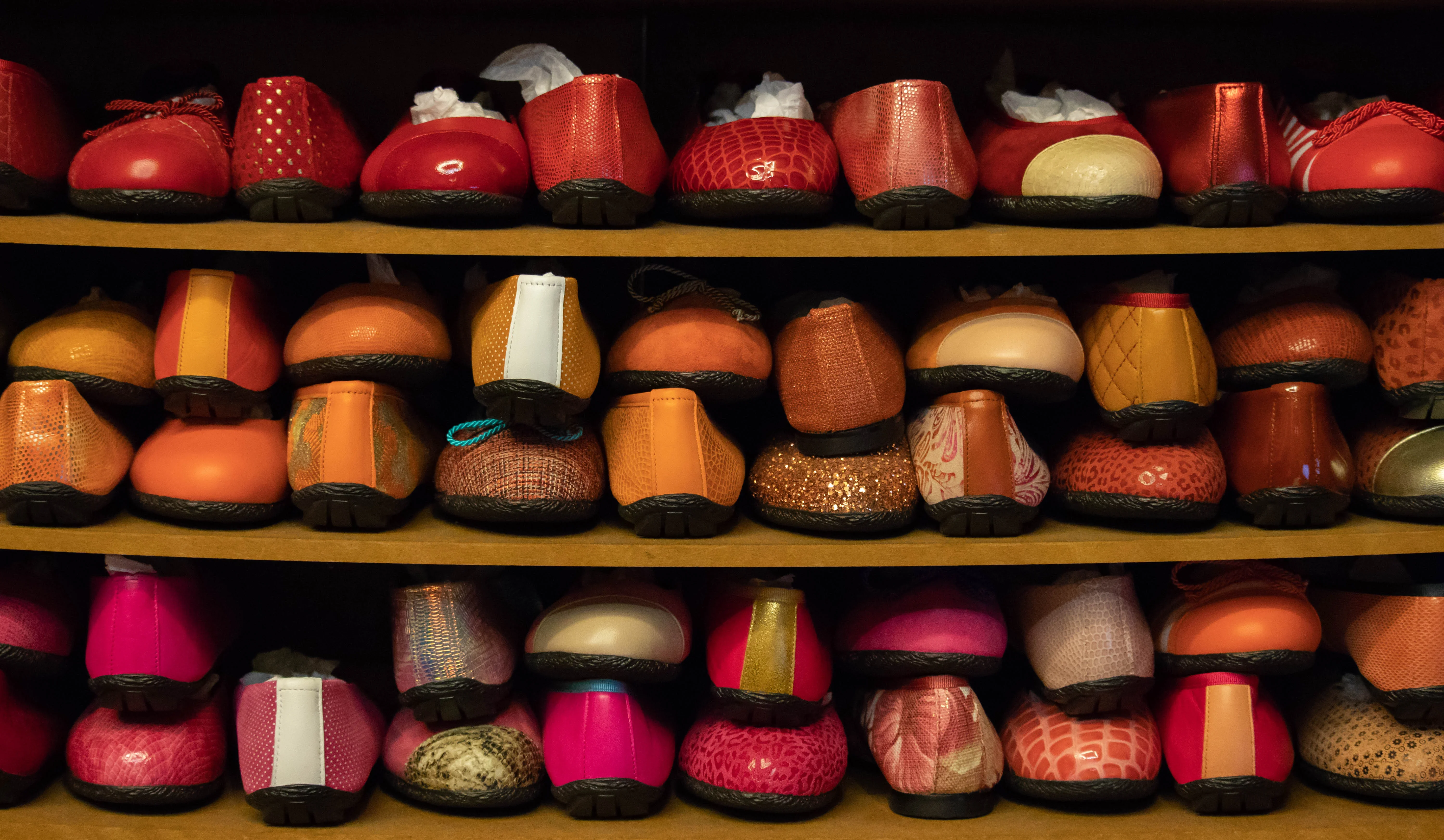
A product fee is to be introduced, payable for textile products and shoes placed on the market. It will be calculated based on the weight of the products. Its size will be determined by the Regulation for determining the order and amount for payment of the product fee for products, after the use of which mass-produced waste is formed after an analysis is performed.
This was announced for the “EU Law BG” section of BTA by the Ministry of Environment and Water (MOEW) in response to questions about the reduction of textile waste. The new rules for textile waste, which the European Parliament approved in September, aim to build a more sustainable and circular economy. According to them, producers who offer textile products in the EU will have to cover the costs of their collection, sorting and recycling through new schemes for producer responsibility (EPR), which will be created by each member state within 30 months of the entry into force of the directive.
From January 1, 2025, the obligation for all EU member states to ensure separate collection of textile waste came into force. For Bulgaria, the normative obligation is provided for in the draft Law for the amendment and supplement of the Waste Management Act, which has been submitted to the National Assembly.
Separate collection of textile waste in Bulgaria has not yet been introduced as a fully mandatory national system, but it is already being applied in practice in many municipalities through voluntary schemes, pilot projects, as the Ministry reminds.
The responsibilities will be detailed with the adoption of the Regulation on waste from shoes and textiles within the deadlines given by the European Commission for the transposition of Directive (EU) 2025/1898 of the European Parliament and of the Council of September 10, 2025, amending Directive 2008/98/EC on waste. According to the directive, the deadline for transposition by the member states is no later than June 17, 2027, the press center of the MOEW points out.
At the EU level, the regulatory framework for extended producer responsibility is the Waste Framework Directive. In response to a question about what the regulatory basis will be for this in Bulgaria, the Ministry pointed out that, according to legal requirements, any person who places products on the market, after the use of which mass-produced waste (MPW) is formed, is responsible for their separate collection and treatment, as well as for achieving the relevant goals for separate collection, reuse, recycling and/or recovery. This requirement is based on the principle of extended producer responsibility (EPR), which requires producers and persons placing products on the market, after the use of which MPW is formed, to assume financial responsibility for the management of waste from these products. Financial responsibility is fulfilled by the payment by the obligated persons of a product fee, regulated in Art. 59 of the Waste Management Act (WMA). The fee is paid to the Enterprise for the Management of Environmental Protection Activities (EMEPA). There is also a legal possibility for these obligations to be fulfilled through collective systems, represented by a recovery organization (RO) or individually, as the requirement to pay a product fee to EMEPA is waived. The legislation does not in any way limit the possibility of the obliged person to decide for themselves how to fulfill their commitments related to the care of the “future” waste, the Ministry also points out.
In response to a question about the monitoring and control of the separate collection of textile waste in Bulgaria, as well as who will control the effectiveness and financial reporting of the extended producer responsibility scheme, the MOEW pointed out that the control will be carried out, as it is currently carried out for the other streams of mass-produced waste. “The competence of the MOEW is the control with regard to the legal management of waste, as well as the achievement of the national goal, of which part are the recycling goals set for the RO and its members respectively. This obligation of the country is dictated by the requirements of European legislation regulating the management and protection of the environment,” the Ministry points out.
The new provisions will apply to all producers, including those who use e-commerce tools, regardless of whether they are established in an EU member state or outside the Union. In response to a question about how the control will be carried out by the MOEW, they point out that “any person who places shoes and textiles on the market, including a person who places them on the market of the Republic of Bulgaria through means of distance communication, will be obliged to request to be registered in the register under Art. 45, para. 1, item 12 of the Waste Management Act, by declaring the data subject to registration through the National Information System “Waste” (NISW)”. This normative obligation will be introduced with the adoption of the Regulation on shoes and textiles. The control over the implementation of the regulatory requirements will be carried out by the control bodies to the MOEW, namely the regional inspectorates of environment and water.
Micro-enterprises will have one additional year to comply with the requirements of the new EPR schemes. In response to a question about how micro-enterprises are defined and how they can participate in an EPR scheme, the MOEW points out that Directive (EU) 2025/1898 of the European Parliament and of the Council of September 10, 2025, determines that from April 17, 2029, EPR will also apply to companies employing less than 10 people and whose annual turnover is less than 2 million euros on an annual basis, namely micro-enterprises.
The new rules plan to adapt the taxes of the producers depending on the durability of the textiles they produce. The MOEW points out that the Ecomodulation of product fees for textiles is a mechanism within the framework of the extended producer responsibility (EPR), in which the amount of the fee paid by producers and importers of textile products is determined according to the environmental characteristics of the product. The aim is to encourage the production and placing on the market of more sustainable textile products and to reduce the amount of textile waste.
Ecomodulation is a principle by which the product fee is reduced or increased depending on whether the product is easier to recycle; contains recyclable or recycled materials; is more durable and subject to repair; is produced through environmentally friendly processes; contains hazardous chemicals; is made of mixed fibers that make recycling difficult. Bulgaria will follow the generally accepted European practices, which will also be applied to this type of waste, the Ministry also says.




Comments (8)
пич, сериозно ли вече такса за обувки и дрехи?! 🤯 надявам се само да не стане като с другите "зелени
абе тоя рециклиране... наистина ли ще го правят или 😂
Еее, пак ли? 🤦♀️ Текстилна такса... ама хайде да видим дали поне ще направят нещо смислено с тия пари
И тази ли? Сега и за обувките ли ще плащаме повече? Да видим как ще се отрази на цените
Абе хора, к'во става с тая държава? Пак някаква такса... ама деба. Да видим дали наистина ще има ефект или просто още една глупост отгоре. Все пак, ако успеят да намалят тия купища текстилни боклуци – добре, ама аман вече от нови такси, бе! Надявам се поне за европейските марки да не гони много цените нагоре, че и аз нещо си