
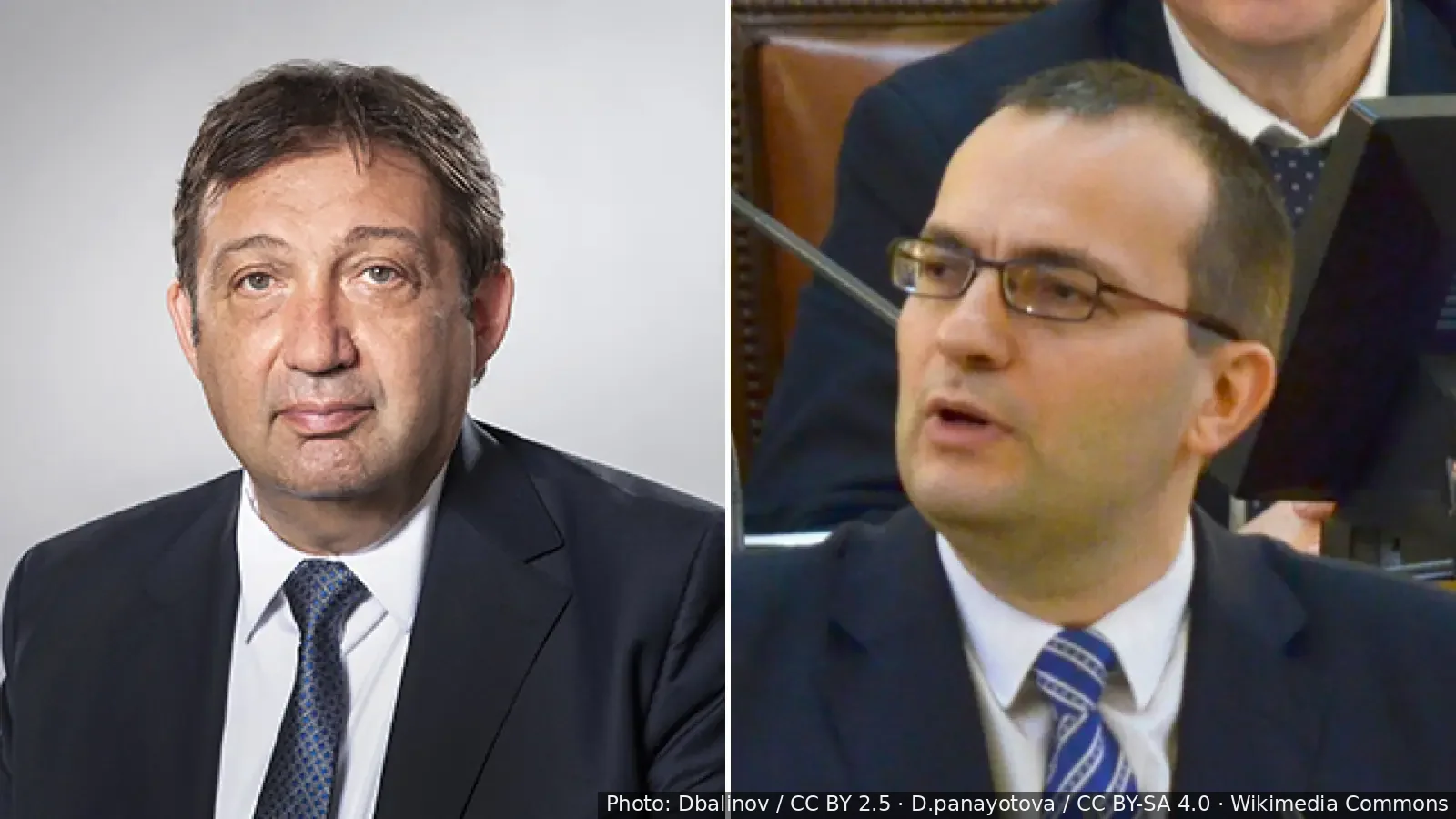
Regional development minister Ivan Shishkov told reporters the opposition is wrong to call a new spending power in the 2027 draft budget a "blank cheque". The power would let his ministry take on long-term commitments under construction and major repair contracts. "The cheque is for 2.5 billion, not 1 billion," he said, putting the real size of the commitments at €2.5bn.
Earlier in the day, Martin Dimitrov of the Democratic Bulgaria parliamentary group called it "the most scandalous blank cheque". He said the draft budget, now before parliament, gives the ministry extra spending commitments worth €1bn. Shishkov called the claims serious political manipulation. He said the opposition was trying to score points from the floor of parliament instead of talking sensibly about the need to invest in roads. He said the ministry had firmly asked for this power.
The money will not be spent all at once, he said. The sum is a financial framework and a legal right for the ministry to launch public tenders and sign contracts in 2027. The projects themselves will be built and repaired over the next 2 to 4 years. Shishkov said this protects financial discipline and fixes an old problem that the National Audit Office also found: the Road Infrastructure Agency signed contracts without having the money to pay for them.
On the Sofia ring road, the detailed development plan is now approved for the last section, and land is already being expropriated. Construction will start in 2027, after a public tender and a signed contract. The road will not be given out as a concession.
On the Plovdiv ring road, the development plan procedures are well advanced, and a contract and the start of construction are next. In 2027 the ministry must also sign a contract to repair the Asparuhov Bridge in Varna.
The draft budget lists by name many national road projects for major repairs, as well as water pipelines to be built or repaired. It also sets aside money to design large projects. The minister called the sum a record.
Shishkov said Bulgaria's needs for roads, bridges and water pipelines are bigger than the budget can cover. For that reason, the ministry will seek a public-private partnership for some future projects, in which the state builds together with private investors. The budget also pays for so-called intelligent transport systems, which are electronic systems to manage traffic and keep motorways safe. The centre that will coordinate them will come mainly under the Ministry of Transport and the Interior Ministry. It will use existing facilities and the digital capacity of the toll system.
Comments (0)
No comments yet.