
21.09.2026, 21:09
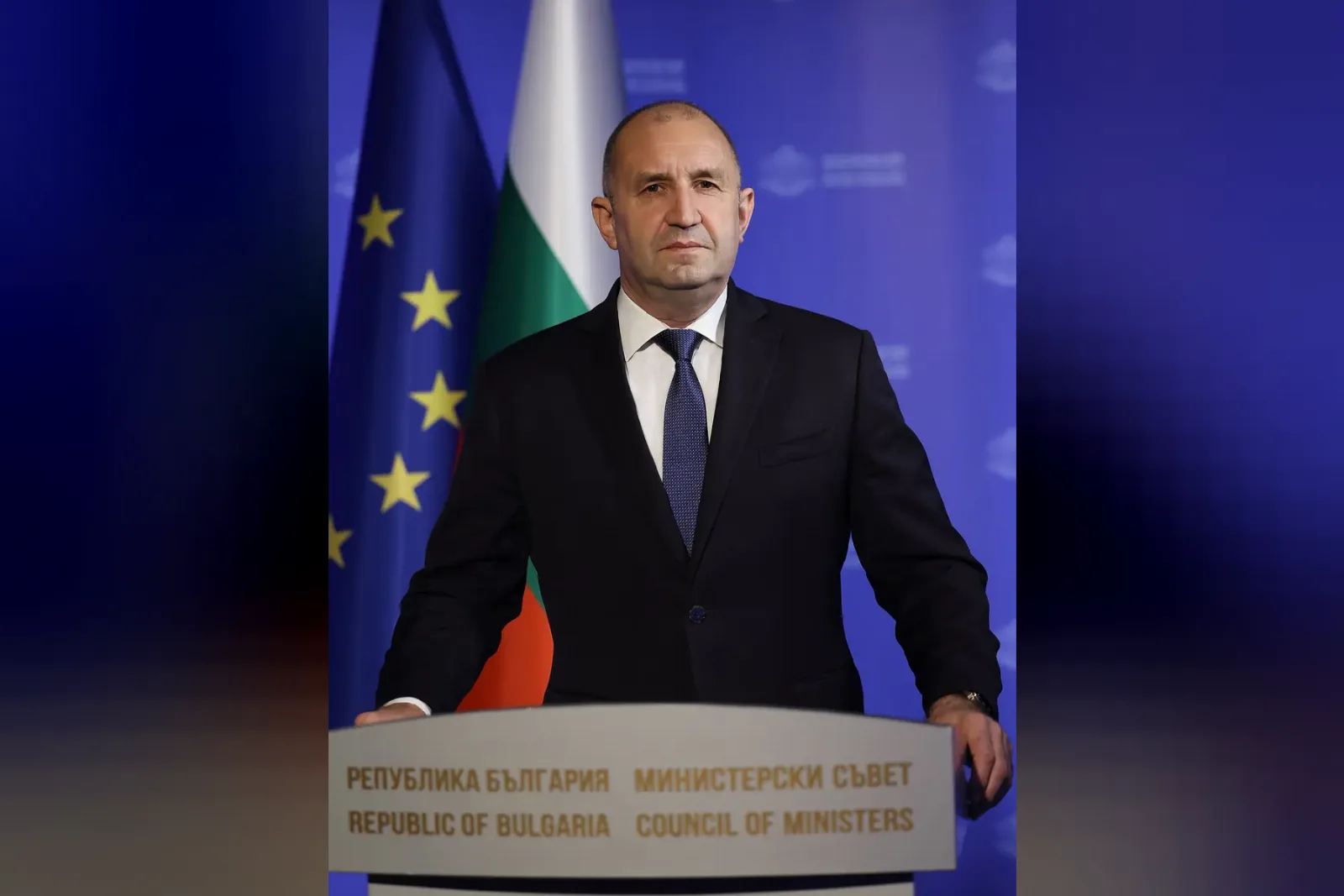
Prime Minister Rumen Radev presented the two main pillars of the government program – the removal of the oligarchic model and the fight against corruption – during a business breakfast hosted by the American Chamber of Commerce in Bulgaria. He defined these measures as necessary conditions for transforming Bulgaria into a democratic European state with a sustainable social and economic model and a high quality of life.
Radev clarified that he does not accept claims that the administration has already ceased the fight against the oligarchy. "There was speculation that we made a statement saying we were finished with the oligarchy. No, we are not. This must be clear. The battle here is very tough, but we are pursuing it persistently," he said. However, according to his words, the cabinet has fulfilled the first point of the government program – the removal of the oligarchy from political power. "What I shared, and which I hope will no longer be subject to speculation, is that we have certainly fulfilled the first point of our program, which is the removal of the oligarchy from political power. They can no longer dictate what the Bulgarian government should do via telephone or direct contact. The Bulgarian people are done with the oligarchy and elected our political force with a full majority," the Prime Minister emphasized.
According to him, efforts are now focused on limiting the access of oligarchic circles to public resources by terminating and reviewing public procurement processes that are under suspicion of irregularities, as well as through audits and inspections. "What we are working on at the moment is to remove the access of this oligarchy, which is deeply rooted in all institutions and spheres of socio-economic life, to public resources. And what we are building into next year's budget is truly to limit any such access. Because by depriving these circles of this access, we are actually stripping them of the opportunity to exert influence on our social and economic life," Radev stated.
The next stage, which the government will continue to work on, involves conducting audits, cooperating with partner services abroad, and searching for assets, properties, and activities of Bulgarian citizens conducted in violation of the law. Radev pointed out that results have already been achieved and that the data collected so far – documents, invoices, payments, and transfers – have been handed over to the prosecutor's office. "And this is only the first step. We will conduct this complex operation on a broad front to cover as many proxies as possible. Because the great complexity is that politicians and influential figures work through proxies. And we will continue our checks and investigations with the full force of the state," the Prime Minister emphasized.
Radev paid special attention to the "Sigma" system, through which financial flows in the state are tracked and which the government continues to develop. He explained that the goal of the system is not only to establish what has happened in the past. "We do it to check daily what is happening with our governance and to ensure we do not allow mechanisms to return that would bring us back to the same oligarchic model. We are actually building this system to control ourselves – our own ministers, administration, and institutions," he stated.
The Prime Minister added that the cabinet is providing a clear answer as to where higher revenues for the state budget will come from. The strategic goal, in his words, is to replace the exhausted model based on consumption, redistribution, and loans with a new model based on high productivity, a knowledge economy, higher competitiveness, and active attraction of investment. "We want to create conditions for increased economic activity. I am convinced that if we succeed in doing this, we will very quickly increase the gross domestic product and move the country's economy to a different orbit," Radev said.
The Prime Minister also noted that the government is conducting an active foreign policy and working to bring strategic infrastructure projects to the European and global levels as part of major pan-European and transcontinental corridors. "Thanks to this, Bulgaria was among the few countries explicitly mentioned in the European Commission President's report as the host of the connectivity summit. Our country is becoming a center for these processes through both its geographical location and its active foreign policy. This is a result of our proactive policy and firm political will to move connectivity forward," he stated.
Radev announced that next year, leading companies from the United States will be invited to participate in tenders for highways, railway links, ports, and airports. In the energy sector, in his words, Bulgaria is ready to transport significantly larger quantities of American liquefied natural gas to Central and Eastern Europe – especially in view of the upcoming European Union ban on Russian gas imports starting in 2027. The Prime Minister noted that the country has free access to LNG terminals in Greece and Turkey, whose total capacity exceeds 35 billion cubic meters, as well as the Trans-Balkan pipeline, which can operate in reverse mode.
Radev emphasized that Bulgaria has an energy surplus – an increasing part of which is green, a stable electricity grid, and rapid connection to it, which makes the country attractive for artificial intelligence and data storage centers. "We are in talks with companies from developed countries that want to build large AI factories right here, because for them, the waiting time for connection is five years," he stated. The Prime Minister expressed confidence that a strong high-tech ecosystem will be built around these centers, with effects on education, space, the defense industry, robotics, and semiconductors.
In conclusion, Radev stated that the government will support any business that works transparently, fulfills its commitments, and pays its taxes in Bulgaria. "I can guarantee you that we will categorically deal in the most brutal manner with any attempt to corrupt or compromise Bulgarian and foreign businesses working here, on Bulgarian territory," Prime Minister Rumen Radev emphasized.

Коментари (0)
Все още няма коментари.