
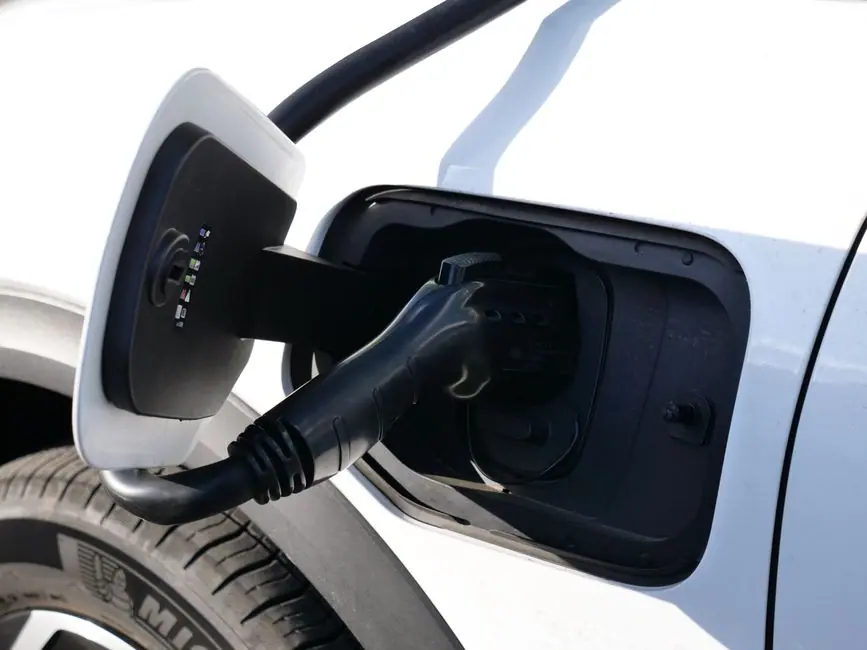
Bulgaria had 4,653 public charging points in the third quarter of 2026, according to the European Alternative Fuels Observatory (EAFO). Of these, 2,520 are alternating current (AC) and 2,133 are direct current (DC). Over the past year, the number of AC points rose by 13.2% and DC points by 33.6%. The total does not show where the points are or how many of them work.
Fast chargers, meaning the DC points, make up about 46% of the network. A quarter earlier, EAFO counted 4,495 points: 2,482 AC and 2,013 DC.
3,480 new electric cars in nine months
Registrations are growing even faster than the network. From January to September 2026, 3,480 new fully electric cars were registered in Bulgaria, 108% more than in the same period of 2025, according to the European Automobile Manufacturers' Association (ACEA).
Electric cars made up 8.8% of all 39,755 new passenger cars registered in the nine months. The EU average is 22.7%, up from 16.1% a year earlier. The figures cover only new registrations of fully electric passenger cars, not the whole car fleet, and the share is of new car sales.
Where the current is converted
A battery takes direct current. An AC point supplies alternating current, and the car converts it with its on-board charger, which limits the speed. At a DC point, the conversion happens in the charger itself, which can deliver much more power.
AC points give 3.7 to 22 kilowatts, and a full charge takes 3 to 8 hours. They suit charging overnight, at work or while shopping. DC points give 50 to 350 kilowatts, and charging from 20% to 80% takes 20 to 40 minutes. They are meant for long trips and quick top-ups, but cost more per kilowatt-hour.
In the 150 to 350 kilowatt class, EAFO counted 395 points in 2024, 614 in 2025 and 719 in 2026. Above 350 kilowatts, the numbers are 10, 111 and 146.
Points, not sites, and no national register
EAFO counts points, not locations. One point can charge one car at a time, so a site with four chargers with two connectors each counts as eight points. The figure of 4,653 does not say how many sites there are.
There is also no official national register. On 3 September 2026, the national access point for data (BGNAP) had no datasets on charging stations. Each operator has its own map, and it is not clear whether they match.
Motorways and big cities are best covered. The Fines Charging network has 398 sites and 1,003 points along roads. EVPoint is strong in the south and on the Black Sea coast, and Eldrive is the biggest by reach. EAFO data has no breakdown by region, so the total does not show how many points there are in small towns.
On reliability, the only figure comes from the operator Fines Charging, which claims 99.98% uptime, with no independent check. There is no data for the other networks. The number of points does not show how many are free and working at any moment.
The number of points and their power are also different things. ACEA counts chargers above 22 kilowatts as fast, while EAFO splits them by type of current. Across the EU at the end of 2023, about 13.5% of all points were fast, and three countries, the Netherlands, France and Germany, had 61% of them.
EAFO's next data update for Bulgaria is due on 15 November 2026 and will cover October 2026. Under the new law, municipalities must build public fast chargers of at least 22 kilowatts, with the number depending on their population.





Comments (0)
No comments yet.