
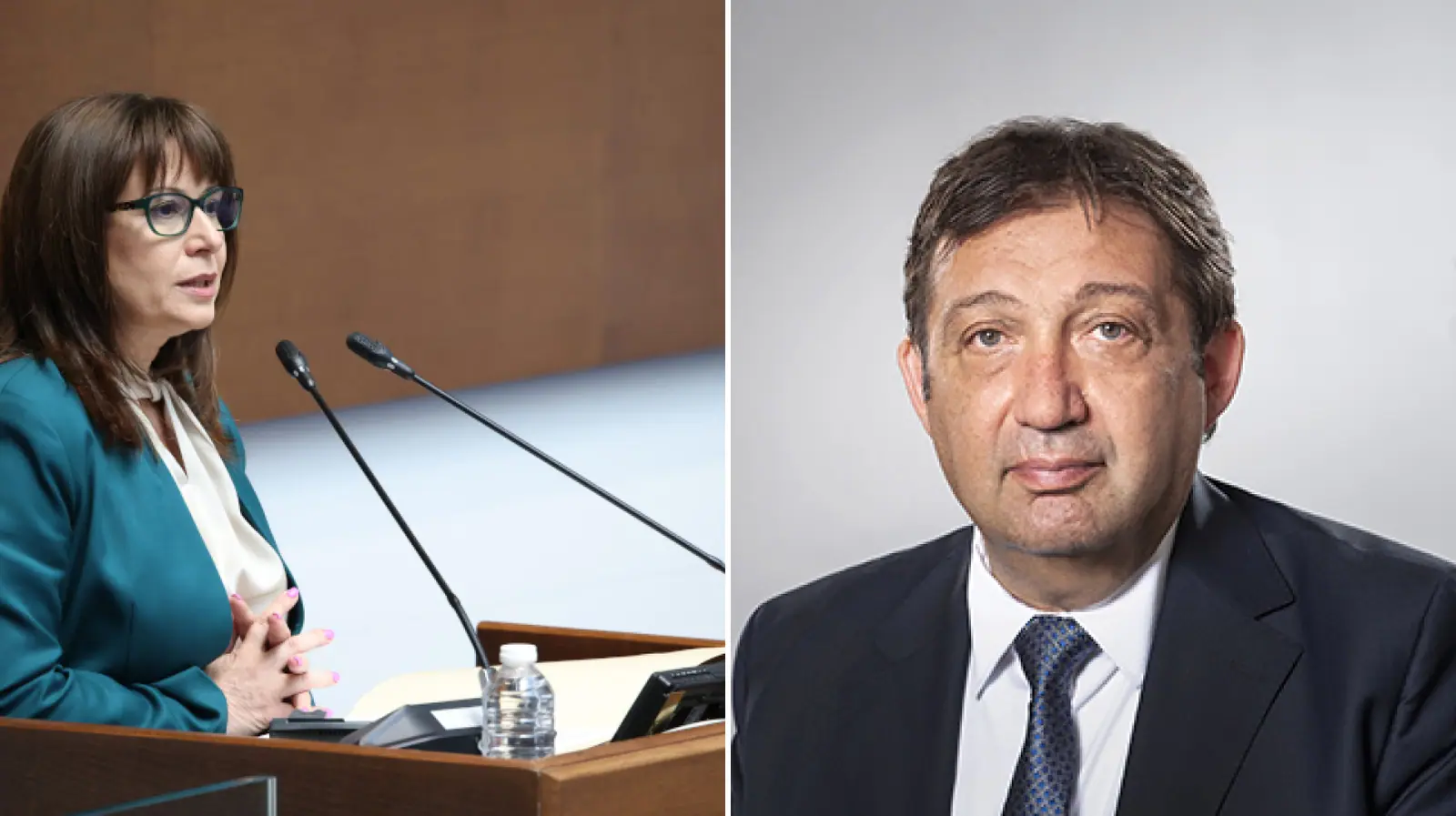
Ombudsman Velislava Delcheva has sent an opinion to the Minister of Regional Development and Public Works, Ivan Shishkov, requesting changes to Ordinance No. 4 of 2004, which aims to better protect people using water and sewerage (W&S) services. This was announced by the institution's press center. The initiative follows complaints regarding recurring lapses in inspections concerning water meter readings, water regimes, drinking water supply, and the oversight of W&S service providers.
In her document, Delcheva proposes a set of measures—including guaranteeing the accuracy of self-reported data from citizens, regularly updating information on the number of residents in properties, introducing clear rules for commercial premises, and imposing sanctions when operators fail to fulfill their obligations. According to the Ombudsman, the issue of distributing water for "general consumption" in apartment blocks remains particularly serious, as conscientious owners end up paying higher bills due to neighbors with faulty water meters, lack of access for readings, or incorrectly submitted data regarding the number of inhabitants.
Delcheva insists on the introduction of a "fairer distribution mechanism" that does not financially penalize compliant consumers for the failings of others.
A separate topic in the opinion is the water supply regime. The Ombudsman points out that, in practice, water is often cut off without an official order, and people are frequently left uninformed about both the reasons and the schedule of restrictions. She recommends establishing clear criteria for cases of "water source drying up" as well as "significant reduction in flow," and mandates that local mayors be required to issue official orders in such situations.
The recommendations also include ensuring access to drinking water during prolonged water supply interruptions. Delcheva writes that the text of Art. 41, para. 6 of the ordinance should be clarified, and that special protection should be provided for vulnerable groups of the population given the social weight of the issue.
As an example of a specific case, the Ombudsman cites the village of Rogachevo in Balchik Municipality, where, according to complainants, water was systematically unavailable for more than 20 days this August, while the municipality claimed they had no water tanker available to supply drinking water to the residents.
The opinion also addresses disputes regarding the accuracy of water meters—Delcheva wants the ordinance to mandate that operators store dismantled water meters for a specified period, so that their readings can be verified if necessary.
Regarding remote reading, the Ombudsman warns that users are practically paying twice for the same service and insists that the transfer of data between heat accounting entities and W&S operators must remain free of charge for citizens. She identifies the lack of a clear control mechanism and administrative liability for ordinance violations as a "particularly significant regulatory failure."
"In view of the above, I believe there are sufficient grounds for the Ministry of Regional Development and Public Works to take action to amend and supplement Ordinance No. 4/2004 on the conditions and procedure for connecting consumers to W&S systems," the Ombudsman's opinion states.
Minister of Regional Development and Public Works Ivan Shishkov stated in June that an in-depth debate on the state of the W&S sector is yet to come, as numerous settlements are facing severe problems in this field.





Коментари (0)
Все още няма коментари.