
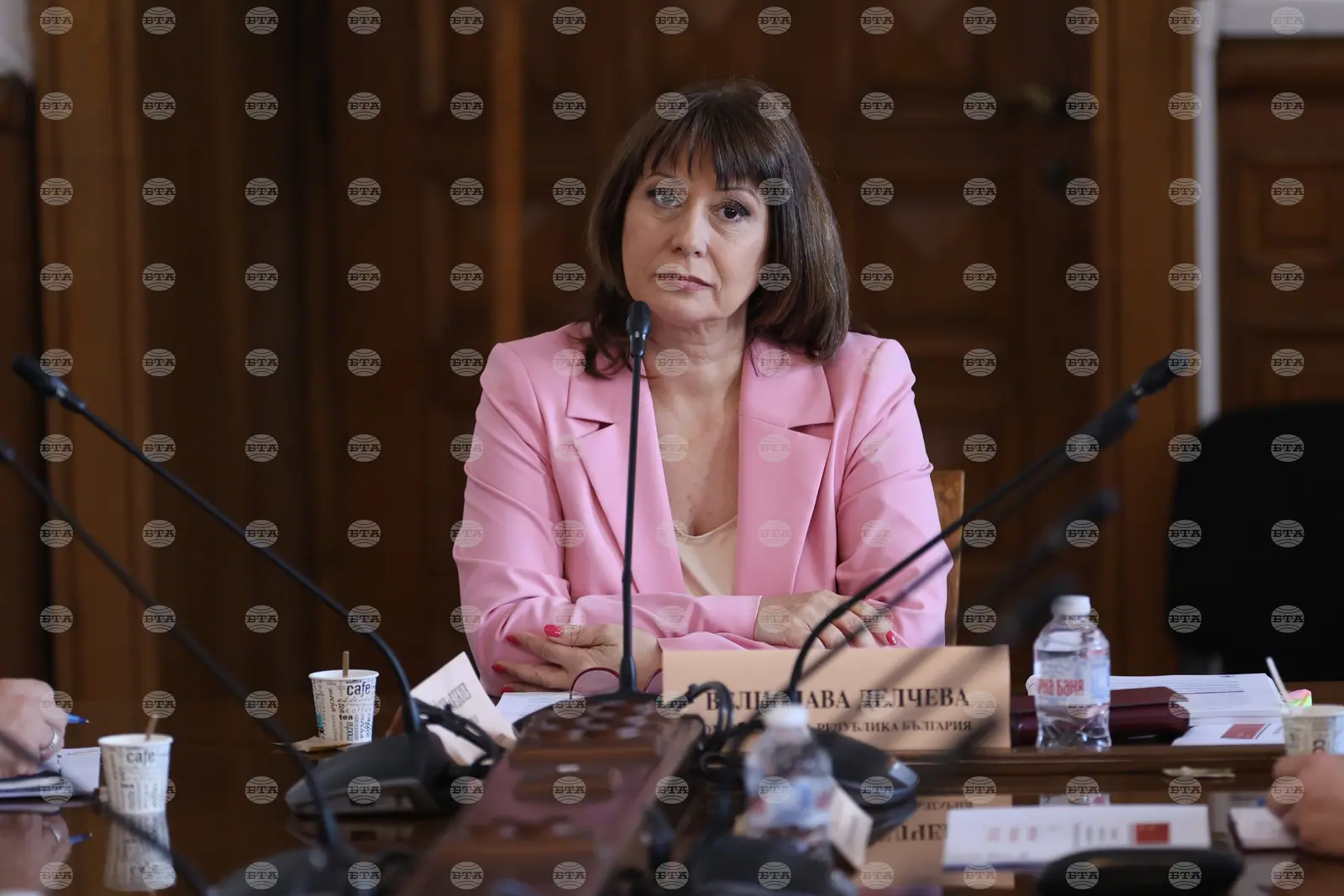
Ombudsman Velislava Delcheva expresses support for key changes in the draft amendment and supplement to the Law on Ownership and Use of Agricultural Land (LOAUAL), aimed at resolving the decade-long problem of unfulfilled restitution rights of owners. The issue affects tens of thousands of citizens in Sofia Municipality, Varna, the "Rodopi" municipality – Plovdiv, and other regions, who formally have recognized rights but have received neither land nor equivalent compensation.
In her opinion, sent to the Chairman of the Committee on Agriculture, Food and Forestry in the 52nd National Assembly Yavor Gechev, Minister of Agriculture Plamen Abrovski, and Minister of Justice Nikolay Naydenov, Delcheva points out that the proposed texts are a real step toward concluding restitution procedures for properties within old boundaries. She reminds that the European Court of Human Rights has repeatedly qualified the prolonged delay of land restitution in Bulgaria as a systemic violation and a disproportionate interference with property rights. For this reason, the state must take measures to definitively resolve the issue, including by guaranteeing equivalent compensation and the actual provision of land.
One of the most critical issues raised by the ombudsman is compensation via named compensation bonds (NCBs). Delcheva notes that when possibilities for providing land are exhausted, a reduction coefficient is applied, and the actual market value of the bonds is often significantly lower than their nominal value. As a specific example, she cites Sofia Municipality, "where the land compensation owed is 50,852.518 decares with a value of 30,733,910 BGN, while the land provided from the municipal land fund is 9,553.172 decares".
"I believe that the subject of the draft law should be expanded with proposals to improve the NCB compensation regime, by broadening the scope of payments with NCBs at face value, or by proposing new methods of compensation that guarantee equivalence," Delcheva emphasized.
To protect the lands necessary for restitution from being dissipated in the meantime, the ombudsman proposes the introduction of an explicit ban on disposing of them until all procedures are completed, along with additional guarantees. "This is necessary because the legal regulation under § 16 is too general and awaits further sub-legislative specification, which makes it difficult to assess whether the duration of the extension of the restrictive regime for disposing of lands from the residual land fund proposed under § 17 is sufficient," she explains.
The ombudsman supports the possibility of receiving land from the municipal land fund, such that in the absence of sufficient resources in the relevant land area, the entitled parties may receive land from an adjacent or other land area within the municipality. Delcheva also supports extending the restrictive regime for disposing of lands under Art. 19 of the LOAUAL (lands intended for the conclusion of restitution), as well as the authority of the regional governor to intervene if the municipal council fails to make a decision within the legally prescribed deadlines.
Another important position held by Delcheva is against the idea that the average annual rent payment should be left to sub-legislative regulation. She argues that this indicator has a direct impact on the rights of citizens, especially small-scale agricultural owners. "For the rights of small owners—the 'weak link' in land relations—the amount of the average annual rent payment is of essential importance," says the ombudsman. The Institution of the Ombudsman proposes that if sub-legislative regulation is adopted, the law must mandatory define the criteria for calculating the amount of the rent payment.
In conclusion, Delcheva emphasizes that the municipal land fund is a single resource for both the restoration of ownership and for compensation, which requires a holistic approach rather than treating individual procedures in isolation. "Assessing the complexity of the problem, the ombudsman has proposed in a series of reports to the National Assembly the adoption of a special law to fully regulate the public relations regarding the conclusion of land restitution, taking into account the impact of excessive delays on them," she concludes.
Changes to the Law on Agricultural Lands will be significant for all property owners in the country, including citizens in the Burgas region.
Calls for urgent legislative and organizational measures to protect recognized restitution rights were sent by the ombudsman as early as the end of May, immediately after the expiration of the restrictions on disposing of lands from the so-called residual land fund. At that time, opinions were sent to the Chairman of the 52nd National Assembly Mihaela Dotova, the Ministers of Agriculture and Food Plamen Abrovski and of Justice Nikolay Naydenov, as well as to the Chairman of the Board of Directors of the National Association of Municipalities Daniel Panov.


Коментари (0)
Все още няма коментари.