
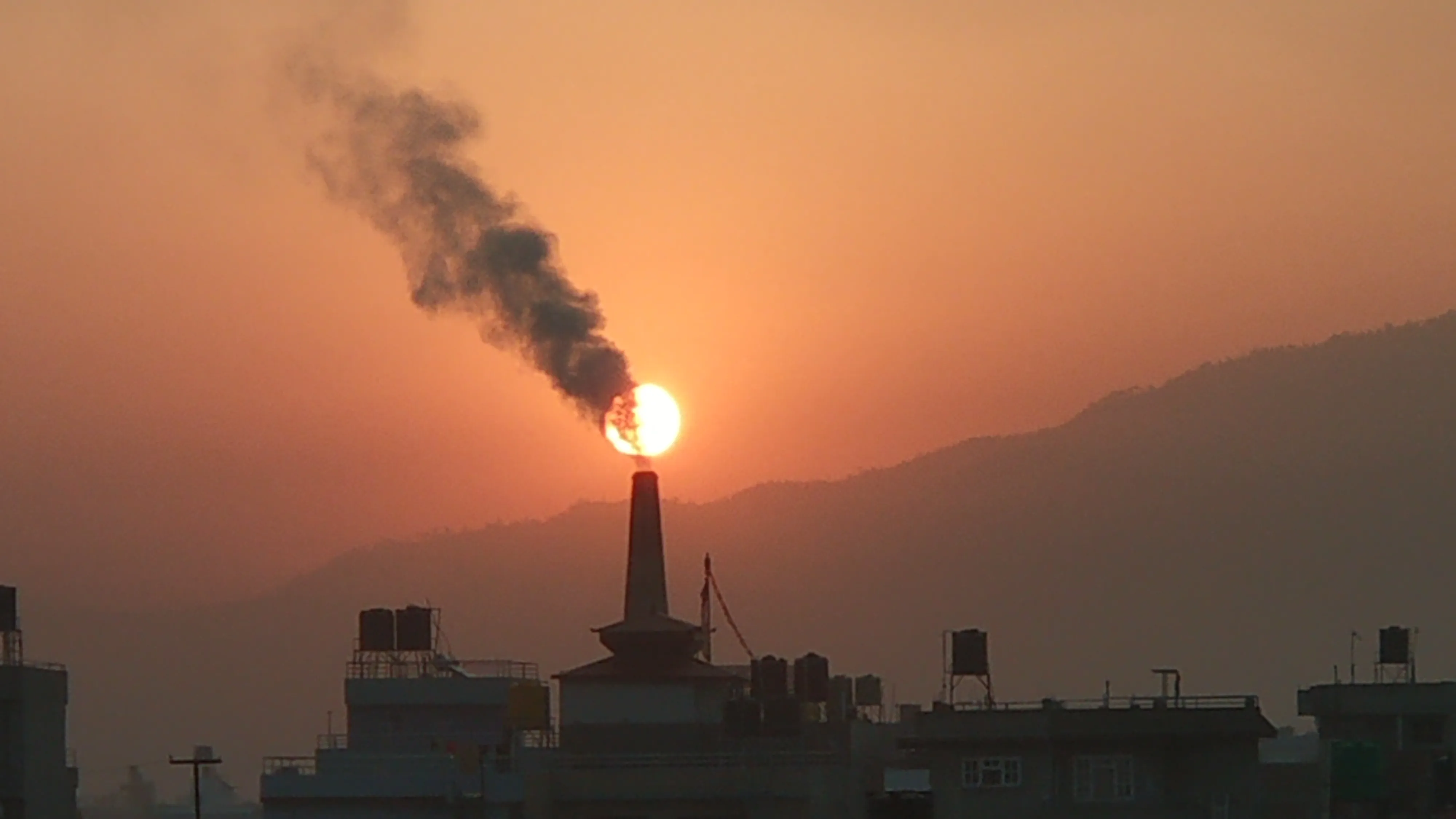
The new Directive (EU) 2024/2881 on ambient air quality and cleaner air for Europe must be transposed into Bulgarian legislation by December 2026, introducing stricter standards for key pollutants, new monitoring requirements, and clearer mechanisms for informing the public. This was announced to BTA by the Ministry of Environment and Water (MOEW) in response to questions. The revised law aims to reduce air pollution in the EU for a clean and healthy environment for citizens and to achieve the Council's vision for 'zero' pollution by 2050. It was adopted on April 24, 2024, with 381 votes 'for', 225 votes 'against', and 17 abstentions.
The Directive was finally approved by the EU Environment Council on October 14, 2024, and published in the Official Journal of the EU on November 20, 2024. It updates and modernizes the European air quality framework, consolidating existing rules and setting more ambitious goals for pollution reduction. The main goal is to gradually improve air quality in the European Union to levels that are not harmful to human health, ecosystems, and biodiversity, in accordance with the scientific recommendations of the World Health Organization and with the EU's goal of 'zero pollution'.
The new rules provide for stricter limit values for key pollutants, including fine particulate matter PM2.5 and PM10, as well as nitrogen dioxide (NO₂), which must be achieved by 2030. The Directive also introduces clearer requirements for planning measures to improve air quality, including the preparation of long-term plans and so-called 'roadmaps' for areas at risk of exceeding the standards.
The MOEW clarified that the deadline for transposing the new law is December 2026, and the necessary steps are already being taken to comply with it. The European requirements will be introduced through amendments to the Clean Air Act and in the secondary legislation that regulates the limit values for pollutants, monitoring, and informing the public.
According to the model currently in force in Bulgaria, the main role for achieving and maintaining the standards for air quality in populated areas lies with the local authorities, the MOEW adds. In case of exceedances, municipalities are obliged to draw up air quality programs, which identify the sources of pollution, their contribution, as well as measures to reduce emissions. The new directive provides that these instruments should be supplemented with clearer strategic plans and long-term roadmaps.
Data from the annual report on the state of ambient air of the Executive Environment Agency (EEA) for 2025 show that fine particulate matter continues to be the main problem for air quality in Bulgaria. The main source of these pollutants is domestic heating with solid fuels, which accounts for about 45 percent of PM10 emissions and 71 percent of PM2.5 emissions in the country.
According to the EEA analysis, the main anthropogenic sources of pollution are also road transport, agriculture, the production of electricity and thermal energy, and industry.
Nevertheless, in recent years there has been significant progress in reducing emissions of a number of pollutants. The comparison with 2005 shows that sulfur dioxide emissions have decreased by about 95 percent, nitrogen oxides by 59 percent, non-methane volatile organic compounds by 36 percent, and fine particulate matter PM2.5 by about 41 percent.
At the same time, domestic heating remains a major factor in air pollution in many Bulgarian cities. In this regard, projects are being implemented in a number of municipalities to replace solid fuel heating appliances with more environmentally friendly alternatives. They are financed under the 'Environment' Program 2021-2027 through the procedures 'For cleaner air!' and 'For cleaner air!' (2), with the aim of reducing fine particulate matter emissions from domestic heating. Contracts for non-reimbursable financial assistance have been concluded under the procedures with a number of municipalities, including Smolyan, Plovdiv, Burgas, Ruse, Pleven, Vratsa, Vidin, Haskovo, Shumen and others. The projects provide for the replacement of old wood and coal stoves with alternative heating systems such as pellet stoves, heat pumps, gas or electric heating systems.
Monitoring of air quality in the country is carried out through the National Environmental Monitoring System, which includes measuring stations in various populated areas. Data from the automatic stations are transmitted in real time to the regional inspectorates of environment and water and to the central dispatching point in the Executive Environment Agency.
The new directive also focuses on greater transparency and public awareness. It provides for the introduction of more unified and comparable air quality indices in the member states, as well as clearer warnings about health risks at high levels of pollution.
The MOEW pointed out that the national air quality monitoring system as a whole meets the current regulatory requirements, but will be adapted to the new European standards introduced by the directive. In this regard, in September 2025, a contract was signed for the implementation of the support measure 'Improving air quality through a modernized and recognized national air quality measurement system and scientific partnerships' (ModAIRn), which is being implemented within the framework of the Swiss-Bulgarian Cooperation Program on the thematic objective 'Environmental and Climate Protection'.
The Ministry of Environment and Water is the program operator of the program, and the Executive Environment Agency is the operator of the program component. The project provides for an analysis of the technical condition of the monitoring stations, the replacement of some of the existing automatic stations with new ones, the creation of two so-called 'super sites' for monitoring and the modernization of the equipment in other measuring points. It is also planned to develop an integrated information system and a mobile application that will provide real-time information on air quality and assessment of the risk of pollution for the public, institutions and the scientific community. It is expected that through the implementation of the project, the national monitoring system and the data transmission system will be modernized and brought into line with the requirements of the revised European directive on air quality.
In the context of European legislation, Bulgaria has already been subject to infringement procedures related to air quality. In 2017, the Court of Justice of the European Union ruled in Case C-488/15, brought by the European Commission, which established that the country had systematically exceeded the limit values for fine particulate matter PM10 and had not taken sufficiently effective measures to improve air quality.
In 2022, the Court of Justice of the EU also ruled on Case C-730/19, related to exceedances of the limit values for sulfur dioxide (SO₂) in the southeastern region of the country, establishing a violation of the obligations under European air quality legislation. In January this year, the European Commission terminated proceedings against Bulgaria after the country took measures to reduce emissions in the southeastern region. The procedure was initiated in 2009, and in 2022 the Court of Justice of the European Union found that the limit values for SO₂ had been systematically exceeded. According to the data reported by Bulgaria, in 2022, 2023 and 2024, compliance with the daily and hourly standards for this pollutant has already been achieved.
On the issues of control mechanisms and sanctions for non-compliance with the measures by the municipalities, as well as the assessment of the risk of new penalty procedures against Bulgaria, the MOEW pointed out that the topic is premature and is within the competence of the legislator. The ministry added that the new directive provides for mandatory steps to achieve the standards set, but also the possibility of derogations when it is proven impossible to reach the standards within certain deadlines.

Comments (4)
Абе, хора, какво да ви кажа… Тая директива за въздуха е добра новина, безспорно! Наистина имаме нужда от по-чист въздух, особено в градовете ни. Все пак, не можем ли сами да си направим труда да се захванем с тези проблеми?
Ей хора! Честно казано, супер е че Европа се грижи за нас - по-чи
Абе, наистина ли никой не се сети за старите Москвичи? Сега как ще ги
Сериозно ли? До 2026-та?! Абе как ще се оправим тогава, като ни управляват все едни и същи?! Дали наистина