
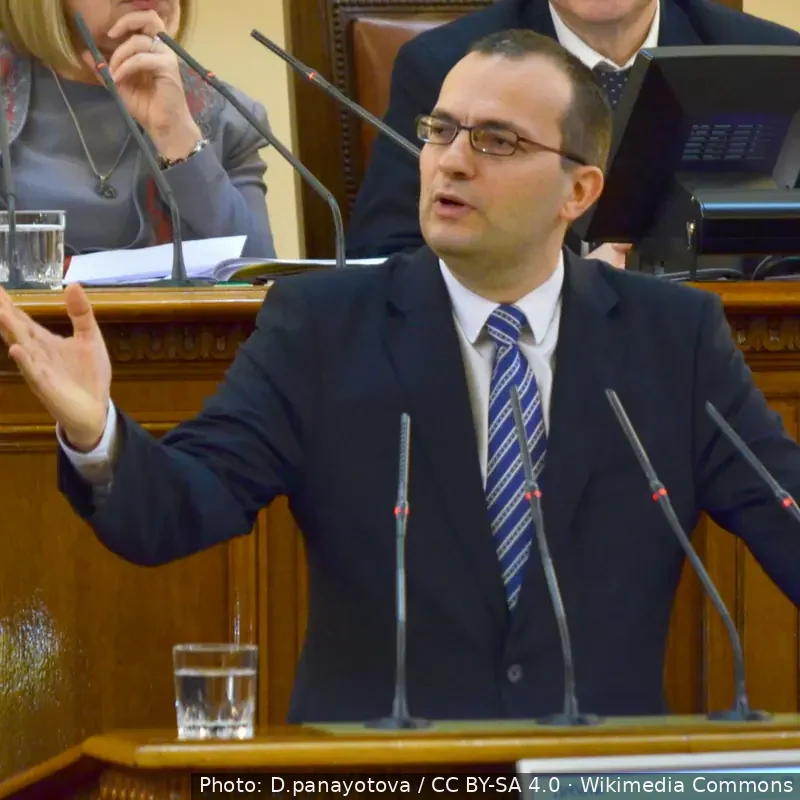
The average family will pay €670 in interest on state debt in 2027 because of the ruling majority's budget, Democratic Bulgaria (DB) MP Martin Dimitrov told BNT. DB's parliamentary group wants the budget withdrawn and spending reviewed again.
Dimitrov counts an average family as two parents and one child. By his calculation, such a family's share is €3,100 of new debt in one year and €2,800 of the total debt. In 2027 it will also pay an extra €900 in taxes and social contributions. He says higher taxes and contributions, new debt and interest will cost every household. "This bad budget policy that Progressive Bulgaria is pursuing has a specific price for every Bulgarian family," he added.
Dimitrov compared the state to a family that should not overspend or take quick loans it cannot repay. He says the problem is overspending and new debt, with no explanation of why the money is needed.
The ruling majority says it is the most social budget, because it raises pensions, pays higher maternity benefit in the second year and lifts the minimum wage. Dimitrov answered with the deficit figures. He says cutting the deficit is a matter of will, and that cuts must be made.
DB's plan has €2bn less spending and more revenue in total, which would bring the deficit below 3% as early as 2027. The biggest cut, €800m, is in the central budget reserve. "Progressive Bulgaria has written itself €1.4bn into the central budget right now, with no calculation at all of what it will be spent on," Dimitrov said.
He called it a free piggy bank that can be spent on anything, and said not one sentence in the budget's explanatory notes says what the money is for. DB also wants to cut €250m each from running costs and capital spending, because the MP says clear calculations are missing for both. The party also proposes collecting more revenue in line with GDP growth, and changes to fees.
Dimitrov says this cuts the deficit without dropping social goals, and that the ruling majority rejects such steps because it wants to spend more. The budget was presented at the University of National and World Economy (UNWE) on 7 November and submitted to parliament on 16 November. In those nine days, the regional ministry's commitments rose by €1bn, from €1.5bn to €2.5bn, and no new projects were presented to explain the change. The MP said he and DB raised the issue, but the public missed it.
The European Commission has warned Bulgaria, and the country could face sanctions for failing to act on recommendations to bring the deficit under control. Dimitrov rejected attempts to shift the blame to previous governments. He says the Commission does not dictate how much money goes to health, education, roads or capital spending. It only demands a lower deficit.
DB will submit its plan to parliament again, and Dimitrov did not rule out opposition protests over the budget.

Comments (0)
No comments yet.