
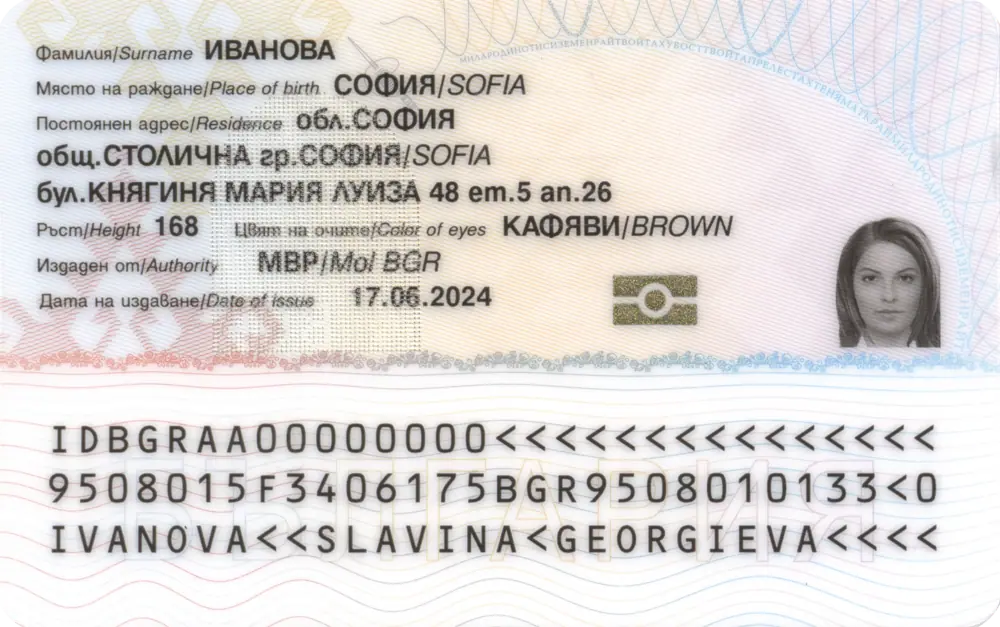
Parliament has passed changes to the Foreigners Act on second reading. The Council of Ministers put them forward. ID cards under the standard service will be issued within 20 days instead of 30.
The deadlines also change in the Bulgarian Identity Documents Act, through the transitional and final provisions of the new law. A temporary ID card will be replaced within 20 days under the standard service, or within three working days under the fast service, counted from the day after the application is accepted.
The rules for service passports also change. They will be issued only for official duties abroad. Children of staff without diplomatic rank who work abroad will also get a passport if they are under 25, unmarried and still studying in the host country. The Council of Ministers says the limit is preventive and reduces the chance of abuse of the right to these passports and their privileges.
The law also introduces a "single permit for residence and work". Foreigners can get it if they meet the conditions for access to the labour market under Bulgarian law and hold the right visa or residence permit under Regulation (EC) No 1030/2002. The procedure takes two months at most. Only in exceptional cases, when a case is complex in fact and in law, can another 30 days be added. While the application is being reviewed, the applicant or their authorised representative can withdraw it. If a foreigner loses access to the labour market because of the employer, the employer must pay them compensation. Seasonal workers whose employer provides housing must have a written contract that sets out the rent terms.
The director of the Migration Directorate, or someone the director authorises, will not withdraw the single permit over unemployment if it totals no more than three months during the permit's validity. If the foreigner has held the permit for more than two years, the allowed unemployment is up to six months. Bogdan Bogdanov of We Continue the Change said the six-month limit ignores objective reasons for absence that are proven through administrative channels. He said more objective ways are needed to check whether a person has been in the EU. A foreigner with a permanent residence permit will lose the right to reside if they were not in Bulgaria in the previous calendar year.
When stateless status is granted, citizens of third countries will go through screening at the external borders. It will take place in centres run by the Border Police Chief Directorate, where people are housed on the order of its director or someone the director authorises. If there is a risk that a person will abscond, or a threat to public order and health, they can also be housed in Migration Directorate centres or in suitable places in the Sofia Directorate of the Interior Ministry and regional Interior Ministry directorates. Everyone who goes through screening will get a preliminary health check from qualified medical staff, access to emergency medical care and basic treatment. Non-governmental organisations will be able to advise the foreigners. Petar Petrov of Vazrazhdane said his party backs the check and finds it useful.
Bozhidar Bozhanov of Democratic Bulgaria said the law looks more and more like a regulation, and that the Interior Ministry and the social ministry should decide which laws should cover the matter. He also said there is no digitalisation of the processes between institutions.




Comments (1)
Добре де, двайсет дни? И какво стана с електронното управление все пак?!