
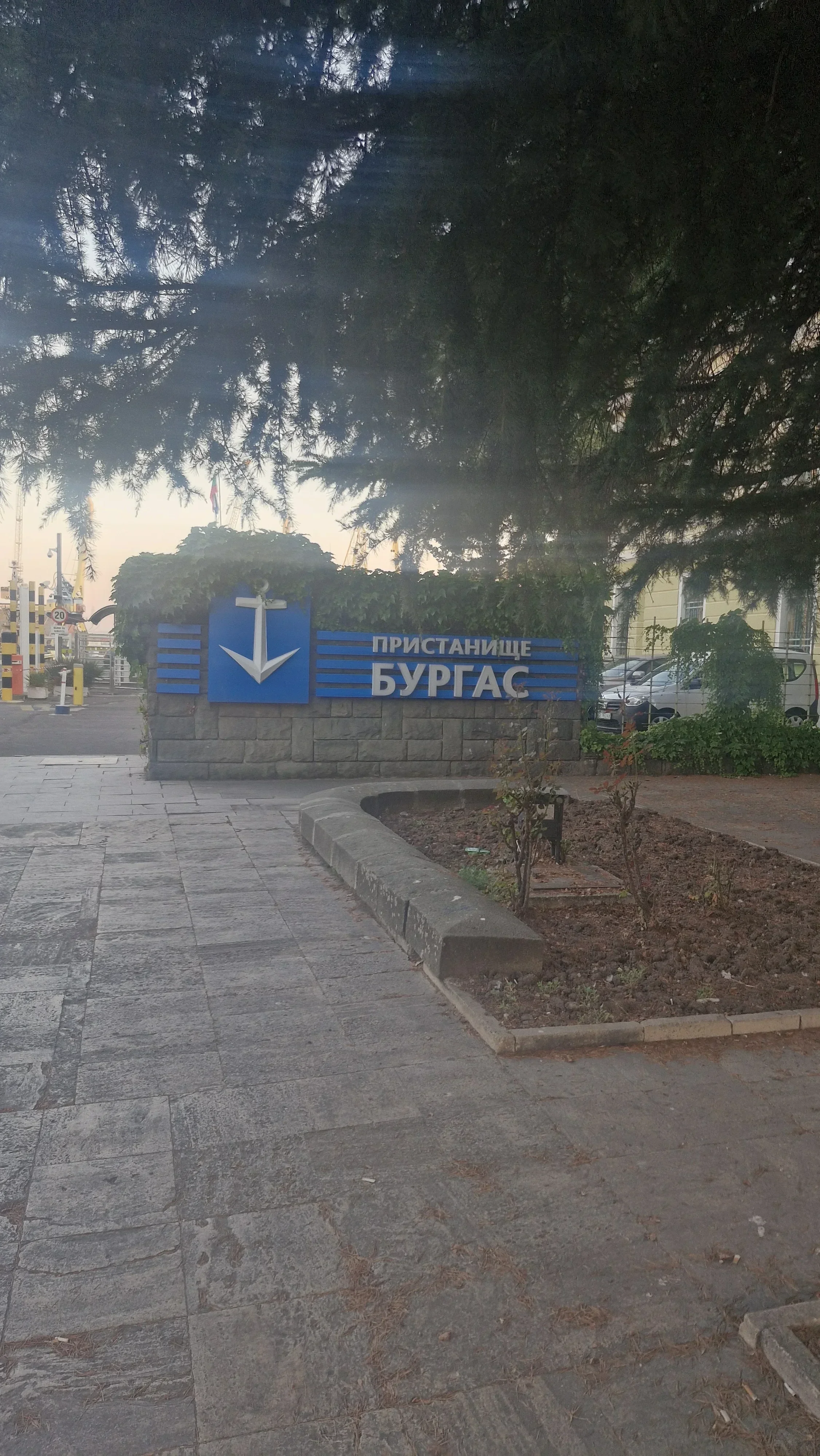
At the beginning of the 20th century, Burgas was still a relatively young city, squeezed between the salt lakes and the Black Sea, but with ambitions to become the great hub of trade on the southern Bulgarian coast. It was then that the decision was made that literally redrew its fate - the construction of a modern seaport and its connection with the interior of the country through the Burgas-Plovdiv railway line.
With "Decree No. 7" of December 20, 1894, Prince Ferdinand gave the green light for the construction of a new, modern port in Burgas - a project that had to meet the needs of the young Bulgarian state for its "own window" to the world. Construction began in 1895 under complex technical conditions, and the sea literally "ate up" part of the old cape, on which the future port would be developed.
About a few years later, in 1899, the white Burgas lighthouse lit up over Burgas Bay for the first time - the first Bulgarian port lighthouse, a symbolic signal that the city was preparing to become a permanent player in maritime trade. It is not only a technical facility, but also a kind of promise for a new role of Burgas on the Black Sea map.
The culmination came on May 18, 1903, when in the presence of Prince Ferdinand the new port was officially opened and announced to be open for commercial shipping. At that moment, breakwaters, quays and sufficient depth had already been built to receive modern ships - Burgas went from the role of a local port to the status of a national maritime center.
However, the development of the port would have remained a half-realized dream if there was no reliable connection with the interior of the country behind it. This is where the second key choice came - the Burgas-Plovdiv railway line, which connects the Black Sea with Thrace and, through the further railway connections, with the rest of Bulgaria and Europe. Thus, the sea and the land "agree" to work together.
The Burgas-Plovdiv line became a strategic artery, along which grain, rose oil, tobacco, textiles and industrial goods started to move, and in the opposite direction - machines, fuels, raw materials. It not only shortens the distance between the coast and the interior, but also makes a new economic imagination possible: the villages and towns in Thrace already have access to the world markets through Burgas.
This "dual infrastructural" choice - a seaport and a railway - gradually turned Burgas into a natural logistical center of Southern Bulgaria. The port became a key node for cargo, and the city established itself as an important administrative and economic center, to which investments, labor and new industries began to be directed. It is no coincidence that today it is one of the most significant cities on the Bulgarian Black Sea coast.
The Burgas Bay itself works in favor of this scenario - this is the westernmost point of the Black Sea and one of the largest Bulgarian bay formations, which provides a naturally protected water area and good conditions for shipping. Thus, geography and infrastructure intertwine: the convenient bay and the modern port, connected by a railway line, turn the city into a logical gateway to the Southern Black Sea.
In the following decades, Burgas lived more and more with the self-awareness of the "sea gates" of Southern Bulgaria - both goods and people, tourist flows, ideas and influences passed through it. The port and the railway affect not only the economy, but also the city's appearance: new neighborhoods, industrial zones, infrastructure appear, and later iconic spaces such as the "Sea Garden", which interweave the industrial character of the city with the feeling of the sea and free time.
Today, Burgas continues to be an important transport hub with a port, an airport and a railway station, and the modernizations on the Plovdiv-Burgas line, including under European programs, are a recognition that the former choice was strategic. When the train stops at the station, and the silhouettes of cranes and ships can be seen on the horizon, this story is felt not as an abstraction, but as a living connection between the past and the present of the city.




Comments (8)
Абе хора, интересно е наистина как инфраструктурата може да промени един град! Винаги съм си мислил, че Бургас е важен заради морето, но явно без тази железница и пристанище нямаше да е така. Малко закъсняла новина, де, ама пък добре напомня на младите как са се развивали нещата в България. 💩
Хм... четох си новината за Бургас. Истина е, разбира се, че тази жп линия и пристанище са били фундаментални за развитието на Южна България. Не е само заради търговията, ами и защто позволиха връзка между различни региони – по-лесен транспорт на хора, стоки, идеи... създава се цялостна мрежа, която да подпомага растежа.
Абе, хора, ама наистина ли трябваше да пишат за това **сега**?! Да, хубаво е да си спомняме как са се развивали градовете ни, ама к'во толкова? Портът и железницата – ясно е. Бургас без тях щеше да е едно покрайнище, нищо повече.
Ей, хора! Четох коментарите... ама верно защо чак сега излезе тази новина? 😂 Все пак – мн яко как са ни направили тези връзки навремето. Представям си к'во е било тогава, без магистрали и бързи пътища – на вла
Абе, писна ми да чета за "как преди"... Добре е, важно е да помним история 🤷♂️