
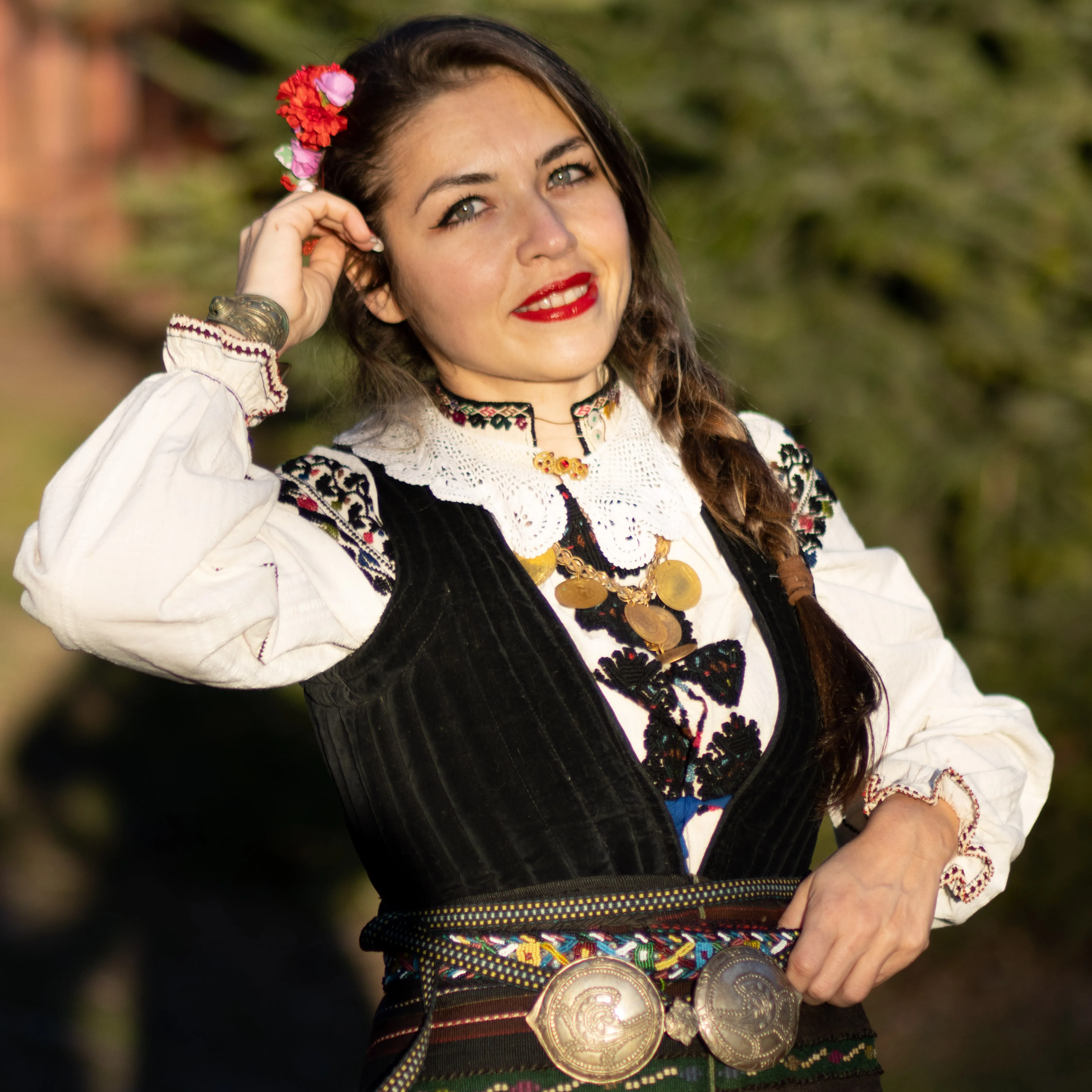
The folk belief says that “during the Dirty Days, the earth is like a sieve, the sky is open, and paradise and hell are merged into one.”
In different regions of Bulgaria, the Dirty Days – the period from Christmas to Epiphany, are called Unbaptized or Deaf Days (Western Bulgaria), the Pagan, Pagan Days, and Karakondzholi Days (Thrace), etc. Because they are associated with the impure, postpartum period of the Holy Theotokos. Throughout the Bulgarian ethnic territory, this period of time is considered particularly dangerous and harmful.
It lasts until the baptism of the Infant or until the ritual baptism of the water on Epiphany (January 6). Then the new annual calendar cycle begins.
The word “pagan”, from which the name of the period (pagan days) comes, is translated as “pagan”, “wicked”, “godless”. “Pagan” is also a dialect form of “rat”.)
During the Dirty Days, the transition from the old to the new astronomical year takes place, from death to the birth of the new solar deity or the young Christian God.
But before that happens, evil demonic creatures come to Earth among people, who bring diseases and hardship.
The most widespread is the idea of the appearance of the karakondzhol. But along with him roam vampires, werewolves, talasmi (spirits), and samovili (fairies).
To protect themselves from them, people carry a clove of garlic in their clothes, place branches of black hawthorn on the doors and windows of their houses, and draw crosses of tar on the gates. Because, according to folk belief, demons are afraid of the smell of garlic and tar, and they are afraid of the thorns of hawthorn. The black color, in turn, has an apotropaic (protective) power. They are also frightened by light, fire, prayer, the icon, and holy water.
During these days, no one lingers in the streets, the doors are locked tightly, and candles are left burning.
That is why during the Dirty Days, the groups of masked bachelors and men, called survakari, babugeri, dzhamali, rusalii, start.
The rusalii (men up to 40 years old) have the main task of treating the seriously ill. Around the sick person, the rusalii line up in a circle and perform a special dance, in which the main actor is the baltadzhia – the leader of the rusali group. If two rusali groups meet, a fierce battle begins between them. Many localities in Bulgaria testify to these battles, bearing the name Rusaliyski Cemeteries (R. Popov).
And the custom of Survaki on New Year's Day (January 1), also performed by boys, consists of hitting relatives with a survaknitsa – a raw, filled with vital juices dogwood branch, decorated with colorful woolen threads, popcorn, and coins for health. Here the red color in the decoration acts apotropaically. (The Survakane ritual actually replaces the Christmas carolers, which have fallen out of common practice.)
A dogwood survaknitsa or survachka is made by twisting the branches in a semicircle and decorating them with colorful threads, yarn or wool, popcorn, plums, peppers, and apples.
During survakane, verbal magic (blessing, based on the ancient belief in the power of the word) is accompanied by the magic of action (touching with dogwood).
But even after Survakane, there are still 6 days left until Epiphany…

Comments (15)
Абе, хора, успокойте се малко! Четох коментарите и видях много разпалени мнения... Аз лично мисля, че статията е доста интересна и показва колко дълбоки корени имат българските традиции. Не е нужно да сме страшни или старомодни, за да си признаем, че тези обичаи са част от нашата идентичност.
аааа, браво, браво! страхотна статия! 🤩 честно казано, малко ме е втрещи, ама като се замисля... нали си спомням как баба ми винаги казваше "пази се от мръсните дни, внуче!" и слагаше червенка на вратата. ебахти! 🤯
Абе, сериозно ли още си слагаме червенки? 😅 Не
Евала на авторите! Честно казано, винаги съм се чудил откъде са дошли всички тия поверия... Баба ми все повтаряше да не си пипам играчките по време на Мръсни дни, че ще ме задяват духове. Аз я гледах и си мислех,
абе хора, хахахах, каква статия! 😂 честно казано, супер интересно! винаги съм се питал откъде са тези наши традиции - все едно сме живели във филм на ужасите, ама по наш начин! 🤣 🤷♂️