
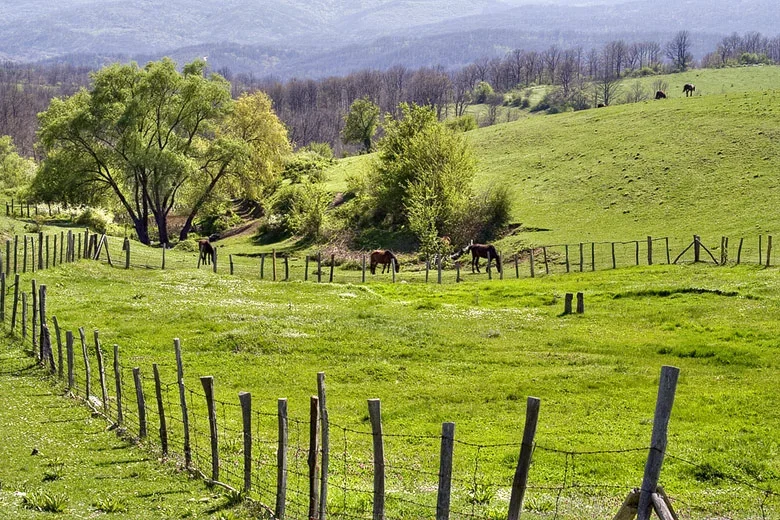
Crossing Strandzha from Elhovo to Ahtopol means covering not just 180 kilometers, but experiencing an entire universe of nature, history, and living traditions. The long ecological route connects the Tundzha River valley with the Black Sea, passing through mountain villages, ancient forests, and sacred sites where the footsteps of the nestinari still echo today.
The "Elhovo – Ahtopol" route: the backbone of Strandzha
The ecological route begins in Elhovo – a town located along the calm waters of the Tundzha River, and ends in Ahtopol, at the end of the old pier, where the mountain touches the Black Sea.
The trail is about 180 kilometers long and follows existing village and forest roads, heading from west to east through the Bulgarian part of Strandzha. It connects numerous mountain villages scattered across ridges and valleys, and smoothly leads the traveler from the country's interior to the seashore.
Although it can be traversed in one breath by experienced hikers and runners, the route is designed as a multi-day eco-adventure – with time for meeting people, stopping at fountains and chapels, bird watching, and quiet evenings in rural guesthouses.
Through the heart of "Strandzha" Nature Park
A large part of the route passes through the territory of "Strandzha" Nature Park – the largest protected park in Bulgaria, known for its incredible biodiversity, mixed forests, and rare plant species.
Strandzha is a mountain of soft, rounded ridges and deep ravines, where beech and oak forests alternate with long-stemmed forests along the rivers. In the spring, the slopes are covered with blooming Rhododendrons, and in the autumn, the forests ignite in golden and wine-colored tones.
The paths lead past clear rivers and small waterfalls, ancient Thracian mounds, and hidden sacred sites. This is a route where hours are not measured only in kilometers, but in the silence of the forest, the wings of eagles, and the whisper of old trees.
Villages on the border between legend and reality
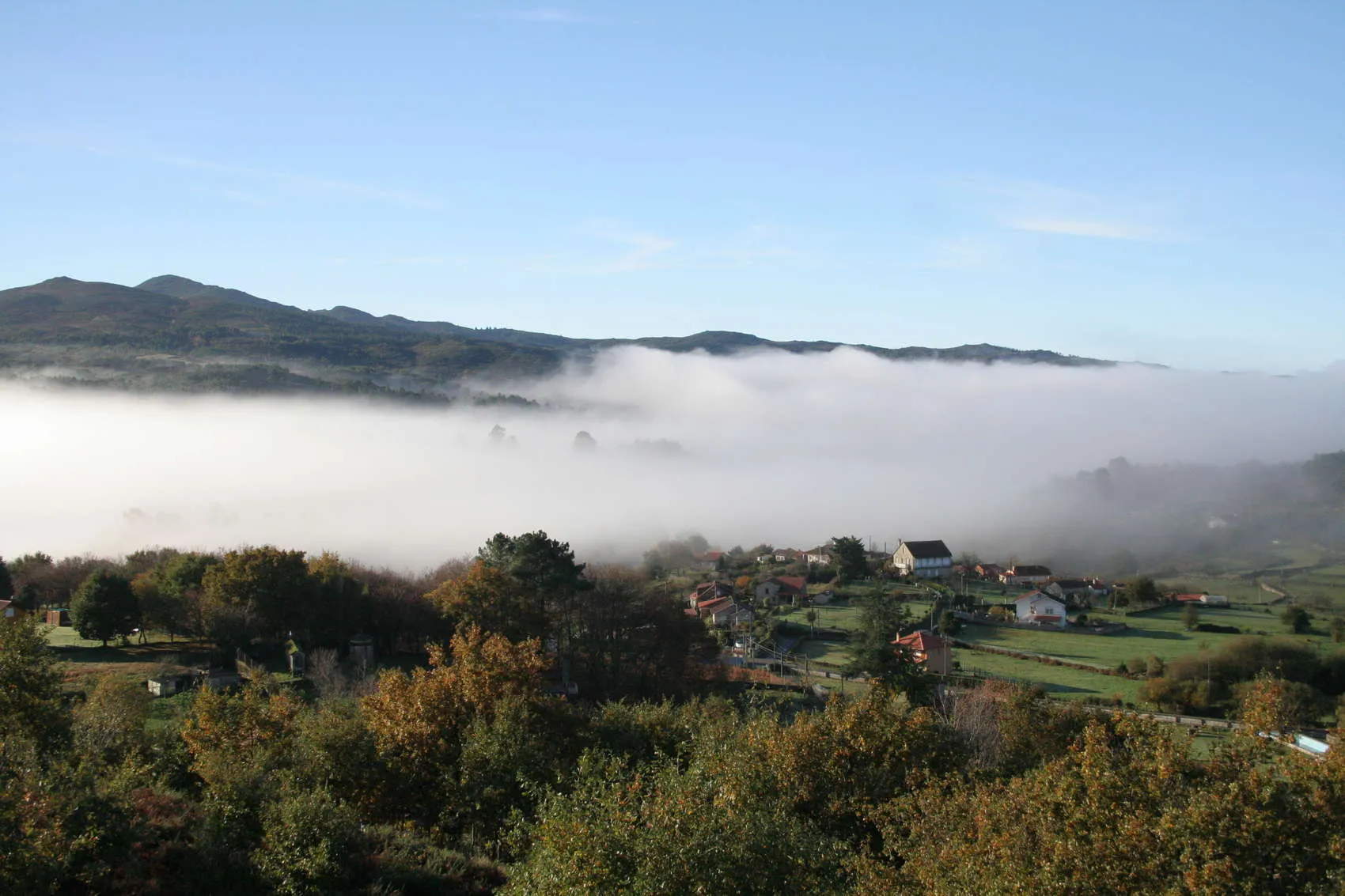
One of the greatest assets of the route are the mountain villages of Strandzha. Among them are Brodilovo, Kosti, Zvezdets, Voden, Sharkovo, and several other small settlements hidden among the ridges.
Brodilovo stretches along the bends of the Veleka River – a river that is like a living artery of Strandzha. The village combines ancient wooden houses, stone walls, and a feeling that time flows more slowly. From here, popular eco-trails start towards the sea and areas like "The King's Spring," where one feels far from all vanity.
Kosti and Zvezdets preserve the spirit of the old Strandzha communities. The village of Zvezdets, known by its old name "Gyoktepe" – "star peak," is located in a high and panoramic place, from which a view of central Strandzha is revealed. Dozens of springs and fountains, as well as Thracian burial mounds, are scattered around, testifying to the ancient significance of the area.
Voden and Sharkovo are among those quiet villages where in the morning you hear the crowing rooster, and in the evening – the ringing of cowbells. They are the face of traditional livestock farming and agriculture, where the hand of man is still visible, rather than the machine.
Folklore, customs, and Strandzha cuisine
The long ecological route is not just a trek through nature, but also a journey through folklore. In the villages along the route, Strandzha folk songs are still sung – long, drawn-out, with a special melody that seems created to echo over the ridges.
Local festivals – fairs, communal feasts, and kukeri (mummers) games – bring people together in the square and give guests a chance to see the living traditions of the region. Dishes such as "karkmach," banitsa with herbs, meat on the grill, and aromatic herbal teas are always present at the table.
Visiting these villages is part of the idea of sustainable tourism: tourists support local producers and guesthouses, and in return, they receive the sincere hospitality of their hosts – with stories about the past, legends of haiduks (rebels), and sacred sites.
The Nestinari dances: the fiery heart of Strandzha
In some of the Strandzha villages that the route passes through or are a short detour from it, one of the most mystical Bulgarian traditions is preserved – nestinarstvo. These are dances on embers, performed barefoot, to the sounds of a bagpipe and drum.
The nestinari rituals are mainly associated with the villages in the area of "Strandzha" Nature Park, where even today, fire is perceived as a purifying and prophetic force. The evening fire dances bring together residents and guests of the villages, and the air is saturated with smoke, music, and a feeling of something beyond the everyday.
To be a witness to "nestinari games" during the hike means to see how an ancient ritual, surviving from Thracian times, still lives in a modern but deeply spiritual mountain.
The route as an idea for sustainable tourism
The Elhovo – Ahtopol ecological route is an example of how a region can develop sustainable tourism without sacrificing its nature and identity. Instead of mass complexes and noisy resorts, Strandzha offers silence, long hikes, meetings with local people, and careful treatment of the environment.
The length of about 180 kilometers allows the route to be divided into stages – suitable for both experienced hikers and families or groups who prefer shorter daily treks. In every village, the traveler can find shelter, homemade food, and new stories.
This is a path that does not just connect Elhovo and Ahtopol, but builds a bridge between past and present, between the mountain and the sea, between man and nature. "Tour Strandzha" is not just a route on the map, but an invitation to discover Bulgaria as it was and as it can still be – wild, hospitable, and real.

Comments (4)
Добре е, че има нови маршрути за природата ни. Надявам се да стане популярно място и хората да погледнат Странджа с други очи.
Абе, 180 км ли? Това за какав атлет
Абе, наистина ли са 180 км? И там, по тия села, какви са пътищата? Няма да е лесно... ама пък ако се
абе хора, ей! 180 км?! сериозно ли?! да си взема раницата и да тръгвам на гурбет към ахтопол ли? хахаха... шегувам се де, ама все пак.