
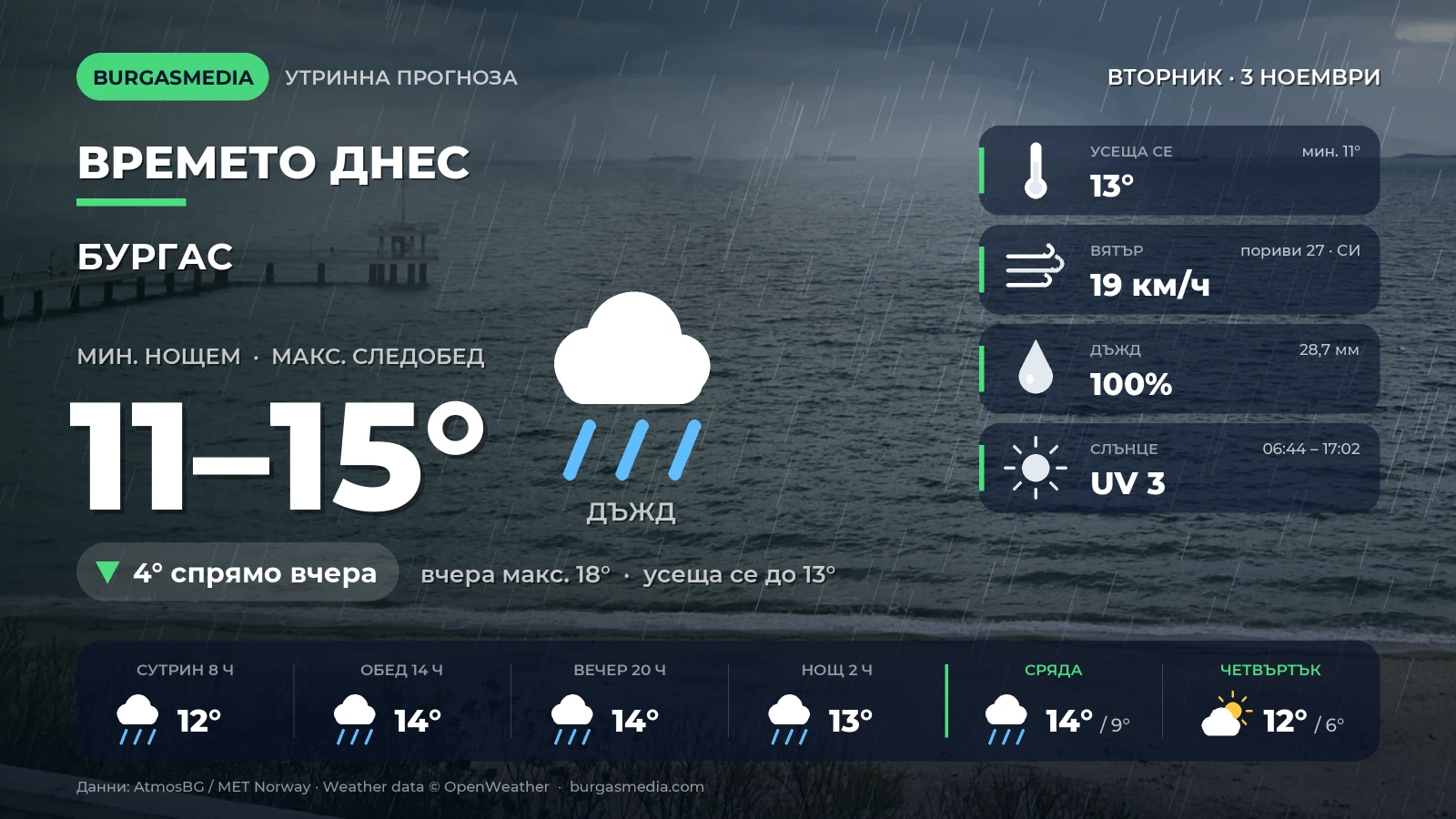
The morning is almost dry, 12 degrees at 8 a.m.
Tuesday in Burgas starts cloudy and cool, and the heavy rain does not arrive until after noon. At 8 a.m. it is 12 degrees and the chance of precipitation is 17 percent, so on the way to work and school it will at most drizzle. Humidity is 85 percent, the air is cold and damp, so it's jacket weather.
The sun rises at 06:44, but the clouds will hide it.
From noon it rains heavily, about 29 liters for the day
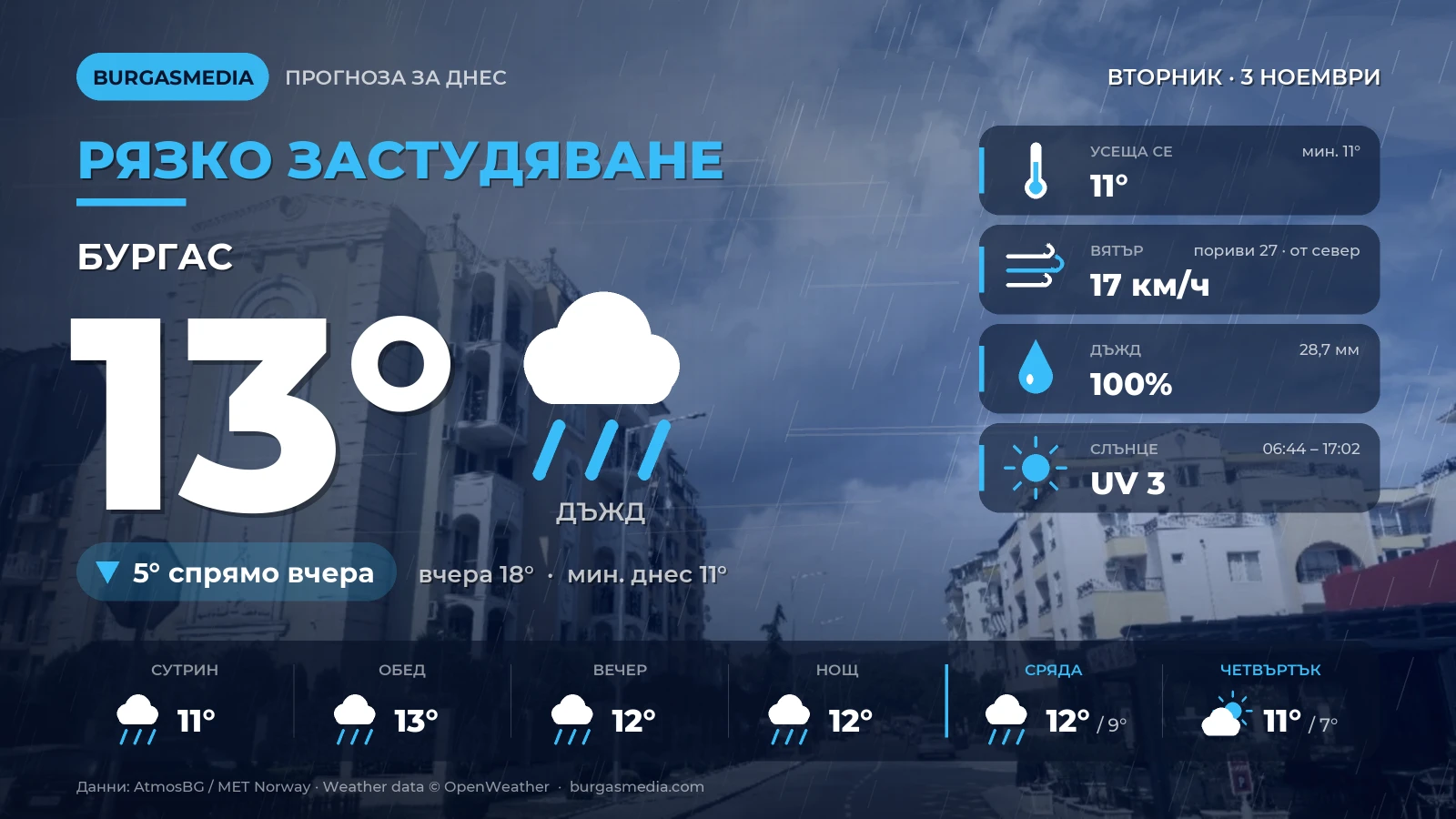
By 2 p.m. the thermometer reaches 14 degrees, and the chance of rain jumps to 100 percent. Humidity climbs to 95 percent. Over the whole day about 29 liters per square meter will fall, and almost all of it will pour down in the afternoon.
It also rained yesterday, so the ground is saturated and the new water soaks in with difficulty. Underpasses, low-lying intersections and streets with clogged drains will fill up quickly.
In the evening 14 degrees and humidity of 97 percent
At 8 p.m. the rain continues with the same intensity. It is again 14 degrees, but because of the moisture it will feel like 13, and humidity reaches 97 percent. The sun sets at 17:02 and shortly after half past five it is already dark, so you will be heading home from work in the dark and in pouring rain. During the night it will cool down to 11 degrees.
Northeast wind with gusts up to 27 km/h
The wind blows from the northeast, at about 19 km/h, and at times up to 27. On the coast this is a wind from the sea, which carries the moisture straight to the city and drives the rain at a slant under your umbrella. Along the Seaside Alley and on the Bridge it will spray from the sides, so an umbrella alone is not enough.
The UV index is 3, but under the thick clouds the sun will not burn. The air is clean, the European air quality index is 16, which means excellent.
Wintering birds arrive at Vaya and Atanasovsko Lake
The Burgas lakes lie on the Via Pontica, the second-largest migratory route for birds in Europe. The big autumn wave of storks and pelicans passes over the city in August and September. At the beginning of November the birds that stay here for the winter arrive at Vaya and Atanasovsko Lake: ducks, coots, cormorants, and at Vaya Dalmatian pelicans winter as well.
In heavy rain the birds gather on the water and in the reeds, and visibility drops. If you want to watch them, go out in the morning while it is still almost dry, and take binoculars. After noon the rain and the wind from the sea will make observation difficult.
A hooded jacket, waterproof shoes and slower driving
Dress in layers, with a jacket or raincoat with a hood and shoes that do not let water through. In the morning an umbrella still works, in the afternoon you will also need waterproof clothing.
If you run or ride a bike, do it before noon. After that the gym is the better choice, because outdoors you will be soaked within minutes.
Drivers should drive more slowly and keep a greater distance. Wet leaves on the road under the trees are as slippery as ice, and in heavy rain the cars ahead of you are hard to see. Turn on the windshield defogger as soon as you set off and switch on the headlights from the afternoon. If you are picking up children from school, leave earlier, because traffic jams in the rain build up quickly.
Wednesday: colder, north wind up to 42 km/h
Tomorrow it again rains heavily, about 28 liters, the temperature is between 9 and 14 degrees, and the north wind blows with gusts up to 42 km/h.




Comments (0)
No comments yet.