
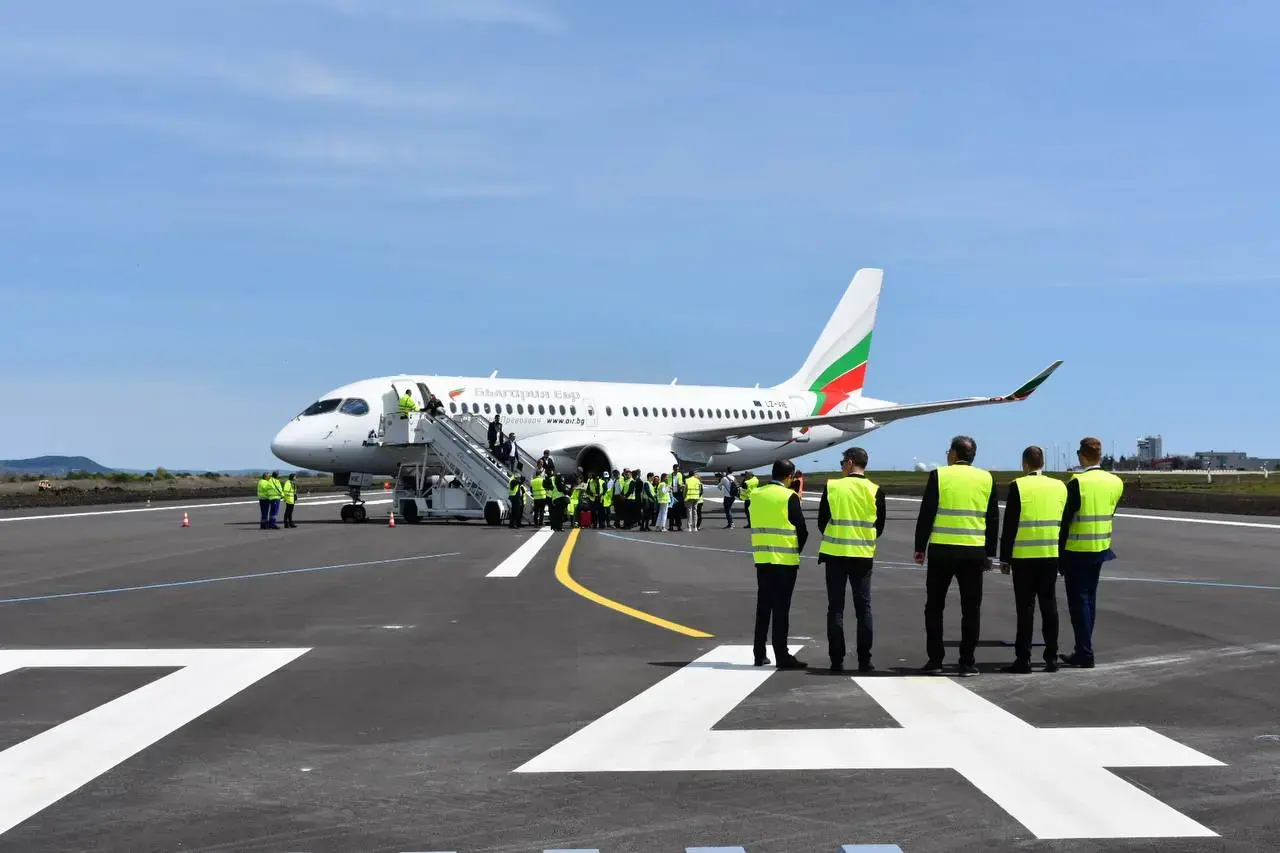
Wizz Air's Bulgarian business has grown by more than 30% this year, and the airline is offering nearly 5m seats, chief executive Jozsef Varadi told BTA.
Varadi visited Sofia, where he toured the company's base and met the management of Vasil Levski airport. Wizz Air has operated in Bulgaria for 21 years, and its planes fly from four Bulgarian airports: Sofia, Varna, Burgas and Plovdiv.
Eleven aircraft are based in Bulgaria, eight in Sofia and three in Varna. The company has about 500 staff in the country.
Varadi said Bulgaria is a strategic market for Wizz Air. He said the local team is solid, committed and hard-working, and has done a lot to help the company grow. Its growth matters for the Bulgarian economy and for a range of industries, he said, and Wizz Air wants to remain a driver of business and jobs in Bulgaria.
Part of the capacity is seasonal, Varadi explained. Some planes fly only in summer and will return to Bulgaria next summer. In the coming years the airline plans more aircraft and more seats, new routes and new jobs in Bulgaria.
No new routes have been announced for now, but the airline is always looking for routes and destinations from Bulgaria. Flights to Egypt began recently.
Next year Wizz Air will move its Sofia operations from Terminal 1 to Terminal 2. Varadi called this a positive step, because there will be more space and better service. Relations with the airport are good, he added, and its management has always supported the company's growth and met its needs.
Bulgarian passengers pick destinations by the purpose of the trip. For holidays, tourists and families head to southern Europe, and there is also interest in Egypt. Some fly for work, and some are students abroad, for whom cheap tickets make travel around Europe easier.
Higher fuel costs end up in ticket prices, Varadi said. An airline that pays twice as much for fuel cannot avoid passing that on in fares. But Wizz Air agreed its fuel price in advance through hedging contracts, so it now pays about half the current market price.
The company's new aircraft burn about 20% less fuel than the previous generation. Thanks to them and to hedging, Wizz Air did not raise fares in the first six months of the conflict that pushed up fuel prices, and is in a relatively better position than its rivals, Varadi said. When the contracts run out, dearer fuel will hit the whole sector and the pressure for higher fares will grow, he warned.
In July, EU institutions announced a deal on new rules on passenger rights. They are expected to take effect in mid-2027. Hand luggage will be included in the ticket price by default, and children up to 14 will sit next to their parents at no extra charge. A spelling mistake in the name on a ticket will be fixed free of charge, and printed boarding passes will also be free.
Compensation of €250 to €600 for a delay of at least three hours, or for some cancelled flights, stays in place, and passengers will have nine months to claim it. The airline will have to tell them of their rights in writing within 96 hours of the end of the journey.
"I would not expect big changes," Varadi told BTA, speaking about the effect of the new rules on the company. He said everything will depend on how they are applied. Wizz Air supports fair and balanced rules that can be followed in practice and that take account of what airlines can do in their daily work.
As an example, Varadi gave hand luggage: if all passengers bring a lot of items on board, they physically will not fit above and under the seats.
The company is investing in service, accuracy and keeping to its timetable, he said. Varadi said Wizz Air has the fewest cancelled flights in Europe and cancels mainly for reasons beyond its control, such as strikes and bad weather.


Comments (1)
5 милиона места! Уау, доста са! 😡