
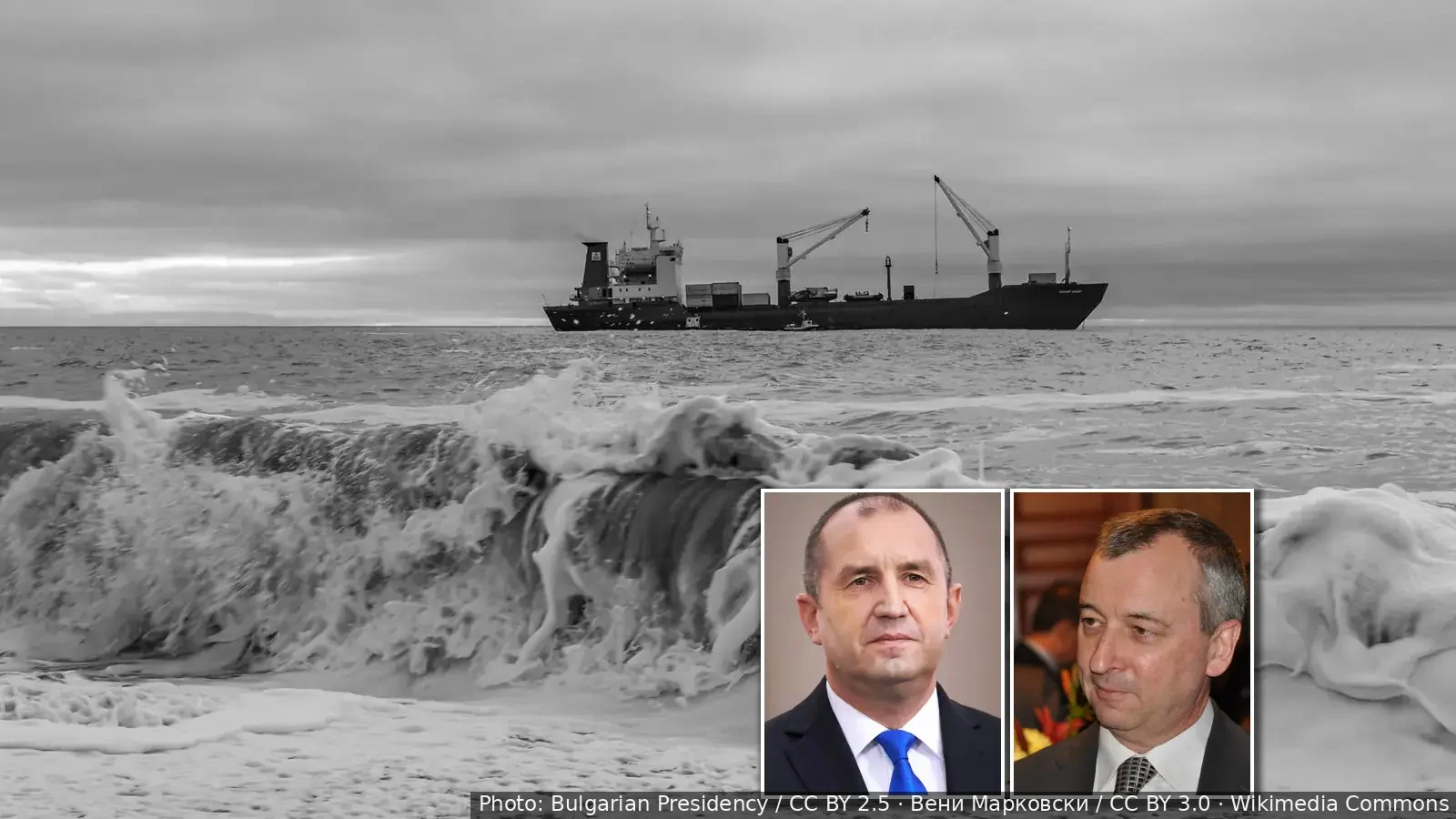
Security in the Black Sea after drone attacks and strikes on merchant ships was the topic of a conference in Sofia called "Black Sea 2026: Closer to the Middle East". Prime minister Rumen Radev took part. The Institute for Economics and International Relations and the Friedrich Ebert Foundation – Bulgaria organised it.
Jacques Paparo of the Friedrich Ebert Foundation opened the conference. He said Bulgaria's location puts it at the centre of many regional processes, and that it has serious opportunities but also faces dangers. Paparo said military, economic and geopolitical processes meet in the Black Sea, and the prospects of all countries in the region depend on them. That is why international law and trust between states matter, he added.
"The war has reached the Black Sea," said Lyubomir Kyuchukov, director of the Institute for Economics and International Relations. He believes the drone attacks at sea are not a chance incident.
Georgi Pirinski, chairman of the Solidary Society Foundation, cited a foreign publication from 25 October. It said more than 570 ships have been hit in the Black Sea since the start of the year and more than 40 seamen have died. The sea is now the deadliest for merchant shipping, it said.
The same publication said responsibility for the rise in strikes is shared. Pirinski spoke of shared security in the Black Sea, where states must rely on diplomacy.
Biserka Benisheva, director for European affairs at PanEuropa Bulgaria, said the fighting has crossed two red lines: it has spread beyond the territory of the warring sides and hit merchant ships. This breaks international maritime law, she said. The strikes affect energy supplies, insurance costs, the wheat trade and global food security. Benisheva said Turkey and the EU are making diplomatic efforts to make the sea safer, but she believes a full framework of rules is needed for the safety of merchant shipping.
Assoc. Prof. Milena Angelova, executive deputy chair of the Association of Industrial Capital in Bulgaria, said the effects of the war on the economy and on people are getting worse. Efforts to work together in the Black Sea region have not yet brought the results people want, she said. She also warned of the risk of an environmental crisis because of the dangerous cargo ships carry in the Black Sea. Angelova said organised civil society can help people find their way through growing disinformation by making its views public.
Without a strategy with clear goals there will be no results, she said, and young people see less and less future in the Black Sea region.





Comments (0)
No comments yet.