
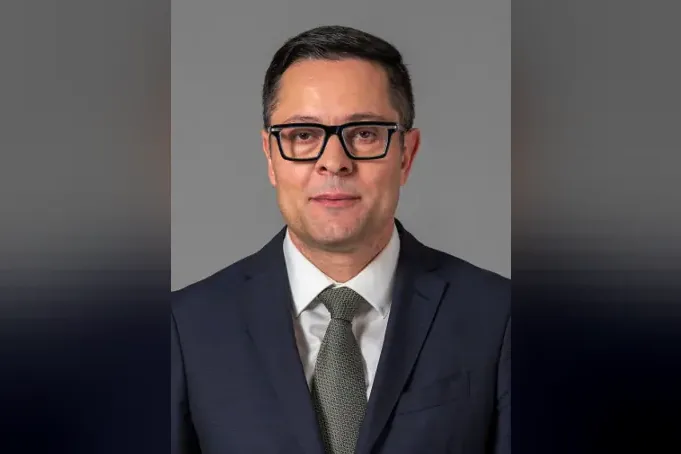
The Lukoil Neftohim refinery in Burgas is running at high capacity and its finances are not at risk, deputy prime minister and economy minister Alexander Pulev told Bulgarian National Television. Bulgaria's own fuel supply is secure, he said.
Parliament has lifted the temporary ban on fuel exports, allowing surplus fuel to be sold abroad once demand from Bulgarian citizens and businesses is met. The latest official figures show tens of thousands of tons of diesel in stock that can be sold abroad without putting the domestic market at risk.
Pulev explained that the plant runs best at high capacity, and crude oil is now bought on more competitive terms. That is where the diesel surplus comes from. If there's no market for it, working capital gets tied up and the company's finances suffer. Exports are not a gift to Lukoil, nor an obligation, the minister said — just a way to stop the surplus tying up cash.
His harshest words were for former special commercial manager Rumen Spetsov, over prices, financial reports and pay. Figures that reached Pulev show Spetsov's monthly salary was worth about five average Bulgarian annual salaries, and that he had also asked for an extra one-off payment. Pulev said this still needs to be confirmed in writing.
Pulev believes Spetsov's approach could not have lasted: the prices charged to customers made no economic sense for the business and kept building financial strain. In his view, that pricing policy would not have survived more than two or three months. Spetsov knew his term would be short, the minister said, so he could afford a policy his successor cannot keep going.
Pulev said the final answers on the company's accounts should come from an independent international audit, which should check whether such payments were made and on what grounds, and report its findings publicly. Spetsov was replaced in June, and the economy ministry has flagged missing or inadequate financial reports and called for a full review of Lukoil's four companies in Bulgaria.
The minister defended the current special commercial manager, Evgeni Simeonov. "Right now Mr. Evgeni Simeonov is still showing that same social commitment," Pulev said. "But he's doing it in a smart way that won't put the refinery's finances at risk." Simeonov has presented a six-month work plan, started reviewing the company's finances, and will give the Commission for Protection of Competition accounting, financial and operational data.
The competition commission has asked Lukoil Bulgaria and Lukoil Neftohim Burgas for fresh, detailed data covering May through the end of September. It is checking crude purchase prices, production costs, how costs are calculated, and how wholesale petrol and diesel prices are set. The aim is to see whether real costs match the prices charged on the Bulgarian market.
The commission stepped in back in April, and in May found a possible "price squeeze" — a gap between Lukoil's wholesale prices and its pump prices. That practice was then stopped. The commission says the gap could have put serious pressure on smaller traders, producers and importers, putting competition at risk.
Pulev called it "half a victory" that Bulgaria has the lowest fuel prices in the EU. The reason, he said, is low household spending power. Bulgaria entered the crisis with lower incomes than most other European countries, so even cheap fuel weighs on family budgets, he explained.
Annual inflation in August was 5.1%, with transport seeing the sharpest monthly rise. The government expects prices to stay under pressure from international oil prices and geopolitical uncertainty. "The whole industry worldwide is being shaken by geopolitical shocks," Pulev said. The refinery is working with changed crude supplies and blends of different oil types.
The refinery should not be used to cut prices in the short term if that puts its finances at risk, the minister said, because the fallout would later hit both the market and ordinary people harder. He believes state support should go to households and to the big companies that drive the economy at the same time, since problems in industry quickly show up in final prices.
In July the company beat its monthly plan by more than 30% — one of its strongest results in years. Pulev credited the current balance to both government action and Simeonov's work, and also criticized Boyko Borisov, his previous governments, and members of the so-called "coalition of everyone against Borisov."
An International Monetary Fund mission will be in Sofia from September 28 to October 2, meeting the government, the central bank and businesses. Pulev said he expects a "constructive and balanced view" from the mission, and believes international partners see both the problems that have built up and the chance for Bulgaria to take a more central role in European economic and financial decisions.

Comments (0)
Все още няма коментари.