
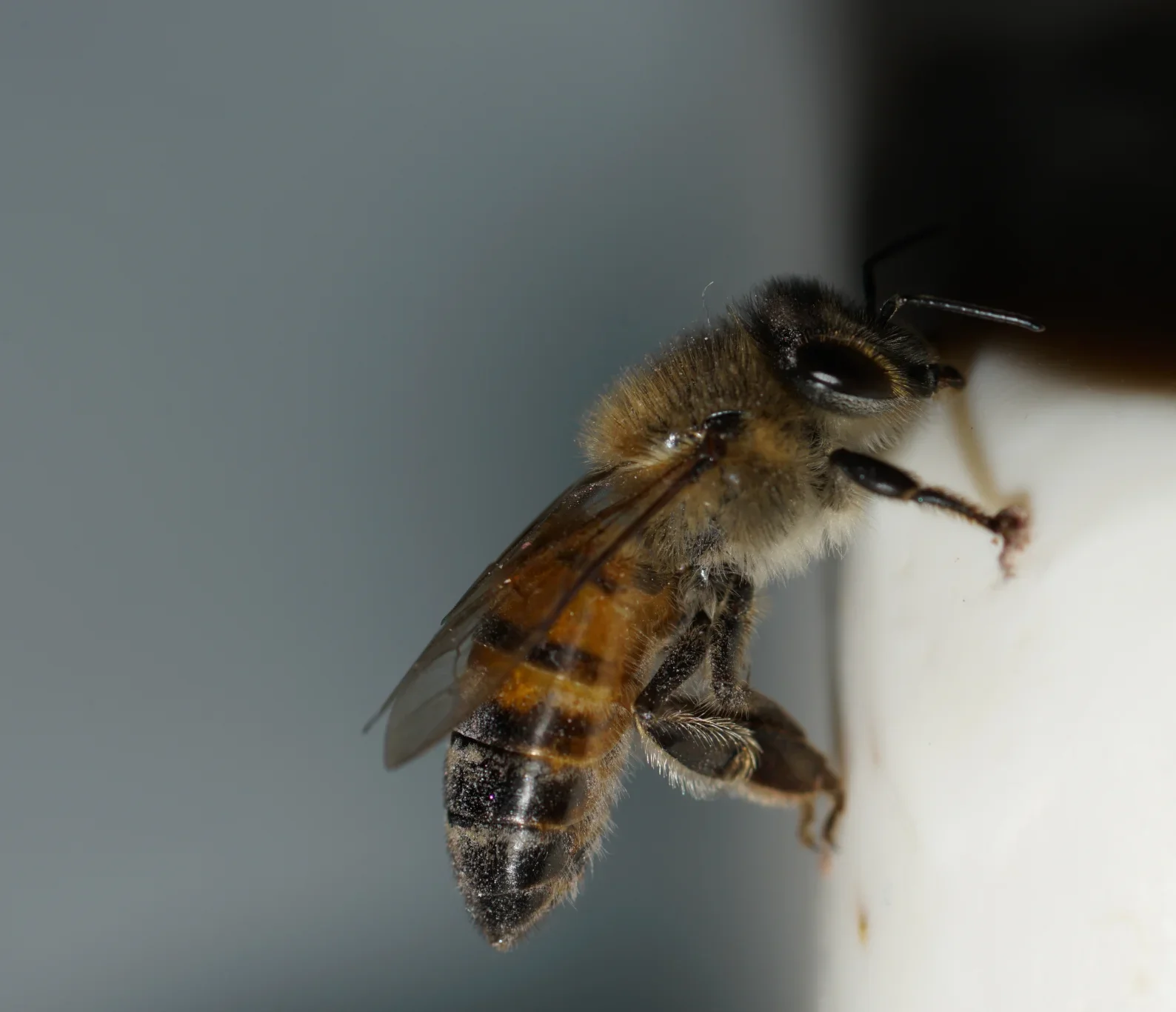
According to a study published in the journal "Nature Communications", bee species that build their nests in plant stems are at the highest short-term risk due to rising temperatures. In contrast, "ground-nesting" species are better adapted to protect themselves from extreme heat because they use the natural insulation of the soil.
What the study showed
The study was conducted by a team of evolutionary ecologists from "seven Australian universities", who assessed the heat tolerance of "95 native bee species" along the eastern continental coast of Australia – across all latitudes from north to south. There are about "1700 species of wild bees" in Australia, which use three main nesting strategies: "digging burrows in the ground", "settling in tree cavities" (such as hollows) and "nesting in thin plant stems and small twigs".
The researchers measured so-called "critical thermal maximums" – the threshold temperatures at which organisms can still survive – for species of each nesting type. It turns out that "stem-nesting" bees possess the highest absolute heat tolerance, as they are already accustomed to the hottest microenvironments, but they have practically no ability to protect themselves from further temperature increases. "Ground-nesting" bees, conversely, rely on the natural thermal insulation of the soil, which protects them from extreme surface temperatures.
"Bees that nest underground can hide from the most intense heat and therefore do not face such high temperatures as species above ground – especially those that settle in thin plant stems, almost unprotected from the external heat," explains the lead author of the study "Dr. Carmen da Silva", a research fellow at the "Pollinator Future Research Centre" at "Macquarie University".
Tropical bees are under the greatest threat
The study also highlights a clear "geographic gradient of vulnerability": "tropical bees", which live closest to the equator, are in the zone of greatest risk. Senior author "Dr. Vanessa Kellermann" from "La Trobe University" emphasizes that species with the highest heat tolerance are not necessarily safe at all. "Many of them live in extremely hot conditions anyway," she explains, which means that additional temperature rises can easily push them beyond the limits of their physiological tolerance.
The results have direct implications for conservation planning. Wild bees support ecosystems around the world through "pollination" and play a key role in "agricultural production". Tropical species are irreplaceable pollinators of crops such as "macadamia", "avocado", "mango" and "lychee", which means their loss would have serious consequences for both nature and the economy.
A practical tool for targeted protection
Collaborator and co-author of the study "Dr. Ros Gloag" from the "University of Sydney" emphasizes how little we still know about most species of wild bees. "This research helps us realize that to identify the main threats to wild bee populations, we need to better understand the specifics of their behavior," she says.
By establishing a link between an "easily observable trait" – for example "nesting behavior" – and "vulnerability to climate change", the study offers ecologists a practical framework for identifying endangered species without the need to test them all individually. This makes it possible to prioritize the protection of bees that are most at risk from warming and to plan targeted conservation measures for both pollinators and the ecosystems that depend on them.





Comments (3)
Ебати, наистина ли?! Тва за пчелите в стъбла е малко откачено... Ама верно,
Бах мамата! Сериозно ли готвят пчелите в стъбла?! 😳 Аз си мислех, че са само по кошерите... И то да са най-застрашени от жегата? Яко е, ама и малко плашещо. Дано намерят начин да ги опазят, все пак пчелите са важни
Бре, хора, сериозно ли?! Това изследване наистина ли го казва? Пчели в стъбла... Кой би си помислил! 😳 Ама нали знаете, климатичните промени ги има и явно засягат всякакви създания, дори и най-малките. Как ще се справят тези пчилки