
The "Nancy Grace Roman" Space Telescope is entering the final phase of preparation for flight later this summer, after engineers completed the final inspection of the primary mirror. Thus, one of NASA's most ambitious astrophysics missions is approaching its launch.
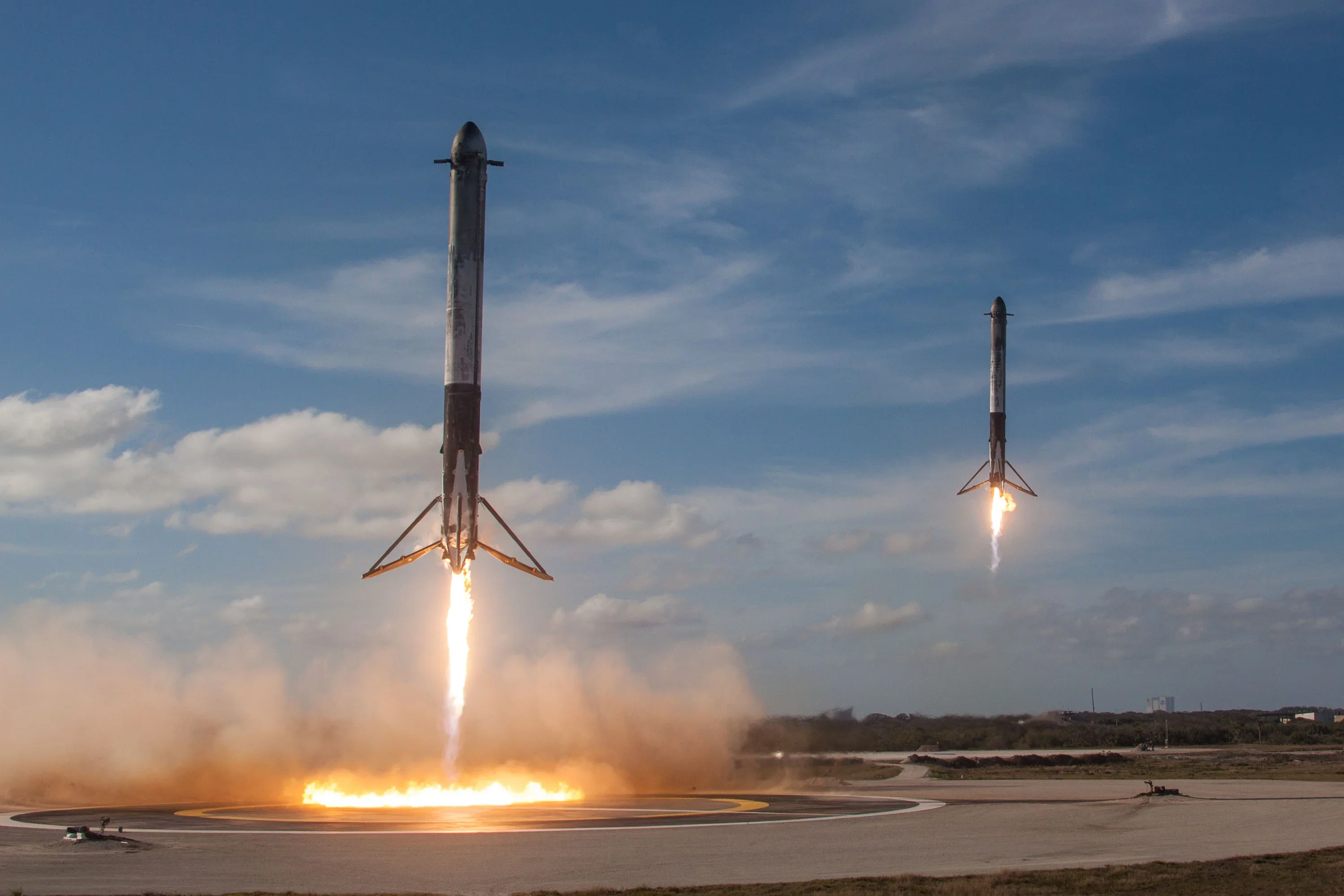
The observatory's launch is planned for no earlier than August 30 aboard a "SpaceX Falcon Heavy" rocket from Pad 39A at the Kennedy Space Center in Florida. This implies a launch earlier than NASA's commitment to have the telescope in orbit no later than May 2027. Previously, the agency had stated it expected a flight "no earlier than early September 2026."
Primary mirror passes final inspection
On May 20 and 21, engineers from NASA's Goddard Space Flight Center in Greenbelt, Maryland, confirmed that during testing on the 2.4-meter diameter primary mirror, not a single speck of dust had entered, and that the coating and alignment were free of defects.
This inspection is the last time humans will touch the telescope's main light-gathering surface before its mission in space. Following the successful inspection, the "Roman" team is preparing over the coming weeks to transport the observatory to the Kennedy Space Center, where it will be integrated with the "Falcon Heavy" launch vehicle.
Wide-field partner to the "Webb" telescope
After launch, the "Roman" telescope will head to the L2 Lagrange point in the Sun-Earth system, about 1.5 million km from our planet. There, it will join the "James Webb" Space Telescope and other observatories.
The mission, with a budget of $4.3 billion, is equipped with a wide-field instrument with a 288-megapixel resolution, capable of capturing a section of the sky about 100 times larger than that of "Hubble" in a single frame. Scientists expect that during the operation, the telescope will discover approximately 100,000 exoplanets – a huge leap compared to the approximately 6,300 known so far.
Dark energy, dark matter, and cosmic "voids"
In addition to hunting for exoplanets, "Roman" will be directed toward investigating dark energy and dark matter through observations of galaxies, supernovae, and large cosmic voids. The goal is to refine how the universe expands and how the invisible components of cosmic matter are distributed.
The combination of a wide field of view and high sensitivity makes the telescope a key tool for mapping cosmic structures on unprecedented scales.
Five-year mission with potential for extension
The nominal duration of the "Roman" mission is five years, but NASA has designed the observatory with the capability for at least another five years of additional operation. Sufficient fuel is provided on board to ensure a significantly longer lifespan, similar to the "JWST," whose precise trajectory at launch provided a fuel reserve far exceeding initial expectations.
The mission is expected to begin returning scientific data approximately 90 days after launch, which means the first results from the observations could be obtained as early as the end of 2026.

Коментари (16)
Абе, август май наистина дойде... Да видим дали ще има нещо интересно. Пет години мисия – много е, ама все пак, надявам се да си 😂
Абе хора, пичове... какво значи "телескоп Роман"? К'во ще ни покаже тоя? Нали вече имаме космически телескопи – Хъбъл, Джеймс Уеб… та да видим какво ново ще изкара тоя. 30-ти август, казват… и Falcon Heavy ракета... ама то все нещо трябва да се прави, нали? 😅
Абе, сериозно? Още телескопи ли ни тряб
Абе, вее сериозно ли си мислите, че ни трябва ОЩЕ телескоп?! 30-ти август значи... ще гледаме прах по телевизора вместо да решаваме проблемите тука! Falcon Heavy… SpaceX… Аман от тия космически играчки, бе хора! Колко пари хвърляме за космоса, а тук на земята асфалт няма къде да стъпиш?!
Ами, гледам новините... все за космос нещо. То хубаво е, разбира се, наука е, напредък. Дано този "Роман" телескоп изкара нещо интересно, де. Пет години мисия – значи ще ГО правят бавно и стегнато, да не стане беля. SpaceX са добри, американците имат пари за тия работи... Европа също не е назад с технологиите. Руснаците... ами, те си имат свои занимания. Дано мир