
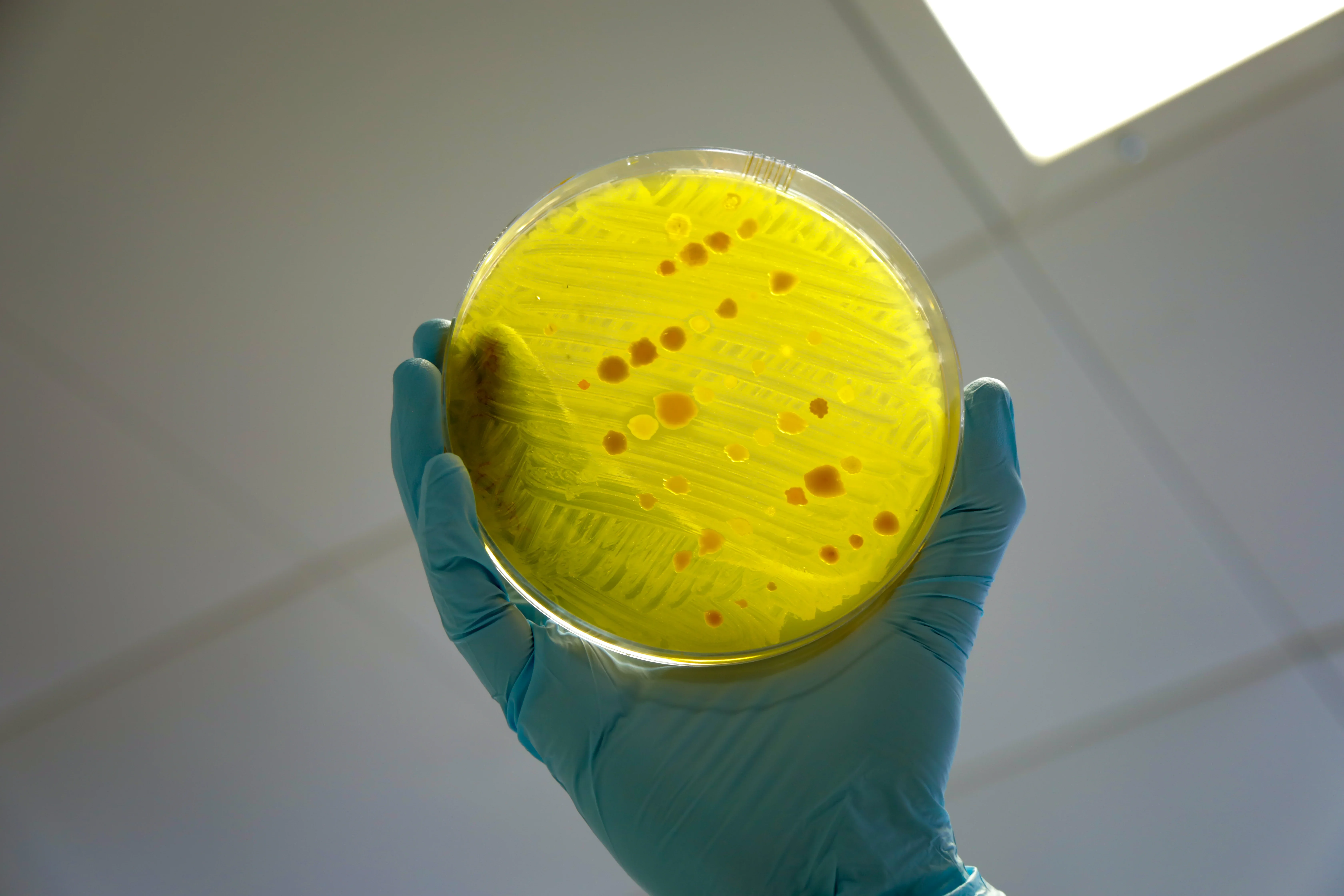
Scientists at the Picower Institute for Learning and Memory at MIT precisely identify the molecules that allow gut neurons to distinguish between beneficial and harmful bacteria, describing the chemical dialogue between microbes and the nervous system, which is likely preserved in humans as well. The results, published in the April issue of the journal "Current Biology" for 2026, provide a mechanistic basis for understanding how gut bacteria affect brain function and behavior.
Polysaccharides as bacterial signatures
The team, led by postdoctoral fellow Cassie Extrøm and Associate Professor Steven Flavell, focuses on the nematode C. elegans – a miniature transparent worm that feeds only on bacteria – to determine exactly what gut neurons "detect" when in contact with microbes. Researchers expose the worms to 20 different bacterial species, then gradually break down the bacteria into their chemical components.
Gradually, DNA, lipids, proteins and simple sugars are excluded as possible signals. It turns out that it is the polysaccharides – complex sugar structures that cover the surface of the bacteria – that activate the key gut neuron NSM. In gram-positive bacteria, peptidoglycan – a major element of their cell wall – is a particularly strong activator. When NSM recognizes these molecules through acid-sensitive ion channels (ASIC), it releases serotonin, which accelerates the worm's feeding and slows its movement so that it stays in place and continues to feed.
When ASIC channels are genetically switched off, both the neuronal response and the observed behavioral changes disappear, which confirms the central role of these channels in the chain of signaling for the presence of bacteria to the shaping of behavior.
Built-in danger signal
The team also discovered a kind of molecular "red flag". The pathogen Serratia marcescens exists in two forms – pigmented and unpigmented. The pigmented strains, which synthesize a compound called prodigiosin, turn out to be significantly more deadly to the worms. In the presence of prodigiosin, the NSM neuron is not activated and the worms stop feeding.
When prodigiosin is added to bacteria that generally attract worms, the typical NSM response is suppressed – this indicates that the animal has developed a chemical system for early warning against a specific molecular danger signal.
What this means for human health
"In our body, there are more bacterial cells than the body's own cells. More and more data show that this has a profound effect on human health," says Flavell. According to him, the ASIC channels described in this study are analogous to the channels found in human neurons, which suggests that similar signaling pathways between the gut and the brain may be at work in different species.
The gut microbiome in humans is associated with depression and Parkinson's disease, but the specific mechanisms behind these links are still poorly understood. Flavell emphasizes that identifying precise molecular mechanisms could help develop therapeutic drugs or supplements that influence the interaction between bacteria and the nervous system.
"There's no reason to think that these pathways are limited to C. elegans," he notes. "The molecular participants we identified are found in many species, including mammals."




Comments (11)
Ех, MIT... пак нещо намират! Добре де, ама к'во ще стане от това? Ще направят ли някакви хапчета, които да си оправяме стомаха и настроението? Или
Ебаси, яко! MIT винаги намират нещо ново, нали? 😂 Сега пък чревните неврони и бактерии... Странно е как всичко в тялото ни си говори, ама все пак – ако разберат повече за това как точно става, може да се открият нови терапии за различни неща. Да видим какво ще излезе оттам, важното е да има развитие! 👍🏻
Евала за MIT! Винаги са няк'ва стъпка напред, браво! Да видим дали ще 🤔
Е, доста любопитно откритие. Винаги съм си мислел, че има някаква връзка между стомаха и мозъка, но
Абе пичове, сериозно ли?! MIT пак са на върха! Чревните неврони "надушват" бактерии... Каква е тая работа бе?! 🤯 Значи и стомаха ни има нщо общо с главата, а? Да не 🤦♂️