
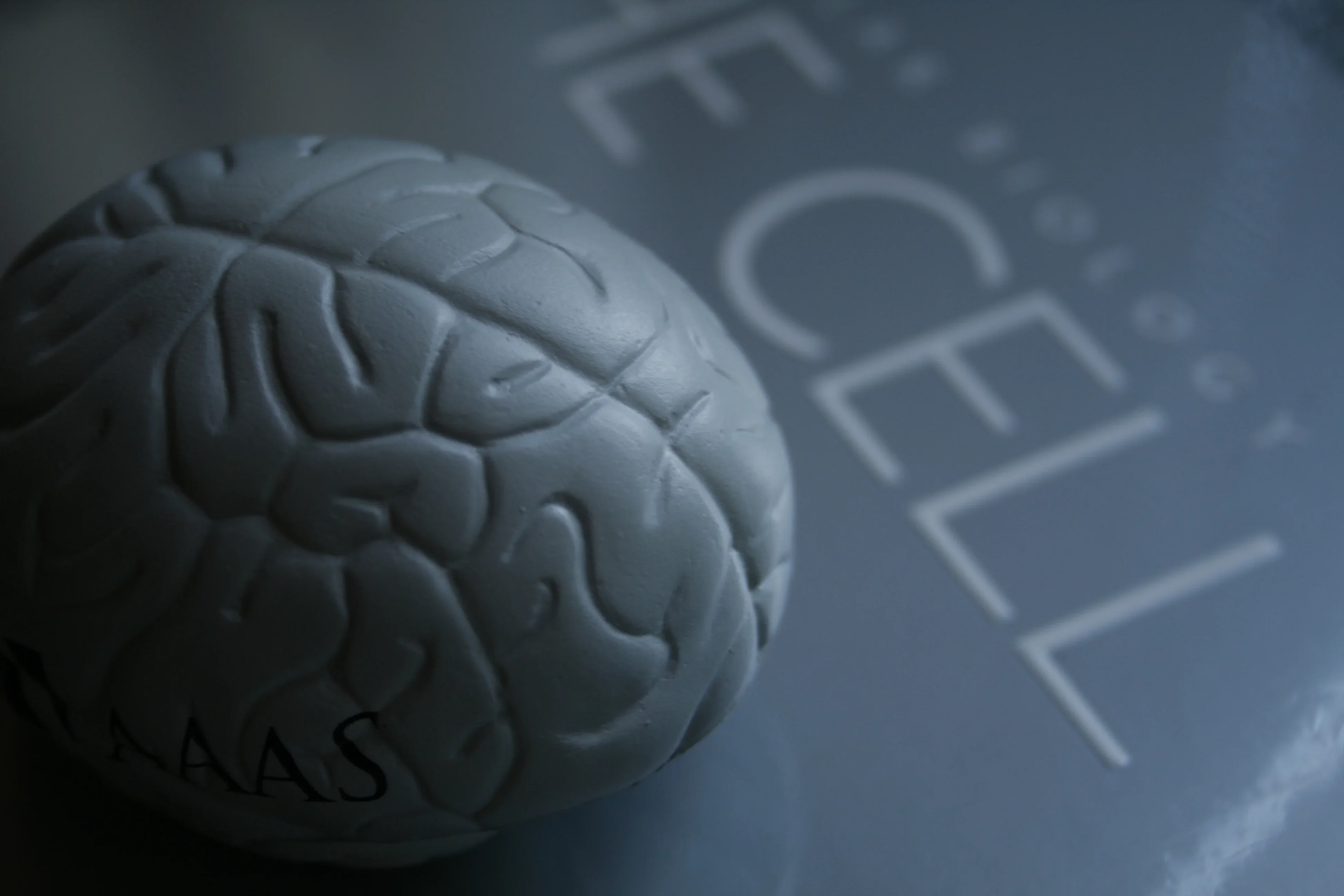
Scientists from "NYU Langone Health" reported that they have discovered a small subset of neurons in the hippocampus that act as a biological "switch," allowing the brain to form new memories without overwriting existing ones. The study results were published in the journal "Nature" on May 13, 2026, and offer a new explanation for one of the oldest mysteries in neuroscience – how the brain manages to be both plastic and stable.
A cell core that "multiplexes" memory
The research shows that about 25% of neurons in the "CA1" region of the hippocampus act as common hub points. They receive fast flows of information from the adjacent "CA3" region and transmit them to the retrosplenial cortex – a part of the brain involved in spatial navigation and memory recall.
A characteristic feature of these "hub neurons" is that they use different activation patterns for incoming and outgoing signals, thereby forming separate communication channels within the same structure – similar to an electronic switch that routes several conversations along different lines without mixing them.
The brain does not look for new cells for every memory
"Instead of triggering new neurons for every new experience, the brain alters the activation patterns of a stable cell core, effectively organizing information and protecting already encoded memories," explains Dr. "Joaquin Gonzalez," a postdoctoral fellow and one of the lead authors of the study.
This approach allows the same group of cells to serve multiple memories, maintaining a balance between memory flexibility and the stability of already accumulated information.
Active during sleep as well
The researchers also found that these same hub neurons in "CA1" remain active during sleep, when they participate in so-called "sharp-wave ripples" – brief bursts of neural activity long associated with memory consolidation.
Because the same group of cells is responsible for both daytime information processing and nighttime replay, the signal transmission channel from the hippocampus to the cortex remains open and supports the strengthening of long-term memories.
Experiment with mice and high-density electrodes
The experiment involved six mice trained to navigate a linear track. While the animals move, high-density electrode arrays simultaneously record the activity of hundreds of individual neurons in several connected brain regions.
This approach allows scientists to track in real time how signals move between the "CA3," "CA1," and the retrosplenial cortex and how the specific subgroup of neurons acts as a "distribution center" for memory.
Implications for understanding memory disorders
Dr. "Gyorgy Buzsáki," one of the lead authors of the study, suggests that the discovered mechanisms could shed light on the early stages of memory impairment in neurodegenerative diseases, such as Alzheimer's disease.
"The 'memory switch' we discovered in the hippocampus may provide key insights for understanding the early mechanisms of memory loss in such diseases," he states, emphasizing that dysfunction in this system could disrupt both the formation and preservation of memories.
Connection to artificial intelligence and "catastrophic forgetting"
The authors note that the results also have potential significance for the development of artificial intelligence. Existing systems often suffer from so-called "catastrophic forgetting" – the loss of previously learned information when training on new tasks.
Understanding how the brain preserves old memories while simultaneously forming new ones could serve as a basis for creating more resilient AI architectures that "multiplex" knowledge in a way similar to this biological "memory switch."



Comments (10)
Абе, хора, вие си го представяте ли?! 😮 Този мозък е машина, наистина! Аз съм шофьор на такси, все гледам хората какво правят, к'во говорят... И да ти кажа, много пъти съм се замислял как помним едно и забравяме друго. Сега разбирам, че имало някаква причина!
ааа, значи досега мозъкът ни е бил като windows! 🤣 винаги нщо се бъгва или трябва да преинсталира
Абе... доста яко откритие, наистина. За деменциите ще е голяма работа, ако успеят да се използват тези знания. Дано не стане като с други "чудодейни" лекарства после – реклами, надежди и накрая нищо
Евала на американските колеги! Наистина яко откритие, може би наистина нещо полезно за хората с болежките тия... дано успеят да го развият добре, а не само да
Ааа, пак американци нещо са измислили... да видим кол