
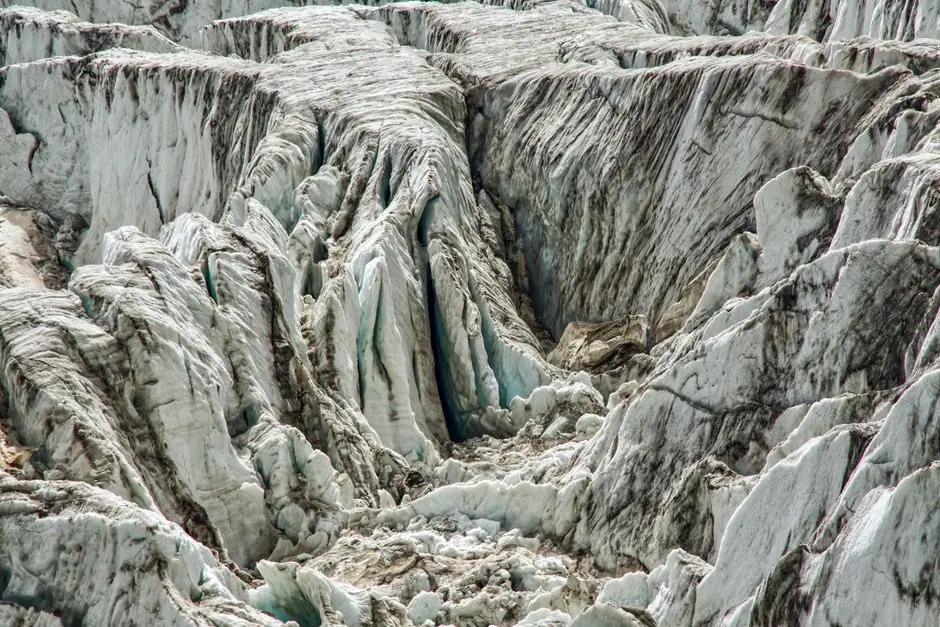
The cryosphere – ice, snow and frozen ground – has moved outside the "safe operating space" that kept it stable for the past 11,700 years, a team of 31 authors writes in a paper in Science on 12 November 2026. The scientists propose adding it to the planetary boundaries framework. But this is the authors' proposal, not a decision by any institution.
The lead author is Bo Su of the Stockholm Resilience Centre and Beijing Normal University. The paper comes out during the COP31 conference in Antalya. "The cryosphere has already gone beyond its planetary safe space," Su says.
The boundaries and the Holocene
The idea of planetary boundaries comes from a 2009 paper by Johan Rockström and colleagues. It says each major part of the Earth system has a range in which societies have lived in relative comfort, known as the safe operating space. If the indicators leave that range, the risk to people and nature grows. But this does not mean everything collapses at once.
The yardstick is the Holocene – the past 11,700 years, which have been fairly stable and easy to live in. The boundaries are set against it. The authors themselves write that nobody knows whether modern societies can work outside these conditions. The team tracks four indicators: the volume of land ice, the area of sea ice, the area of snow cover and the temperature of permafrost.
Measured values and forecast
The values differ in type and in time period, so they cannot be fully compared.
| Indicator | Boundary | Value |
|---|---|---|
| Land ice | no less than 27.48m gigatonnes | 27.63m Gt in 2018 |
| Sea ice (annual average area) | no less than 19.8m sq km | 16.5m sq km in 2024 |
| Snow cover (annual average area) | no less than 38.8m sq km | 35.9m sq km in 2024 |
| Permafrost temperature | -6.6°C | -6.0 to -5.3°C for 2000–2014 |
Source: ScienceAlert, based on the paper in Science
Sea ice and snow are below their boundaries. Permafrost is warmer than its boundary, but that figure comes from a climate model and covers 2000–2014, not the latest year. The snow data come from the ERA5-Land reanalysis, a model fed with observations rather than a direct measurement.
Land ice in 2018 was slightly above its boundary. The authors count it as crossed because, by their calculation, emissions already released will cause the loss of more than 0.64m gigatonnes more. That would put it below 27.48. So for this indicator, the finding is a forecast, not a measured breach of the boundary.
Descriptions of the result differ. The Stockholm centre says the decline in all four indicators has reached dangerous levels. Another account says three indicators have been crossed and the loss in the fourth is already locked in. A third says some indicators have already moved away from Holocene values, while other changes will be hard to avoid.
The main cause, the authors say, is warming from human activity. In some regions soot, industry and construction add to it. They also warn of feedback loops: the less ice there is, the faster the warming, and that melts more ice. The risk is to fresh water supplies, coasts and low-lying areas. The study does not predict a specific disaster.
The framework is a scientific tool. It is not a legal limit, it does not mean everything will melt at the same speed, and it does not forecast a new global temperature.
The authors want the boundary to serve as a guide for safety targets on greenhouse gases and soot, and for less local pressure. The UN has a Decade of Action for Cryospheric Sciences, running from 2025 to 2034.


Comments (0)
No comments yet.