
More and more people living in blocks of flats describe the same situation: they are not cooking anything, but the kitchen smells of foreign food, cigarette smoke or frying. Sometimes the aroma is so strong that it carries over to the corridor and even into the bedroom. Instead of a home with the "aroma of coffee", they are greeted in the morning by the smell of the neighbor's pan. Sounds familiar? At the heart of this problem is almost always the block's common chimney and the way the absorbents are connected to it.
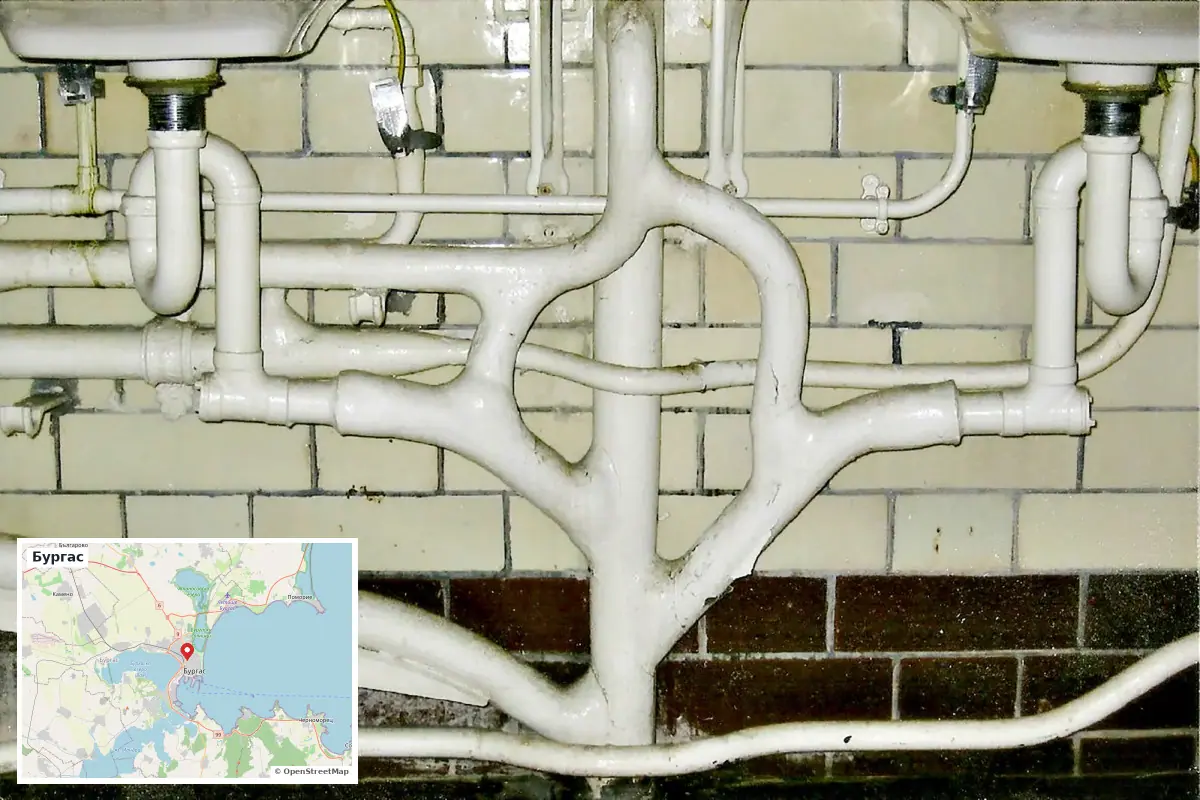
In most residential buildings, ventilation is organized through common vertical shafts through which air is removed from kitchens and sanitary facilities. In old blocks, the system is often designed for passive ventilation - without thinking about modern powerful absorbents. In new construction, compromises are often made during construction, and some apartments even "modify" the channels according to their own repair. The result is the same: different dwellings turn out to be connected to the same chimney, which turns into a common path for air and odors.
But why do the smells go back? There are several reasons and they are often combined. A classic mistake is to connect the absorbent directly to the common chimney without any check valve. When a neighbor turns on a strong extractor hood, its motor "pushes" the air into the shaft under pressure. This air seeks an exit and finds it most easily where the system is weakest - for example, in an apartment with an old absorbent, with a corrugated pipe inserted into the opening, or directly with an open grille. Clogged or narrowed sections, sealed openings and unprofessional repairs further worsen the situation.
In practice, when the neighbor turns on the absorbent, a reverse flow occurs in your kitchen. Instead of the air from your home going out, foreign air returns through the shaft. That is why you often feel smells precisely when you are not cooking - the system is "filled" by someone else. Opening the window only helps partially: it dilutes the air, but does not remove the reason for the smells to enter back through the ventilation.
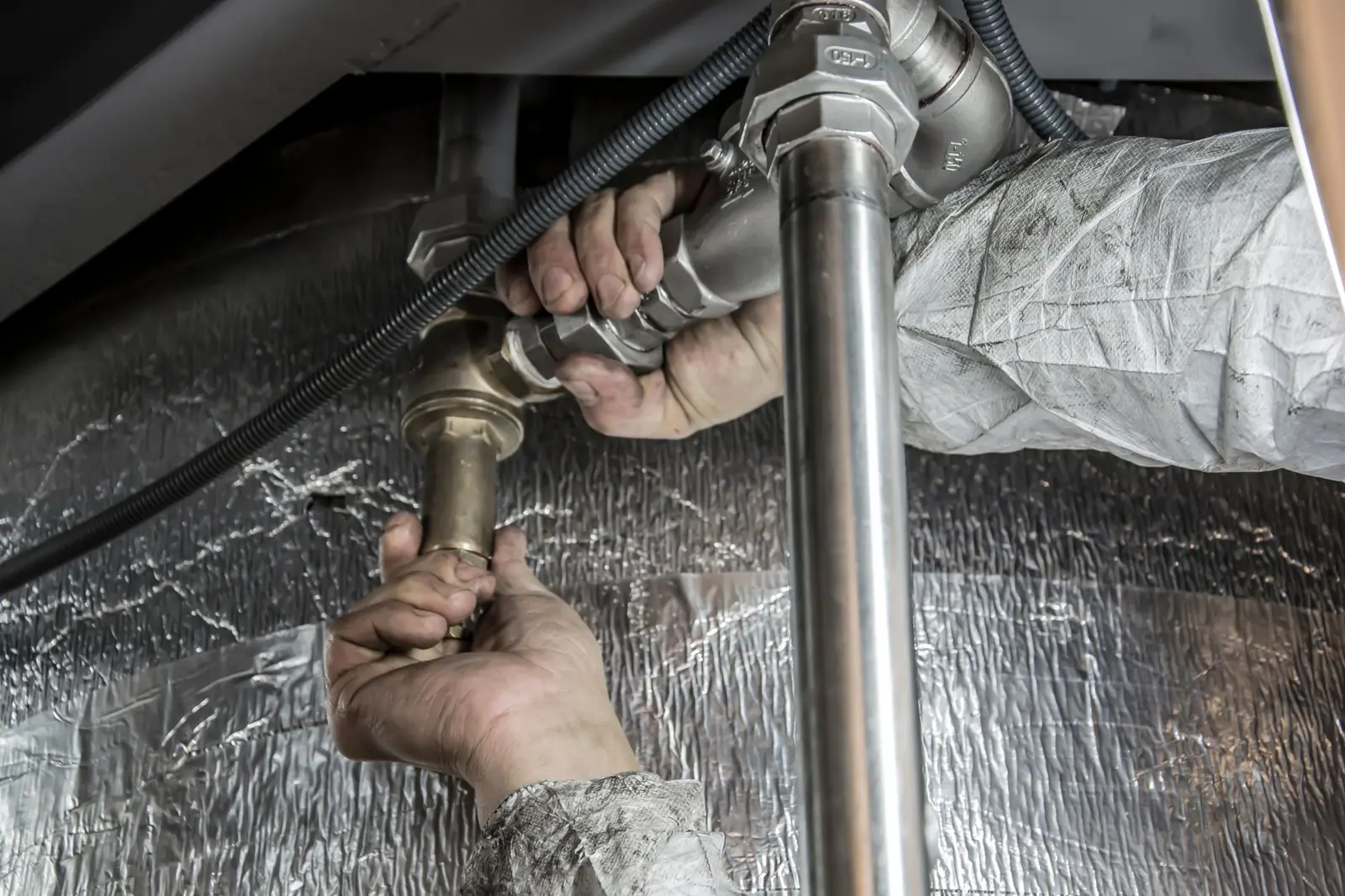
Here comes the check valve - a small but key element in the whole chain. It is a mechanism that allows air to pass in only one direction: from your kitchen to the shaft. When the absorbent is not working, the valve is closed and does not allow air from the chimney to return. When you turn on the extractor hood, the pressure opens the valve and pushes the air out. Thus, the path of odors between neighboring apartments is cut off and your kitchen remains protected, even if others on the vertical have more powerful motors or improperly connected appliances. Recently, there are valves on the market where closing is ensured by a magnetic mechanism, which guarantees a tight fit and completely hermetic sealing - unlike the classic lamellar valves, which often allow air to pass even in a closed position.
What can you really do at home? The first step is to check how your absorbent is connected. Is there a solid connection to the outlet or just a corrugated pipe tucked into the opening? Is there a visible valve and does it close tightly? Do you hear noise from the shaft when the neighbors cook, even when the extractor hood is off? If the answer is "yes", your system probably does not have sufficient protection against backflow.
In the Bulgarian market, there are already solutions created specifically for this problem - patented hermetic check valves with magnetic closure, which are mounted directly on the opening to the shaft and do not require complex modifications. Detailed information on the principle of operation, dimensions and installation can be found on the official website of Klapa.bg – the Bulgarian manufacturer of the patented hermetic valve There, the manufacturer explains why standard "lamellar" valves are often not sufficient and how a well-sealed hermetic valve with magnetic retention can stop the smells from neighbors even at the entrance to your air duct.
If you are wondering how much such a solution works in real homes, it is useful to see the experience of people who have already gone this way. Over 7,000 Bulgarian households have already installed a valve from Klapa.bg. In the page of Klapa.bg on Facebook video demonstrations, first-person explanations and user comments are published, sharing how the air at home has changed after installation. This way you can more easily assess whether such an investment makes sense in your case.
In the end, clean air in the home should not be a luxury or a compromise with neighborhood habits. The block's common chimney cannot disappear, but we can stop leaving it "open" to our own kitchen. A small technical change - a well-chosen check valve - often turns out to be the difference between a home that smells of your cooking and a home where the whole cooperative breathes daily.


Коментари (14)
и кво сега? всеки да си слага клапи ли? и това ли е решението
Абе хора, четох статията и наистина е проблем! Не съм очаквал да го прочета днес, ама явно е често срещано. То верно, хубаво е да се живее в блок с комшийство, ама чак въздуха да ни "подправят" – малко прекалено, нали?
Пич, сериозно ли? Тва е голям проблем, наистина! Дай да видим какви клапи има и к
Абе, я кажи - има ли шанс за евтини клапи някъ
Ех, пак някой проблем... Сериозно ли няма нормални решения за тая работа? Нали сме в ЕС, трябва да има технологии, ама все нещо се опъва. Дано успеят да намерят бързо някакво решение, че 😏