
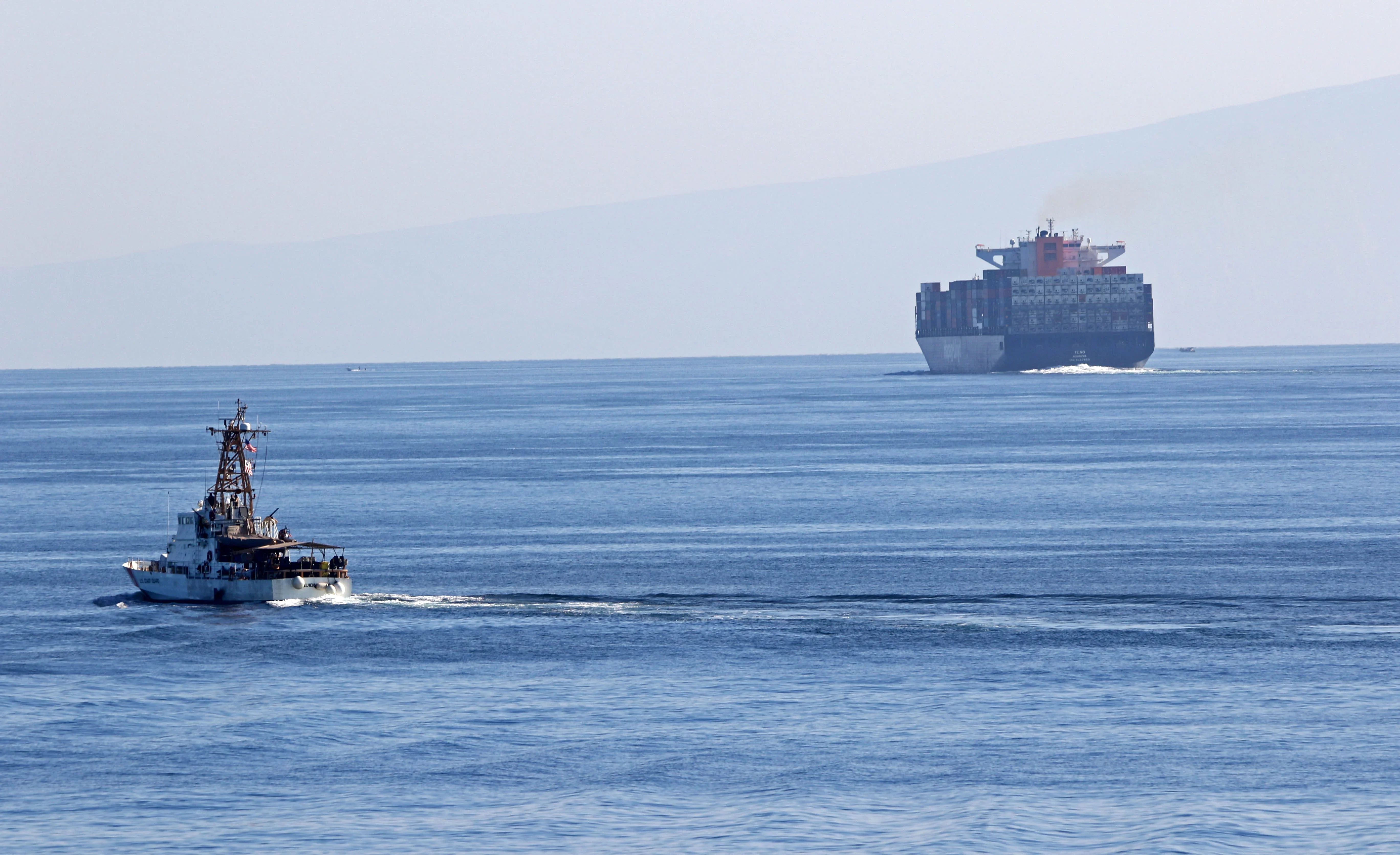
Iranian authorities have allowed 15 merchant ships to pass through the Strait of Hormuz in the last 24 hours - the largest registered traffic for a day since Tehran imposed a de facto blockade on the strategic maritime corridor after the start of the war in 2026. According to Iranian state media and maritime monitoring data, all vessels have received prior permission from the Iranian authorities, which underlines that Iran continues to control access to the strait on a permit basis, rather than opening it freely.
From almost zero traffic to "record" 15 ships
The Strait of Hormuz, through which over 130–150 ships passed daily in peacetime, was practically paralyzed after a series of US and Israeli strikes against Iran at the end of February 2026 and the subsequent threats from the Revolutionary Guard Corps that any ship attempting to pass would be attacked. In the first days after the escalation, traffic fell by over 70%, and at the beginning of March, shipping almost stopped, with dozens of attacked or damaged vessels and hundreds of ships anchored outside the strait.
Against this background, the passage of 15 ships within a day seems modest on an absolute background, but it is a record since the beginning of the crisis and a signal of a gradual transition from a total to a "selective" blockade. Maritime analysts note that in previous days, only a few AIS-active ships passed through the strait daily, often under special routes near the Iranian coast and after direct coordination with Tehran.
Which ships and whose flags pass through Tehran's "filter"
According to available data, the predominant part of the 15 vessels are tankers and cargo ships, related to countries that Iran defines as "friendly" or "neutral" – including China, Russia, Iraq, Pakistan and in certain cases Turkey and India. Some of the ships carry Iranian oil or petroleum products, others – goods related to trade with these countries, but there are no vessels with a direct connection with the US, Israel or Western allies.
Since the beginning of the crisis, Tehran has gradually built a system of exceptions: it was initially announced that only Chinese ships would be allowed through the strait, then the list was expanded with several more countries that do not participate in the sanctions pressure against Iran. Permissions are given after a preliminary application, diplomatic negotiations and in some cases – against direct payments for "ensuring a safe corridor", sources from the industry claim.
"Selective blockade": how Iran turned Hormuz into a tool for pressure
Formally, Iran has not declared a complete legal blockade of the Strait of Hormuz, but in practice it applies the so-called "selective blockade" – the strait remains physically passable, but passage is limited to ships that receive a green light from Tehran. In parallel with this, through radio messages and demonstrative attacks against "undesirable" ships, the Revolutionary Guard Corps managed to intimidate a significant part of the owners and insurers, so that they themselves avoid the area.
In recent weeks, Iran has further consolidated control over traffic by creating a permit route near Larak Island - essentially a narrow corridor through which "approved" ships can pass under surveillance and sometimes under escort. Yesterday's 15 ships passed through this corridor, which shows that Iran prefers to "dose" the restoration of traffic without giving up its lever of pressure on global markets.
Impact on energy markets: relief or cosmetic change?
Oil markets are sensitive to any signal of change in traffic through Hormuz, through which about one-fifth of the world's crude oil exports pass under normal conditions. The record, but still very limited traffic of 15 ships a day was met more as a sign of a potential unloading of tension than as a real solution to the problem - oil prices stabilized slightly, but remained at increased levels compared to the period before the crisis.
Experts emphasize that even doubling or tripling this daily number will not return the system to normal: current volumes are about 90–95% below the average before the conflict. In addition, a large part of the ships that receive permission are directly or indirectly related to Iran and its partners, while supplies to Western and some Asian markets remain severely limited. This means that the risk of new price jumps remains, especially in the event of new incidents in the strait.
Hundreds of ships in the "waiting room" of the war
While a small number of vessels get the green light, thousands of sailors and hundreds of ships continue to wait. International organizations and maritime analysts estimate that about 2,000 merchant ships are blocked in the wider area around Hormuz, of which about 400 are in the Gulf of Oman, waiting for the situation to normalize. Some of the tankers have turned off their transponders to avoid attracting attention, but this only complicates the picture of real traffic.
At the same time, shipowners, insurers and crews are subjected to strong psychological and financial pressure – the costs of downtime, redirection and additional insurance premiums are rising, and the uncertainty about when and whether they will be able to pass through the strait remains great. For many companies, it is becoming increasingly likely to seek alternative routes, including the longer route around Africa, despite the higher costs.
Political message: "the strait is open, but not for our enemies"
Iranian officials are trying to present the current regime not as a blockade, but as "the right to sovereign control". The Foreign Minister and representatives of the Revolutionary Guard repeatedly repeat the thesis that "the strait remains open, but not for our opponents" – that is, for ships associated with the US, Israel and their Western allies. The passage of a record number of ships in a day fits into this line: Iran shows that it can release traffic "drop by drop" when it is in its interest.
According to analysts, this is part of a broader strategy: Tehran uses Hormuz as a strong trump card in negotiations – both with Washington and its allies, and with partners such as China and Russia, who have a direct interest in safe traffic and stable energy prices. The selective opening of the strait for "friendly" ships both demonstrates strength and sends a message that Iran can reward supporting countries.
What follows: towards normalization or towards a new spiral of tension?
The record number of 15 ships a day through Hormuz is an important signal, but not a guarantee of sustainable de-escalation. Much depends on whether this flow will continue to grow in the coming days and weeks or will remain an instrument for tactical political gestures. New provocations are also possible – attacks on ships associated with "undesirable" countries, or a sudden tightening of the filter if tensions in the war rise again.
For the world economy, the stakes are clear: the Strait of Hormuz remains one of the most important "bottlenecks" for oil and gas. As long as traffic is in a single-digit percentage of normal and depends on the decisions of one player, the risk of new shocks in prices and supply chains remains high. Today's 15 ships are a step forward compared to the complete freezing of traffic - but the road to a return to normality is long and politically uncertain.



Comments (12)
Абе тва с Иран... малко ми е зорко да го чета. 15 кораба? Добре, ама пак са мнооого по-малко от норма
Абе, много тъпо. Дано не ни докара повече проблеми накрая. Все пак трябва да се подкрепят нормалните търговски пътища
Абе тва Иран май яко се заяжда, а? Не може ли просто да си живее мир
Абе, сериозно ли? 15 кораба?! Честно казано, малко ме е яд, че трябва да пиша за такива работи... ама пък кво да правим, светът ни лудна! Тоя Иран все си играе на войнишки, ама дали разбират, че тежко ще им дойде?
Ех, тая рабата... Пак някой си прави сметка