
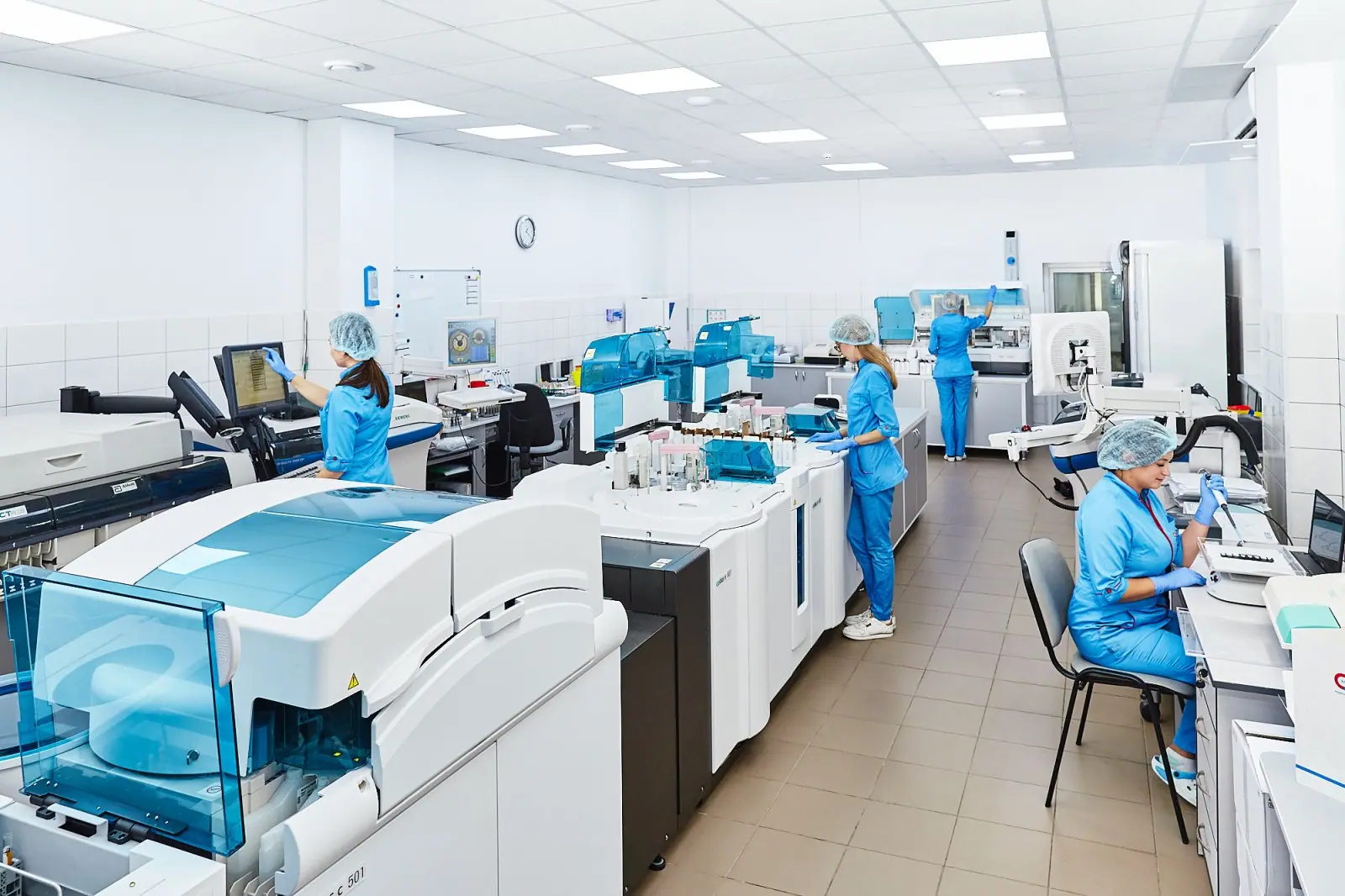
The Institute of Molecular Biology at the Bulgarian Academy of Sciences (IMB-BAS) is setting up a new centre where scientists will study cancer and rare diseases at the molecular level. The EU is paying €30m for the project.
The Centre for Biomedical Research and Technology (BioMedRTC) is coordinated by IMB-BAS. The project is already under way and the research teams are at work. The centre will start recruiting young scientists in the coming months.
Researchers will look at the cell at the molecular level. They combine methods from molecular and cell biology with tools from mathematics and physics. The aim is to understand better how rare diseases and cancer work at the molecular level, and so find new ways to diagnose and treat them.
Mikhail Sarov of the Max Planck Institute of Molecular Cell Biology and Genetics in Dresden, Germany, said the centre will not carry out clinical research or work with patients. He said it will only study the molecular mechanisms of diseases.
The centre should get its own building within two years, equipped with state-of-the-art microscopes and other instruments. Bulgarian scientists will share experience and knowledge with mentors from the Max Planck Institute in Dresden and the Curie Institute in Paris.
The hope is that independent young researchers will find a place at the centre to do science and develop new ideas. It is also hoped that Bulgaria will become competitive worldwide and add to European research.
The basic experiments behind vaccines, telecommunications and satellites date back 50 to 60 years. At the time, it was not clear that they would change people's lives and the economy.



Comments (0)
Все още няма коментари.