
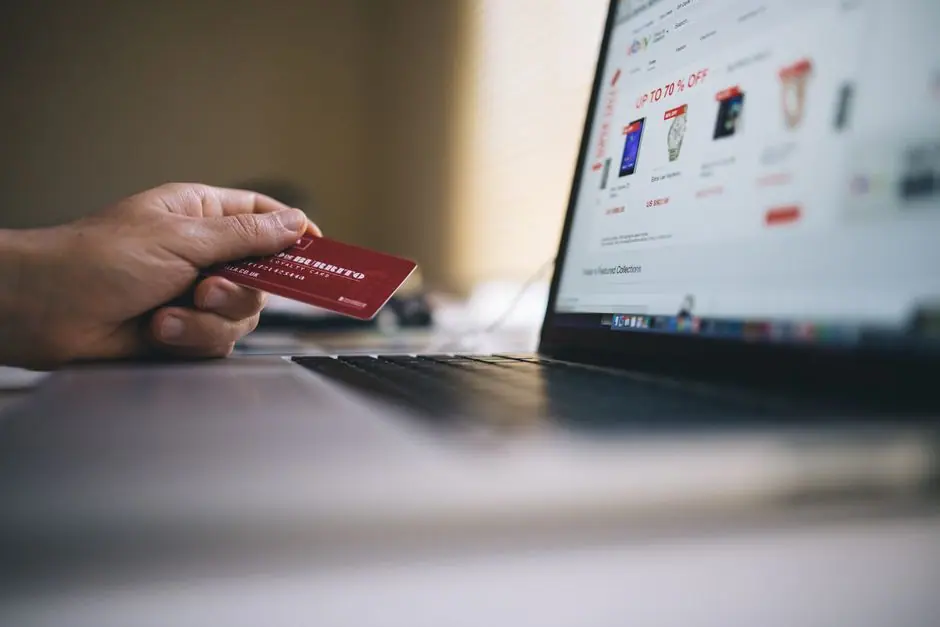
Black Friday is on 27 November 2026, and security software firms are already warning how fake online shops work. Such shops multiply before every big sale. The figures come from the firms' own research, not from official statistics, so they show the scale of the problem but not the exact number of scams.
Bitdefender researchers found more than 55 fake-shop campaigns in 12 European countries between March and May 2026. Bulgaria is not mentioned in their report. The scammers posed as well-known brands, mostly through Facebook ads and WhatsApp messages. Other campaigns reached people by email, text and phone, and some shops also showed up as paid search ads.
Foreign letters in the web address and a bank transfer instead of a card
The web address is the oldest trick. Bitdefender describes domains that use letters from other alphabets to look like a brand name, and domains that change as soon as they are blocked. Check Point found that in autumn 2025 new sites with "Black Friday" in the name often followed one pattern: a year, a country and a word such as "shop", "mall" or "factory". They had the same page template, the same fake logos and stolen photos of goods. Check Point says one in 11 new domains with this theme in 2025 was harmful, and it counted 158 such new domains in October 2025.
The low price is the bait. Gen Digital says fake shops are often built on ready-made e-commerce platforms to look professional, and they show holiday banners, countdown clocks and "last items in stock" notices. CloudSEK, another security firm, found more than 2,000 such sites around Black Friday in 2025, split into two large groups of linked sites. They put pressure on shoppers with timers and pop-ups about "recent purchases". Gen Digital also warns that the padlock next to the address only shows an encrypted connection. It does not prove the shop is real.
How you pay matters most. In the Homborg network, described by Bitdefender, the shops showed card and PayPal options but accepted only advance bank transfers. The chance of getting money back after such a transfer is small. Gen Digital therefore advises against paying by bank transfer, gift card or cryptocurrency, and says to use a card or an established payment service. Such campaigns often also collect card or delivery details, not just money.
Checking the shop and the discount rule
Gen Digital advises checking the address for odd spelling and extra words, and searching for the shop's name together with "scam" or "complaints". It also says to look for a physical address, a company name, return terms and a real way to contact customers. Very few reviews, or reviews that are all glowing, are a bad sign. Check Point adds that the sites are often brand new, so the age of a domain is a warning sign. This information is in public domain registries. A price marked "up to -90%" on a popular product is also a reason for doubt.
An EU rule can help you check a discount. Directive (EU) 2019/2161, known as "Omnibus", requires a seller who announces a reduced price to show the previous price next to it. The previous price is the lowest one at which the item was sold in the 30 days before the cut. The rule does not cover goods that spoil quickly, goods that have been on the market for less than 30 days, and personal discounts. If the crossed-out price is higher than the lowest price of the past month, the stated percentage does not meet the rule. The rule applies to sellers in the EU. It does not protect you from a scammer who never delivers.
Getting money back after a card payment or a transfer
If you pay by card, your bank can ask the card network to return the money. This is called a "chargeback". The Irish consumer protection agency says you should first ask the seller for a refund, and if that fails, call your bank straight away. The time limit is usually 90 to 120 days and depends on Visa or Mastercard rules. The European Consumer Centre in France says the bank files the request, not the customer. You need evidence: the order, the payment and emails exchanged with the seller. A refund is not automatic and not guaranteed. Neither source covers Bulgaria, so check the exact time limits and procedure with your bank. Card details entered on a fake site should be blocked immediately.
A bank transfer counts as a payment the customer made voluntarily. No refund process like the one for cards is described for it, so you should tell your bank as early as you can. Bitdefender calls a transfer a method with little chance of getting money back.






Comments (0)
No comments yet.