
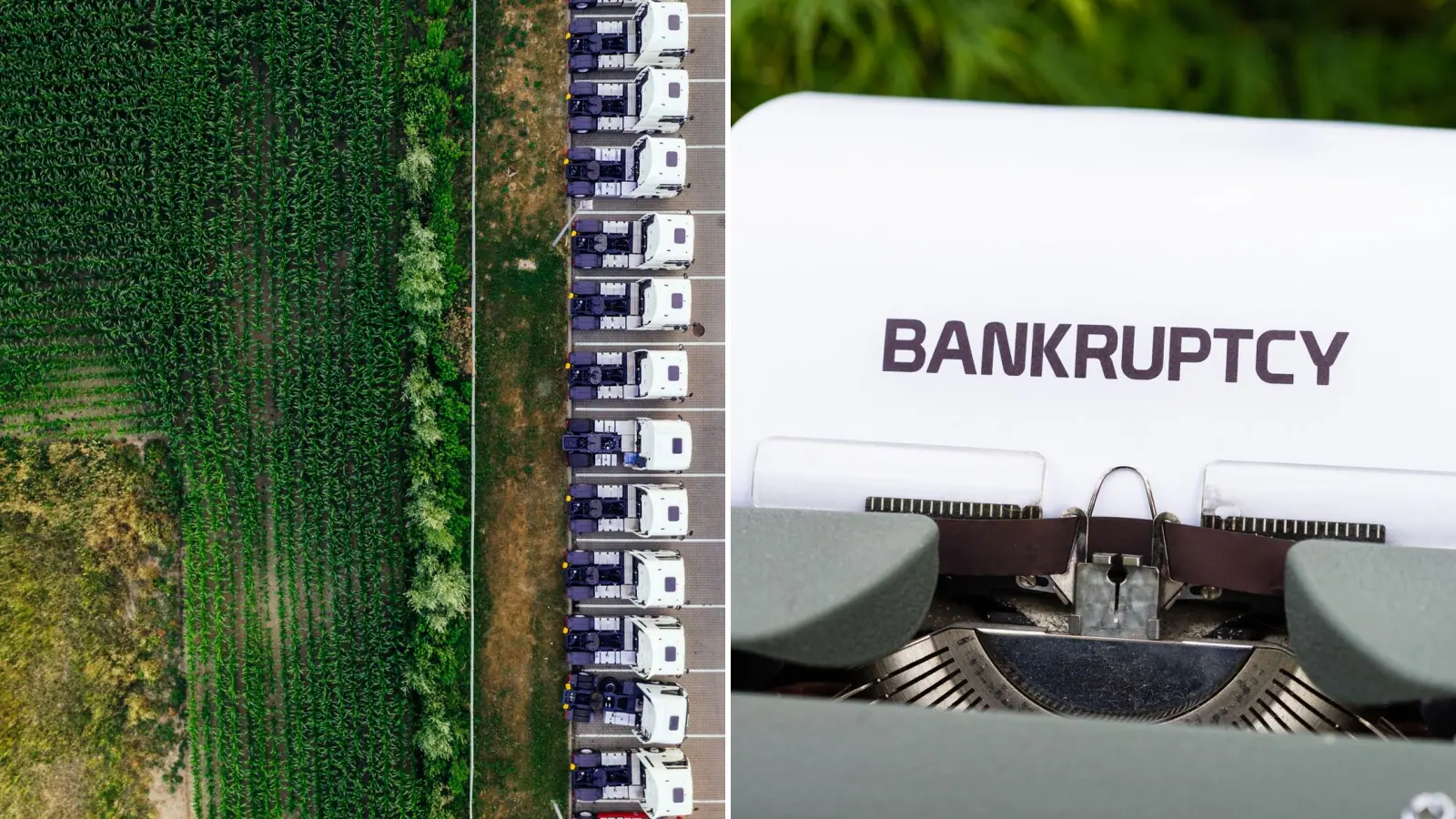
Bulgaria will see 12% more company bankruptcies in 2026 than in 2025, credit insurer Allianz Trade says in its global insolvency report. That is far above the expected rise of 2% for Central and Eastern Europe and 5% worldwide.
About 490 Bulgarian firms will go bust in 2026. The rise will continue in 2027 but slow to 2%, and the number should level off in 2028.
The company says Bulgaria's low number of bankruptcies comes from the way its laws work and from slow, cumbersome insolvency procedures. Formal proceedings cover only a small share of cases with unpaid overdue trade debts. Some indebted firms simply stop work without going through insolvency. Some owners leave firms with little or no assets, or pass them to people who own almost nothing. This is most common in transport and fuel trading, though such cases are getting rarer. Other firms shut down after the National Revenue Agency (NAP) seizes their assets, or when banks enforce security on loans and leasing.
Creditors in these cases often do not start insolvency proceedings, because it costs them extra money and they have little chance of getting their money back. As a result, some of the problems, and some of the firms that have really closed, do not show up in the official data.
Transport and farming are the hardest hit in Bulgaria. Hauliers face constant late payments and unstable fuel prices. More recently, the situation in the Black Sea and low water levels on the Danube have made it harder to move goods. Among farm businesses, grain and fertiliser traders have problems. Some firms in the solar power sector also face difficulties.
Construction firms are sinking deeper into debt, and payments to them come very late. Building activity is falling and there are fewer new projects, so the company's experts in Bulgaria do not expect a major improvement soon.
Worldwide, bankruptcies rose 6% in 2025, and Allianz Trade expects a 5% rise in 2026. It forecasts another 1% rise in 2027 and a 1% fall in 2028, but the number will still be about 22% above the average before the pandemic. Large companies fail most often in retail, services and construction.
Between January and September 2026, 376 organisations with annual turnover above 50m euros declared insolvency, a record for that period. The company warns that rising risk around the world also affects Bulgarian firms that work in foreign markets or have partners abroad.
Bankruptcies directly threaten about 2.7m jobs worldwide in each of 2026 and 2027, or 180,000 more than in 2025. Most of them are in Europe, at about 1.6m, while North America has about 650,000.






Comments (0)
No comments yet.