
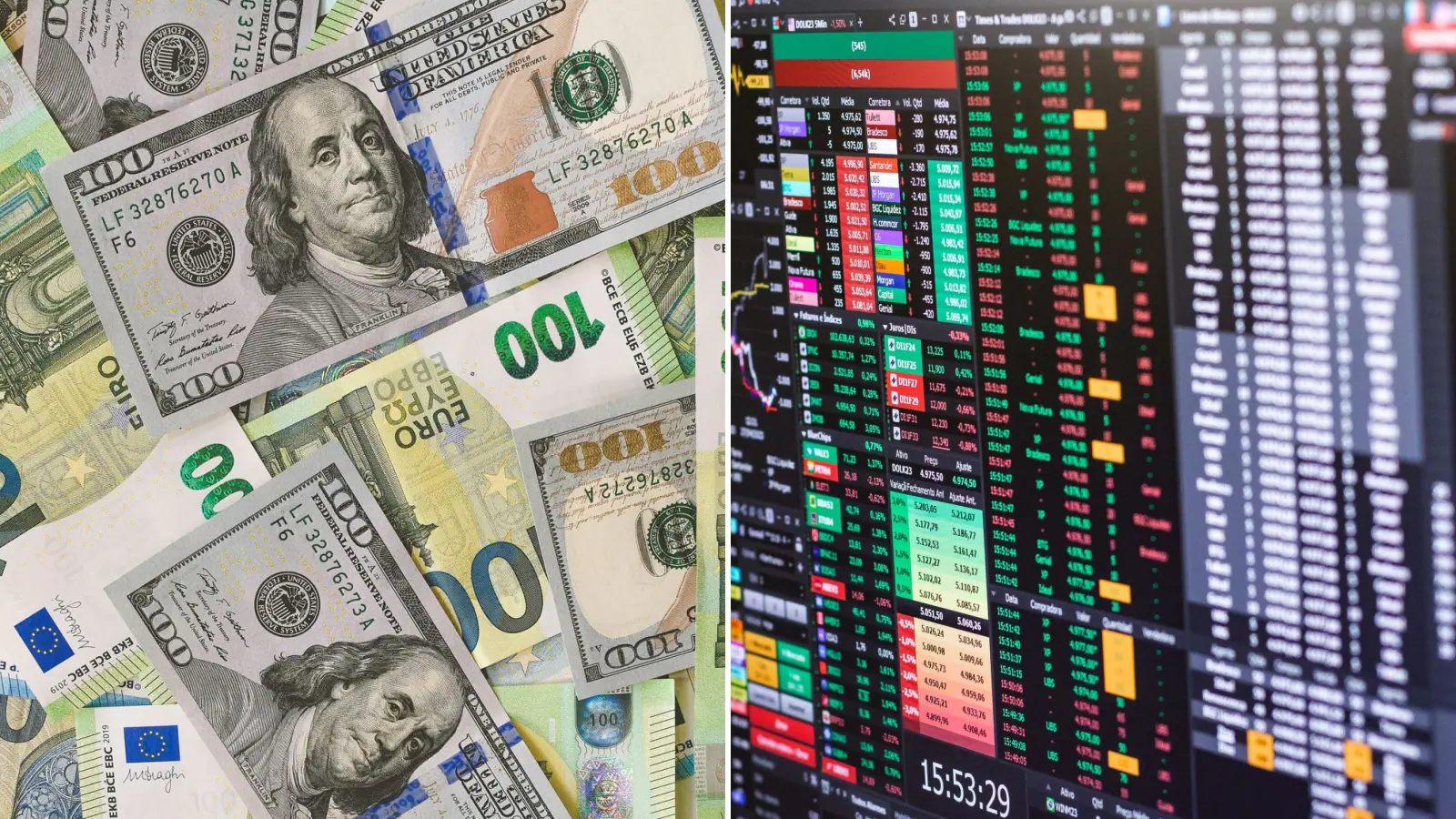
The euro rose 0.28% to $1.117 on Monday morning, winning back part of its Friday losses, according to quotes at 10:00.
It fell about 0.7% on Friday to $1.1132. A week earlier it hit $1.1105, its lowest level since May 2025. The European Central Bank's reference rate for Friday is $1.1165 per euro, against $1.1267 on Thursday.
The dollar gained on Friday after strong US jobs data. Employment grew faster in October and unemployment fell, which raised hopes that the Federal Reserve will lift interest rates in December.
The dollar index, which tracks the US currency against six other major currencies, was at about 102.20 points at the start of trading on Monday. Its rise of about 0.7% on Friday was its biggest one-day gain in almost six months.
CME Group's FedWatch tool, which shows what markets are betting on in futures contracts, puts the chance of a Fed rate rise at its 9 December meeting at about 79%. A week earlier it was 71%.
Hopes for tighter monetary policy had faded because of a global sell-off in tech stocks. Fears of stricter rules on artificial intelligence and slower investment grew after the Democrats won the US midterm elections. Barclays strategists say in a report that strong economic data keep the dollar up despite these risks.
The US economy is holding up despite a string of shocks, New York Fed president John Williams said on Friday. But inflation is still too high, he said, and it must return to the 2% target. Alberto Musalem of the St Louis Fed said inflation is the main worry for businesses in his district. San Francisco Fed head Mary Daly said another rate rise will probably be needed, despite the sharp drop in tech stocks.
Against the British pound, the euro fell 0.04% to 0.834 pounds. Against the Swiss franc it was unchanged at 0.914 francs per euro. The pound rose 0.1% to $1.3360.
The dollar fell 0.2% against the yen to 158.185 yen, after rising 0.6% on Friday. Bank of Japan governor Kazuo Ueda said on Friday that he expects underlying inflation to stay near the 2% target, but sees some risk that it will pick up.
The Australian dollar rose 0.3% to 0.6875 US dollars. On Friday it lost more than 1% and hit 0.6855, its lowest since 31 March. The US dollar fell 0.1% against the Canadian dollar to 1.4119 Canadian dollars, after rising 1.1% on Friday because of an unexpected drop in jobs in Canada.
The New Zealand dollar rose 0.4% to 0.5557 US dollars, moving away from the seven-month low of 0.5529 it hit at the end of last week. New Zealand held its election over the weekend. Preliminary results show prime minister Christopher Luxon's National Party, together with ACT New Zealand and New Zealand First, has a total of 67 of the 120 seats in parliament.
Nearly 400,000 votes, about 15% of all those cast, are still to be counted. Luxon and Labour Party leader Chris Hipkins said they would wait for the final results before starting formal coalition talks. Official results are expected on 27 November.





Comments (0)
No comments yet.