
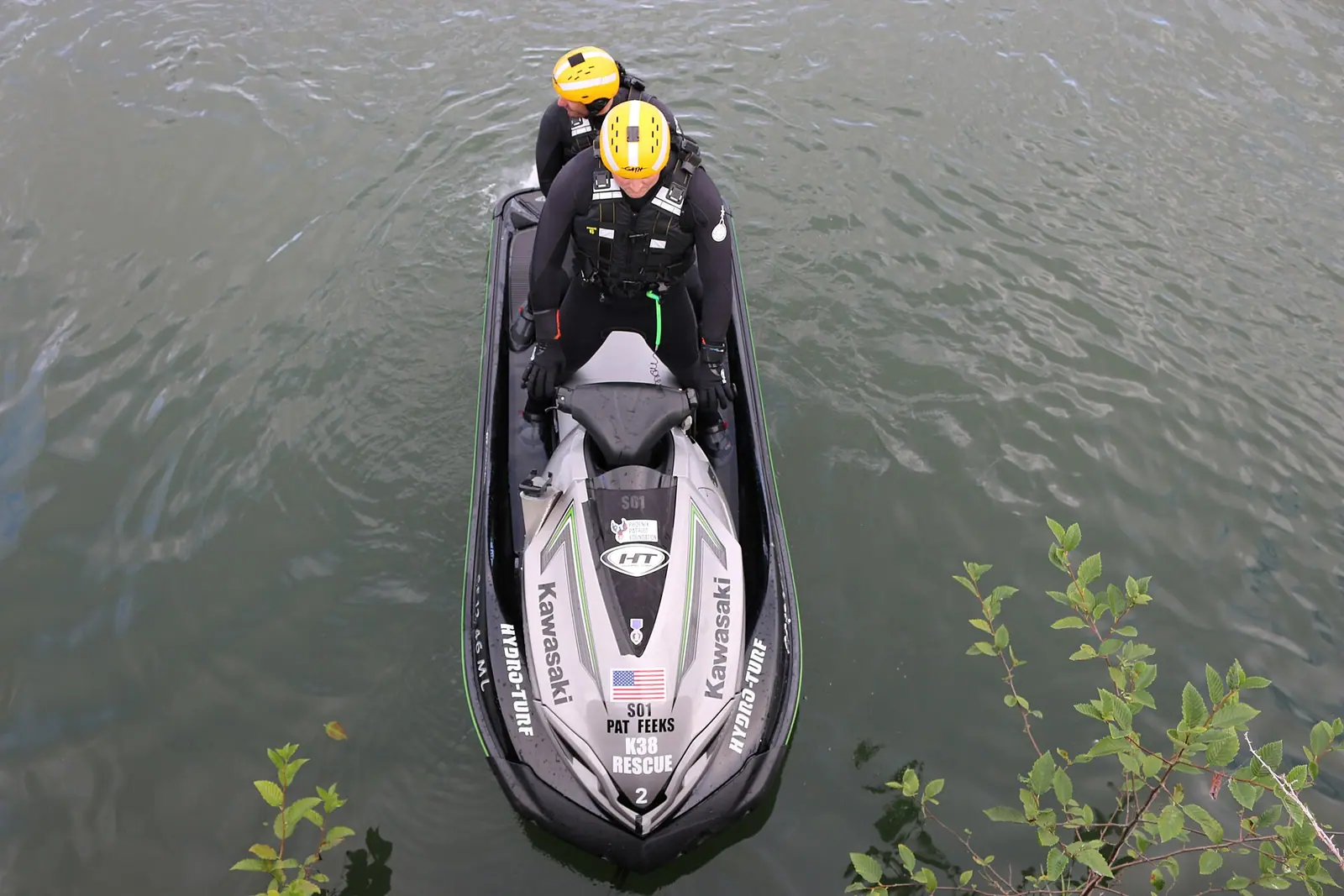
Volunteers from the Bulgarian Red Cross spent three days learning how to respond to an earthquake in the Black Sea and pull people from a sinking ship, in a regional drill called "Bolata 2026" in the northern Black Sea region.
Volunteer teams from Varna, Silistra, Shumen, Targovishte and Dobrich took part, along with DERBAK disaster-response teams and mobile emergency crews from the same five regions. Dr Artyun Erinozov, director of the Red Cross in Dobrich, led the drill.
The scenario: an earthquake at sea, a ship going down, people including children in the water who had to be brought ashore, where medics and psychologists were waiting.
Teams split the work. Some pulled people to safety in the water, while others met them on shore, sorted the injured by how badly hurt they were, and gave first aid. The job doesn't stop once someone is out of the water — next comes medical care, getting them to hospital, and psychological support.
Rumen Raychev, from the Shumen volunteer team, commanded a rescue boat as one half of a two-person water rescue unit. His job, he said, was to steer the boat and make sure the injured got aboard safely — a complex job they've drilled many times over. What matters most, he said, is a volunteer's state of mind: not fearing the water, the pressure or working in a team, and actually enjoying it.
Stanimir Trifonov, from the Dobrich volunteer team, said the training is meant to get teams to gel, get to know each other and work as one unit. Once a real emergency hits, it's too late to find out who can do what.
Psychologist Svetla Veselinova, from Varna, said giving someone psychological first aid takes no special training — just a kind word, attention and respect. "You don't need special training to help someone," she told Bulgarian National Radio. The basics, she said: make sure you're safe first, then the injured person, and only then start listening to how they feel and what they've been through.
Among the Red Cross volunteers in Silistra was Nezabravka Kirova, a Bulgarian National Radio correspondent in the city.
This was the third time the drill has run in this regional format. Dr Erinozov said working at regional level gets better results: with five organisations involved, people already know each other from years working together and understand each other fast. With 28 organisations, he said, coordinating everything becomes very hard.
After the drill, the teams sat down together, went over how they'd done and talked through what to improve.
Comments (1)
Болата! Харесва ми мястото, хубаво е там! Дано се справят и да са внимателни момчетата.