

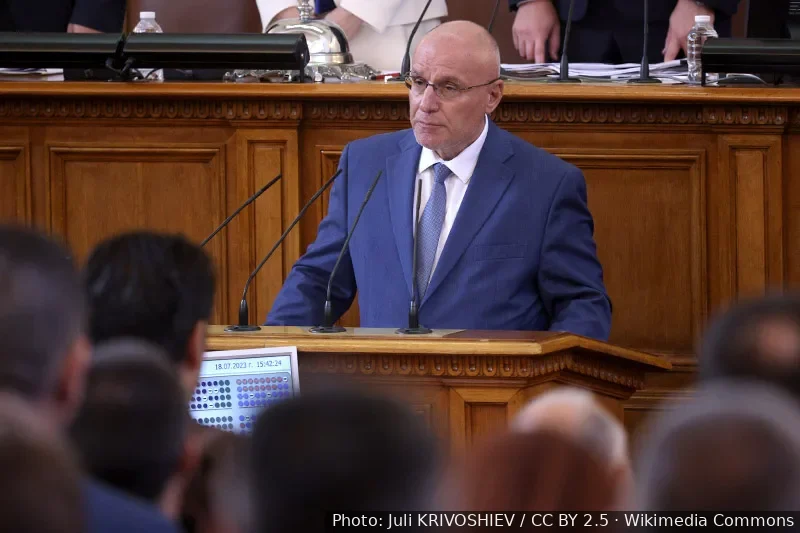
Bulgaria is preparing a public campaign to teach people about money. It will cover all age and social groups. The Bulgarian National Bank (BNB), the European Commission, banks and schools will run it together, said Ani Dimitrova, an adviser to the BNB governor and Bulgaria's financial literacy ambassador.
The campaign targets children, young people and their families, older people and vulnerable groups. Besides the BNB, it will involve the Association of Banks in Bulgaria, the finance ministry, the education sector, other institutions and the European Commission's office in Sofia. Dimitrova announced the plans in a social media post after two meetings in Brussels on 18 and 19 November. No dates for the campaign have been set.
On 18 November, financial literacy ambassadors from EU countries met in Brussels for the first time. On 19 November, the European Parliament hosted a high-level conference, "Financial Literacy: Beyond the Numbers". There Dimitrova met EU financial services commissioner Maria Luís Albuquerque and European Commission executive vice-president Roxana Mînzatu. She invited both to visit Bulgaria and to take part in events on the subject.
European Central Bank (ECB) president Christine Lagarde took part in the conference in an online interview.
According to Dimitrova's summary, Lagarde warned that people online come across misleading information and dubious investment offers, including through artificial intelligence tools. Lagarde said financial education matters for narrowing the gap between women and men in financial literacy.
The ECB president also spoke about how accessible the future digital euro, cryptocurrencies, tokenisation and digital payments will be for people. Dimitrova said financial education should start early and continue through life, and be tied to real decisions such as buying a home, getting married or taking on long-term debt. As an example of easier learning, Lagarde presented an initiative by the ECB and national central banks that pairs physical activity with short learning materials in a mobile app.
According to 2023 Eurobarometer data, 18% of people in the EU have a high level of financial literacy, 64% a medium level and another 18% a low level.
The European Commission presented an EU financial literacy strategy in September 2025. Its aim is for people to know and be able to do more, so they can decide with good information what to do with their money. That should give them more financial security and independence.




Comments (0)
No comments yet.