
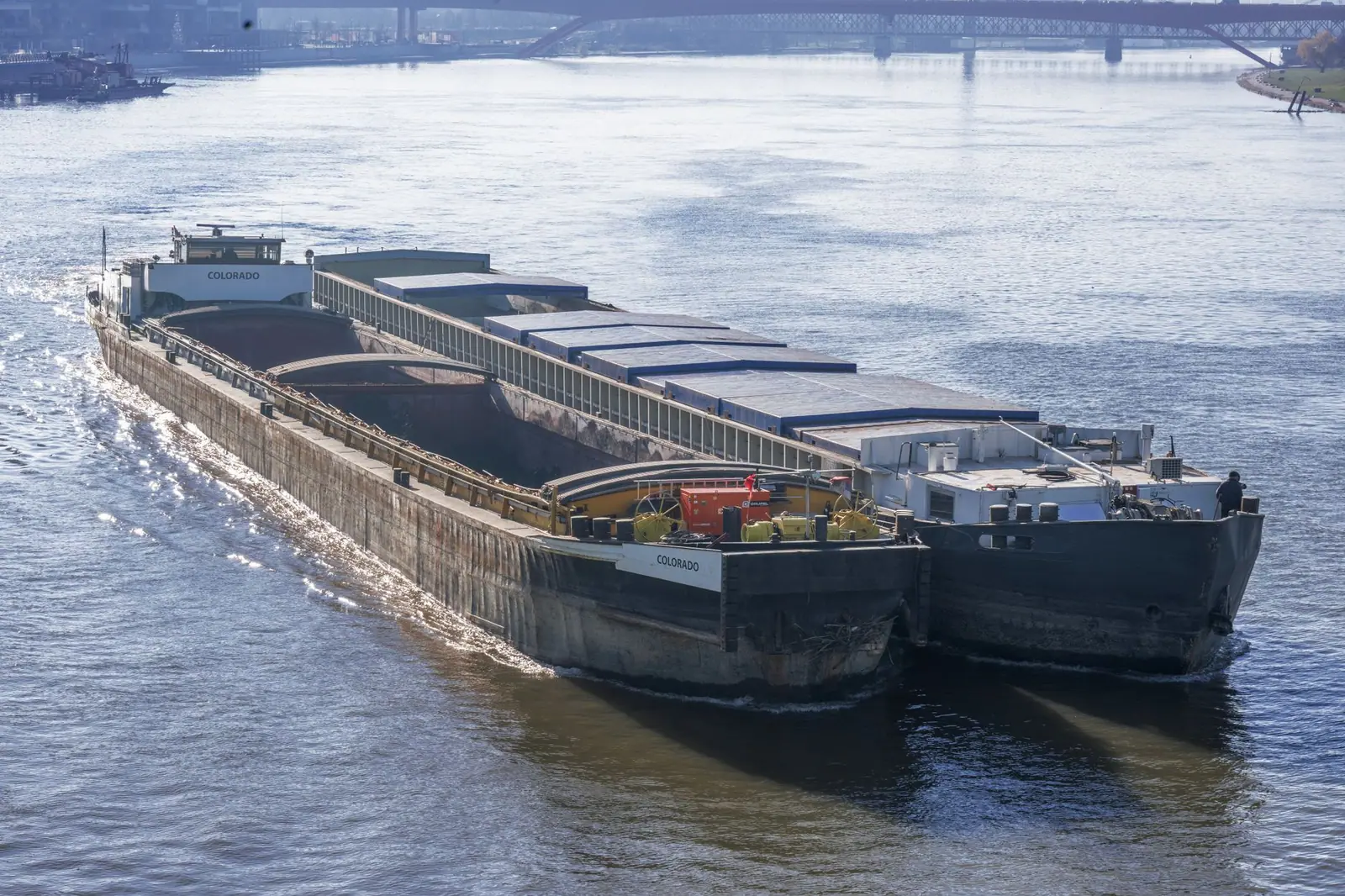
Bulgaria currently holds the chair of the Danube Strategy, and in that role it has asked the European Commission not to overlook problems with low water levels in the river, droughts and other water crises when it makes decisions. That's according to the press office of the Ministry of Regional Development and Public Works.
Bulgaria's chairmanship is also asking that future European programs and EU funding help affected countries and regions cope better the next time a similar crisis hits.
The Danube is one of Europe's most important natural resources — a transport and economic corridor that links more than 110 million people across 14 countries, the statement says. But low water levels aren't just a problem for shipping. They also hit transport, energy supplies, tourism, and the amount and quality of the water — and with that, ecosystems and wildlife too. Soil in vulnerable areas is getting worse, and it's an open question how well the areas along the river, and the people living there, will hold up against more shocks like this in the future.
The chairmanship is putting forward a concrete next step: folding the Danube Strategy's most pressing issues into a wider assessment of what low water levels and more frequent droughts are doing to the whole region. The goal is to see where the region is most vulnerable, what long-term steps are needed, how much money it will take, and where countries can team up. This work will be done together with the European Commission, the Danube Commission and the International Commission for the Protection of the Danube River, along with other interested parties. That way, the strategy becomes a tool for giving cross-border problems a shared answer, and it becomes easier for individual countries' needs to reach EU policymakers.
Bulgaria chairs the EU Strategy for the Danube Region in 2026, with the Ministry of Regional Development and Public Works carrying out the role. The ministry says the push for a joint response to critically low river levels builds on earlier work by the Bulgarian chairmanship. The aim is to make sure the region's cross-border problems are heard louder at the European level, and that the needs of the countries, regions and people along the Danube are better reflected in EU policies and tools.
On Bulgaria's initiative, the EU's four macro-regional strategies joined forces on their messaging for the first time. These are the strategies for the Baltic Sea, the Danube Region, the Adriatic-Ionian Region and the Alpine Region. They touch on the future of cooperation between the macro-regions and on the EU's next budget. Specific guidelines were also drawn up on how to link the Danube Strategy's key issues more closely to the EU's future policies, programs and funding opportunities. The goal, the ministry explains, is for cooperation between countries to lead to more real solutions and investment in places where individual countries couldn't manage on their own.
Fifteen years after it was set up, the Danube Strategy now brings together nine EU member states and five countries in the process of joining the EU. The ministry says it remains a tool for finding shared solutions to problems that cross national borders.
The water problem on the Danube is nothing new. In the second half of September, the Danube River Basin Directorate for Exploration and Maintenance in Ruse reported that the situation on the Bulgarian stretch of the river remains difficult because of low water levels. The drop has now been going on for months.






Коментари (0)
Все още няма коментари.