
The Asia-Pacific region is entering a period of rare overlapping climate and energy shocks – a potential "super El Niño" in 2026–2027 and the most severe energy crisis in decades, fueled by the war in the Middle East and disrupted shipping through the Strait of Hormuz. According to economists and climatologists, this combination threatens to simultaneously hit growth, inflation, and food security in the most populous region on the planet.
What is a "super El Niño" and why does it scare Asia
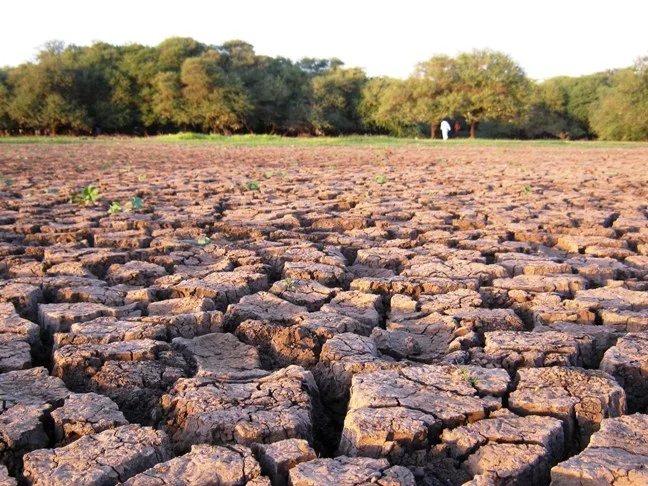
The "El Niño" phenomenon is associated with the warming of surface waters in the equatorial Pacific Ocean and a change in global precipitation and temperature patterns, which often leads to droughts in parts of Asia and Australia and flooding in other regions. The World Meteorological Organization warns that a new El Niño event is expected to develop from mid-2026, with the latest atmospheric and oceanic data showing a clear increase in sea surface temperatures in the tropical Pacific.
Climate models indicate a probability of over 60 percent that an El Niño will form in the period of June–August 2026 and persist at least until the end of the year, while independent scientific teams estimate the chances of it becoming a "strong" or even a "super El Niño" at about one-third. Under such a scenario, 2027 could become the hottest year in the history of instrumental observations, and much of Asia is expected to see a drier and significantly hotter-than-usual outlook, with direct consequences for agriculture and water resources.
According to forecasters, there is an increased risk of typhoons and extreme storms in the western part of the Pacific Ocean, including over East Asia, as well as a potential drought in central and northern India with suppressed monsoon rainfall. Similar conditions have historically led to weaker yields of rice and other key crops in South and Southeast Asia, creating the groundwork for rising food prices and social tension.
The energy crisis: Asia as the most vulnerable consumer of Middle Eastern fuels
Parallel to the climate warnings, the region is facing the most serious energy crisis in decades, caused by the military conflict in the Middle East and disrupted traffic through the Strait of Hormuz – a key maritime corridor for oil and liquefied natural gas. Asia is the most dependent on Middle Eastern energy supplies, with much of the crude oil and LNG imports for developing economies passing through this route.
Experts from regional and international organizations note that high oil prices – at levels comparable to the shocks of the 70s and the gas crisis of 2022 – are already being passed on to the budgets of households and businesses in the Asia-Pacific region. According to data from the Asian Development Bank, in a scenario of prolonged energy disruptions until the beginning of 2027, the economic growth of developing countries in the region could slow by up to 1.3 percentage points, and inflation could rise by up to 3.2 percentage points compared to baseline forecasts.
Limited gas supplies have also led to a sharp jump in LNG prices in Asian markets, which is forcing a number of countries to look for cheaper but more polluting alternatives to avoid electricity shortages. Combined with rising prices for oil products, fertilizers, and other petrochemical derivatives, this creates serious risks for industry and agriculture across all of Asia.
Back to coal: a forced choice for many Asian countries
The shortage and rising price of gas have led to a sort of "relapse" in the region's energy mix – many countries are temporarily returning to coal to guarantee base-load power supply. According to data cited by international agencies, countries like Bangladesh, Pakistan, the Philippines, and Vietnam are increasing coal generation and boosting imports of this resource to compensate for expensive LNG and unstable supplies from the Middle East.
This strategy brings short-term benefits – lower electricity costs and a smaller risk of large-scale "blackouts" in the midst of hot periods – but it stands in sharp contrast to climate goals and the real risks of the upcoming "super El Niño". More coal means higher greenhouse gas emissions and a further intensification of the long-term warming trend, which in turn increases the likelihood of more extreme climate phenomena in the future.
At the same time, experts from the UN and regional commissions remind us that the energy crisis could also be a catalyst for a faster transition to renewable sources if governments use the shock to accelerate investments in solar, wind, and geothermal energy, as well as the modernization of power grids. The question is whether political will and financial resources will prove sufficient in the face of simultaneously rising climate and social risks.
Climate, energy, and food security: a recipe for a "perfect storm"
The potential "super El Niño" carries serious threats to agriculture in Asia, especially if a scenario of a drier and hotter climate materializes in key agricultural regions. In India, Pakistan, parts of Southeast Asia, and China, conditions are expected that could lead to reduced yields of rice, wheat, and other staple crops, while the energy crisis raises the price of fertilizers and transport.
This combination of weaker harvests and expensive inputs could trigger a sharp rise in food prices, especially in developing countries, where food costs take up a large share of the family budget. An analysis by the Asian Development Bank shows that with a prolonged conflict in the Middle East and persistently high fuel prices, inflationary pressure in the region could last for years, and millions of people could be pushed into poverty and food insecurity.
To this is added the pressure on water resources: in Southeast Asia, including Thailand, forecasts indicate longer dry periods interrupted by short but intense rainfall, which complicates dam management and irrigation. In the region's large megacities, the risk of water shortages and heat stress for the population is increasing, especially against the background of limited electricity supply, which hinders cooling and air conditioning.
Economic and political dimension: a test of Asia's resilience
The combination of energy shocks, climate anomalies, and food risks is becoming a serious test for the resilience of Asian economies and political systems. The slowing of growth, increased inflation, and the need for large-scale subsidies for energy and food limit the fiscal space of governments and increase the likelihood of debt distress.
Socially, prolonged heatwaves, intermittent power outages, and rising food prices are already causing discontent in a number of South and Southeast Asian countries, where millions of people are literally struggling to survive the heat without reliable cooling. Political scientists warn that if the crisis deepens, mass protests and the destabilization of governments cannot be ruled out, especially where public trust is already fragile.
Against this backdrop, the message from the scientific and expert community is unambiguous: "Asia must use the current shock as a signal to accelerate the transition to a more sustainable energy and economic structure" instead of returning permanently to coal. Without ambitious adaptation measures for climate risks and energy source diversification, the region risks the "perfect storm" of a "super El Niño" and energy crisis escalating into a deep humanitarian and economic crisis.






Comments (15)
Абе, много яко... ама не в добрия смисъл. Четях за Ел Ниньо, разбира се, ама "супер" звучи доста притеснително, да си го кажем. Азия е огромен континент, наистина – Китай, Индия… ако там нещо се обърка, ние тук няма как да останем на мира. Икономически, и иначе. 👎
ебати! сериозно яко е положението там в азия… дано поне нашите хора са подготвени, че наистина може да се усети доста силно тук. ва
Абе хораааа! Какво стааа? Сега и Азия ли ще ни тормози бе?! Супер Ел Ниньо... направо ми иде да се скрия под масата! 🤦♂️
Ебати, яко сериозно! Явно положението в Азия не е никак розово. Дано да
Абе, значи ще ни тормозят и от Азия сега? Да не би да сме забравили за Европата ли? 🤔 Какво чакаме – да им пращаме палачинки ли?! 😂