
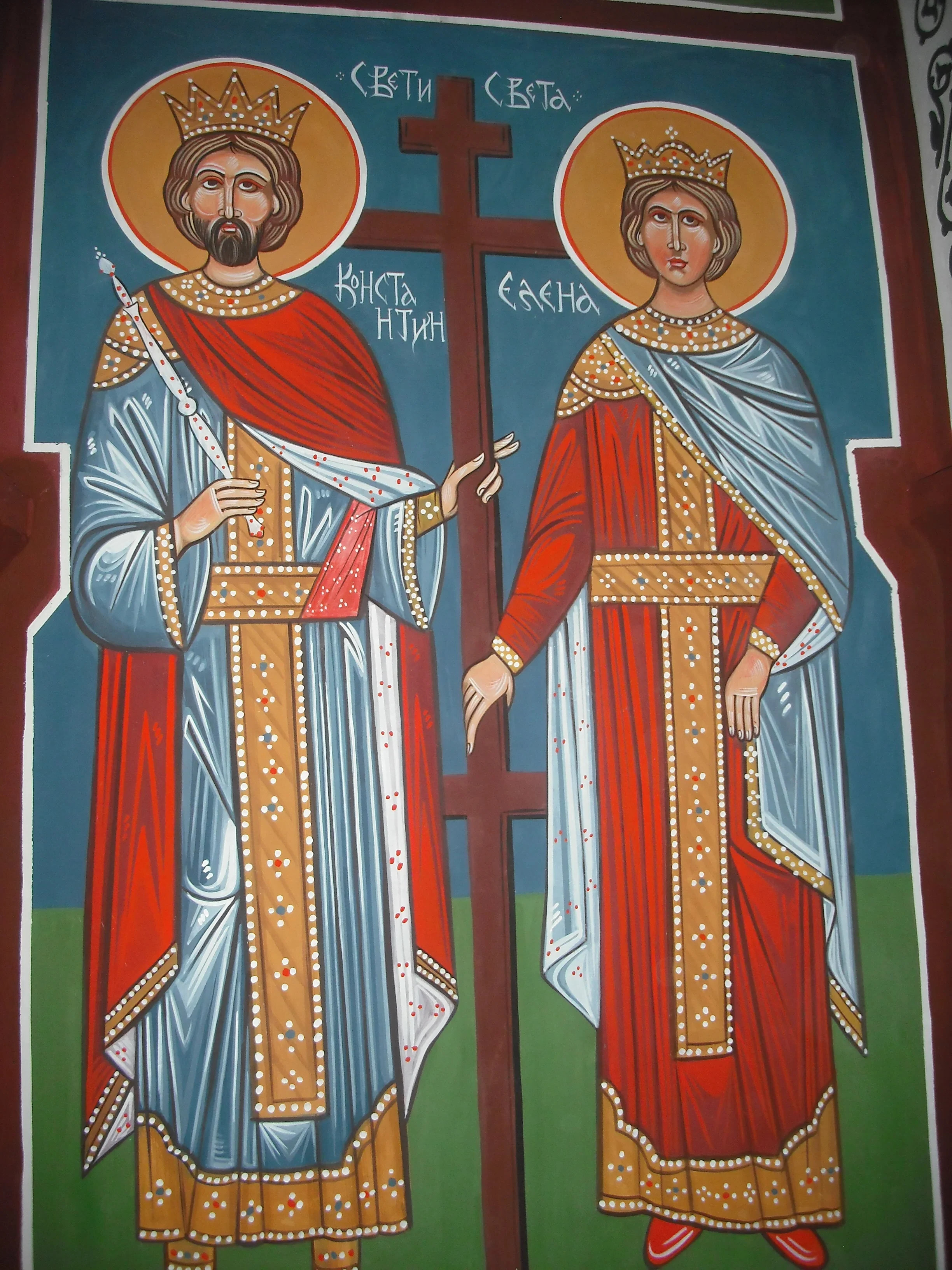
Today, the Bulgarian Orthodox Church honors Saints Constantine and Helena – one of the most revered spring-summer holidays in our country. May 21 is associated both with the finding of the cross on which Jesus Christ was crucified and with the transition from spring to summer in the folk calendar.
The holiday is an occasion for a name day for thousands of Bulgarians. People named Konstantin, Kostadin, Kosta, Konstantina, Kostadinka, Elena, Elka, Eli, Eleonora, Elitsa, and their derivatives celebrate. The name "Elena" has Ancient Greek origins and means "bright as the sun, radiant," while "Konstantin" comes from Latin and means "constant, unchanging."
Historical figures Constantine and Helena
Saint Constantine was the Emperor of Byzantium in the 4th century. In 313 AD, together with co-emperor Licinius, he issued the Edict of Milan, which equated Christianity with other religions in the Roman Empire and guaranteed more tolerant treatment of Christians.
Constantine did not make Christianity the official religion – that happened later, in 380 AD under Emperor Theodosius. With some reservations, however, he is considered the first Christian emperor: although he received Holy Baptism only in 337 AD on his deathbed and did not renounce the title and role of chief pagan priest, from the beginning of his reign he declared his sympathies for the new faith and called himself "the external minister of the Church."
His mother, St. Helena, holds a special place in the Christian tradition. It is believed that she built several monasteries in the places where Christ lived and preached, and that it was during her time that the cross on which Jesus was crucified was discovered. This event is considered one of the most significant in the history of the Church and is among the reasons why both were canonized as saints.
Church services and Nestinari rituals
In all churches of the Bulgarian Orthodox Church, a solemn holy liturgy is held today in honor of Saints Constantine and Helena. Believers pray for health and protection, and those celebrating their name day receive guests according to old Bulgarian custom.
May 21 is also the day of Nestinarstvo (fire dancing) – a unique ritual for Bulgaria, preserved mainly in the Strandzha region. In the villages of the region, large bonfires are lit in the evening, which are spread into embers. In a procession accompanied by icons of "St. St. Constantine and Helena" and characteristic drums and bagpipes, the Nestinari walk barefoot over the burning embers.
The ritual dance on the fire lasts a few minutes and is perceived as an act of faith and spiritual purification. According to tradition, people who are "seized by the spirit" do not burn and can offer predictions and blessings.
Festive cities in Bulgaria
Besides being a church holiday and the day of the Nestinari, May 21 is also an official holiday for several Bulgarian cities. Elena marks its city holiday precisely today, with a program that includes liturgies, concerts, and cultural events.
Pazardzhik also celebrates – with a rich cultural program, outdoor celebrations, and events dedicated both to the city's history and to its patrons, Saints Constantine and Helena.
For the whole country, the day combines church veneration, living folk heritage, and personal celebration – from the name days of thousands of Bulgarians to the fire dances in Strandzha and the festival programs in Elena and Pazardzhik.

Comments (13)
Ехаа, 21 май! Св. св. Константин и Елена - хубаво е да почитаме светиите ни, това е важно. А за нестинарите... абе, странна работа. Древна традиция, ама все пак
Абе, сериозно... Св. св. Константин и Елена -
Абе, хора... Св. св. Константин и Елена - ясно, празник е. Нестинарите обаче... малко ми е зловещо да го кажа честно. Древни са си, ама все пак! Ясно е,
Хм… четох новината, да. Св. св. Константин и Елена – хубаво е, че се помнят светиите ни. Имен ден на много хора, празник в семействата... важно е това, наистина.
А? Пак ли тия нестинари? Бах мааму, все едно фи