
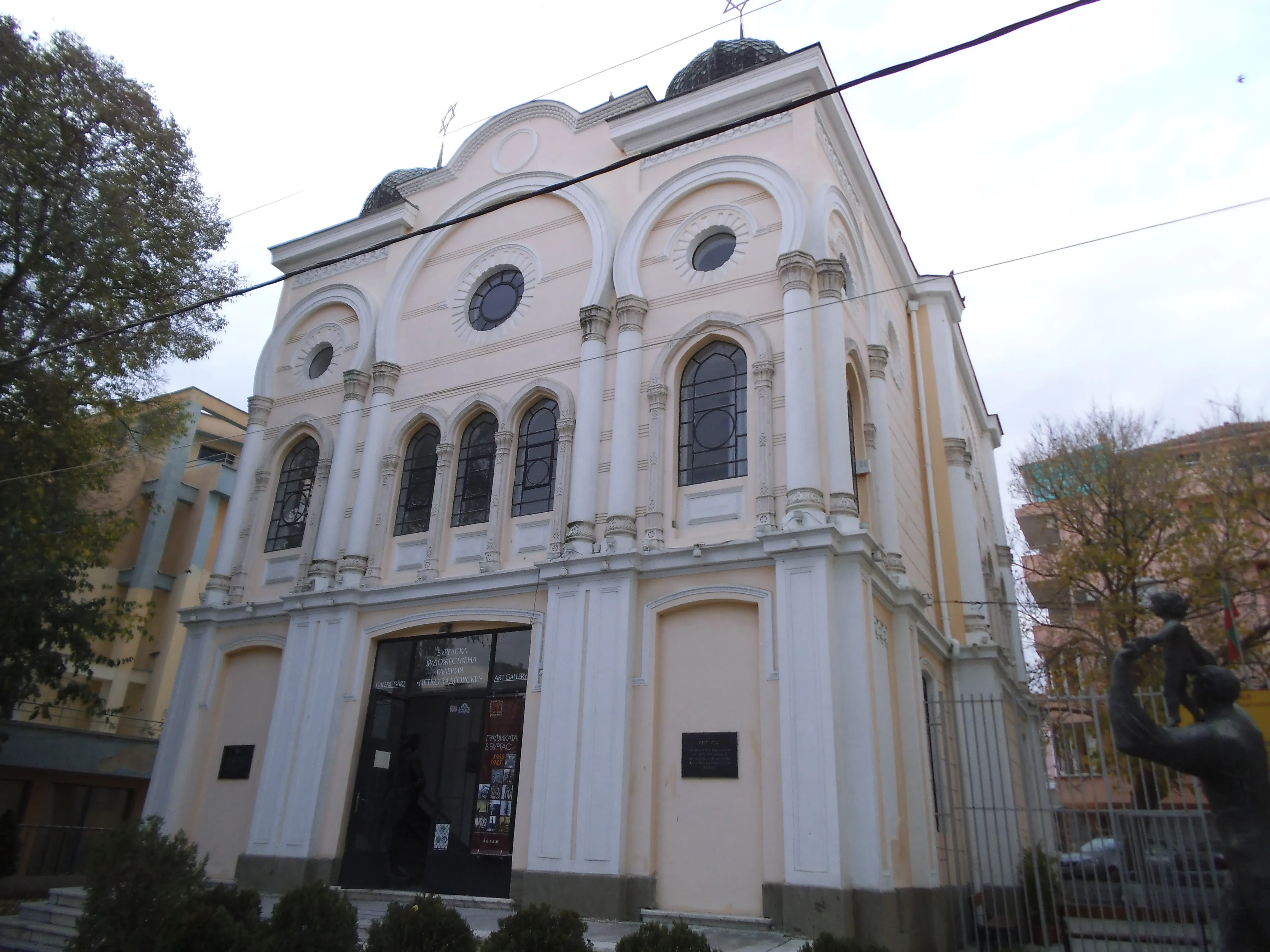
The architectural masterpiece by Ricardo Toscani – the synagogue in Burgas, which emerged between 1905 and 1909, represents a remarkable example of stylistic diversity. The project masterfully combines neoclassical and romantic elements, with Moorish decorative motifs referring to the Spanish roots of the Jewish community.
The building carries a deep historical context – it symbolizes the migration processes of Jews who were forced to leave the Iberian Peninsula due to religious persecution during the Inquisition. These settlers found refuge in Bulgarian lands, creating lasting community bonds.
Political transformations drastically changed the fate of the building. The post-war communist regime caused mass resettlement of Burgas Jews to Israel. On April 7, 1947, the building was nationalized and converted into an art gallery, during which significant parts of the authentic interior elements – murals, stained glass, and chandeliers – were destroyed.


Comments (0)
Все още няма коментари.