
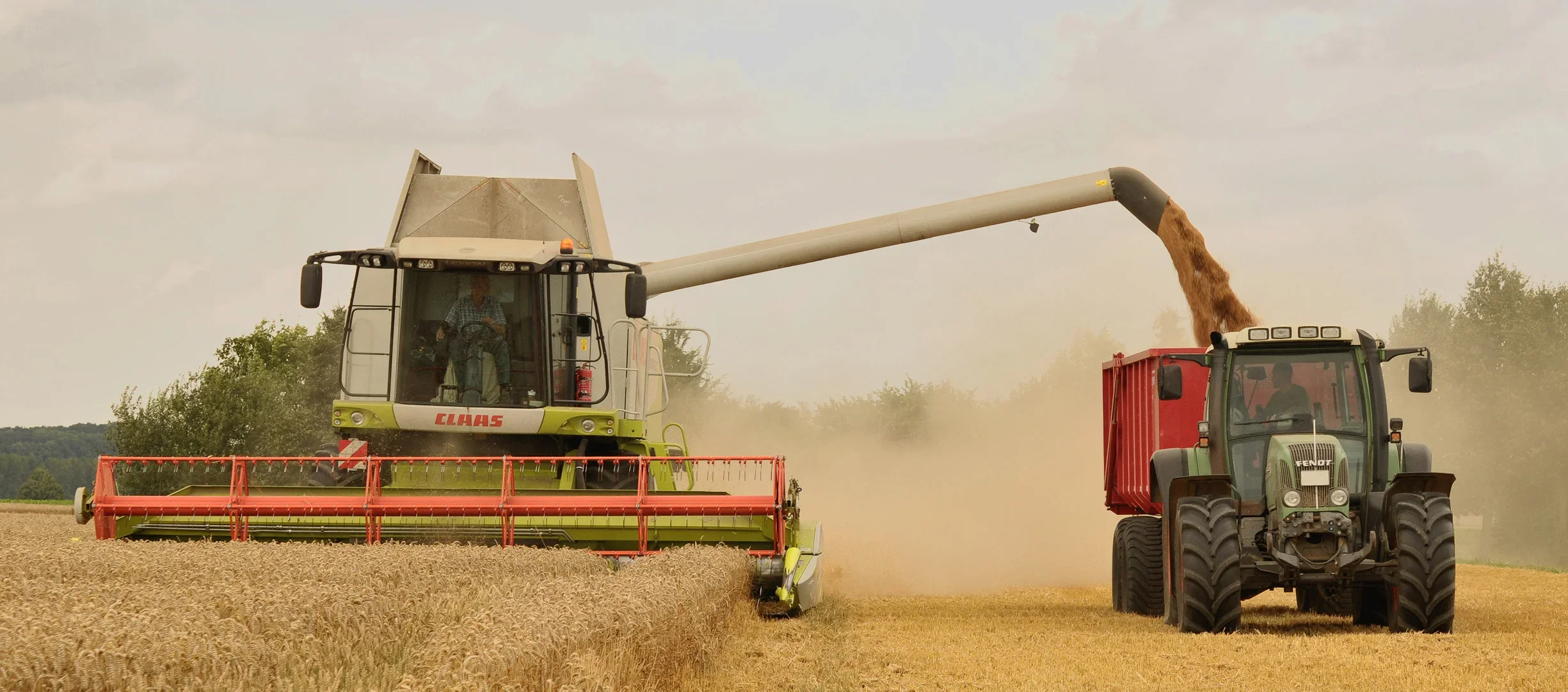
European agriculture is entering a period where adaptation to heat and drought is shifting from an additional measure to a requirement for sustainable production. Prolonged rainfall deficits, high temperatures, and low river flows are already reducing yields, putting pressure on water resources, and increasing risks to farmers' incomes.
The latest report from the European Commission's Joint Research Centre at the end of July records a worsening of drought in Central and Eastern Europe. Warning conditions are present in parts of Central, Eastern, and Western Europe, including large areas of France. Insufficient rainfall, prolonged heatwaves, low soil moisture, and low river flow are already causing water and heat stress for vegetation and agricultural crops.
The scale of the problem
In 2025, soil moisture deficit during the growing season affected approximately 930,000 square kilometers, or 22% of the European Union's territory. This makes the year the fourth driest in the EU since 2000.
In about 250,000 square kilometers, vegetation productivity has not returned to its usual levels following the drought. The most affected areas are parts of Southeast Europe and the Atlantic regions.
Extreme weather events over the last decade have led to crop losses up to 30% higher than expected based on long-term trends. Drought is the single largest source of damage for European agriculture: it accounts for 54% of losses related to extreme weather. This is followed by excessive rainfall at 21%, frost at 16%, and hail at 9%.
The European Scientific Advisory Board on Climate Change estimates the average annual losses for EU agriculture from extreme weather at approximately 28 billion euros. By mid-century, this figure could reach approximately 40 billion euros annually if risks continue to increase.
Eastern Europe is among the most vulnerable
A combination of a heatwave and drought, similar to that of 2022, would have a negative effect on the growth of real gross value added in agriculture in 99% of European regions. The average estimate is a drop of 4.54 percentage points compared to a scenario without such climatic deviation.
Models show more severe consequences for Eastern Europe. For Romania, the Czech Republic, Bulgaria, Slovenia, and Croatia, the average negative effect is estimated at 5.36 percentage points. This is not a forecast for every individual farmer or a specific season, but a model estimate of the vulnerability of regional agriculture to such a combined shock.
Southern Europe remains particularly at risk due to limited water availability and frequent heatwaves. The Intergovernmental Panel on Climate Change points out with a high degree of confidence that most European regions will suffer significant losses in agricultural production from the simultaneous action of drought and heat, with potential gains in Northern Europe failing to compensate for them.
What resilient agriculture looks like
Climate-resilient agriculture is not a single technology, but a combination of solutions at the farm, watershed, and regional levels. The goal is to retain more water in the soil, reduce dependence on rainfall, limit losses during extreme temperatures, and distribute risk across different crops and income sources.
One of the main measures is improving soil health. Reduced tillage, permanent soil cover, cover crops, more organic matter, and limiting compaction from heavy machinery help the soil retain moisture for longer. This can reduce plant vulnerability during dry periods without necessarily requiring new water extraction.
Irrigation remains an important tool, but it is not a universal solution. The European Commission recommends prioritizing high-efficiency systems, sustainable water management, winter rainfall storage, nature-based water retention solutions, and the reuse of treated wastewater where regulatory and health conditions allow.
Another key tool is changing the agrotechnical calendar and crop selection. Earlier or later sowing and harvesting dates, varieties with shorter growing seasons or higher drought resistance, and crop diversification can reduce the risk of simultaneous loss of the entire harvest.
Practical examples
For cereal farms, the combination of cover crops, minimum tillage, and precision fertilization can improve soil structure and reduce evaporation. In dry summer conditions, this gives the main crop a better chance of utilizing the limited available moisture.
In fruit growing and viticulture, drip irrigation, soil moisture sensors, mulching, and nets for protection against hail and strong sun are being more widely applied. Sensors allow water to be delivered according to the actual needs of the plants, rather than on a fixed schedule, which is important when resources are limited.
In livestock farming, climate resilience includes shade and ventilation in facilities, sufficient access to water, adapting grazing during drought, and ensuring feed reserves. Heat affects not only plants but also the health, productivity, and reproductive performance of animals.
Investments and risk management are needed
The actions of individual farmers alone are not enough. Drought affects entire watersheds and regions, so coordinated investments in water infrastructure, monitoring, early warning, and joint management of water resources are necessary.
Among the tools for limiting economic risk are insurance, mutual funds, income stabilization schemes, and better access to climate data. These do not prevent drought, but they can help farms survive a bad season and maintain the ability to invest in adaptation.
The transition to climate-resilient agriculture requires funding. The European Scientific Advisory Board's estimate is that between now and 2050, about 10 billion euros per year are needed for adaptation investments in EU agriculture – 7.8 billion euros for crop production and 2.3 billion euros for livestock.
Heat and drought will not be solved with just one good harvest or one rainy season. For Europe, the key question is whether agricultural systems will be able to maintain production and income amidst increasingly frequent climatic extremes. The answer depends on the decisions about soils, water, varieties, technologies, and risk management taken today.
Comments (4)
Ебаси... па сега ли се сетиха? Години наред си говорим за глобалното затопляне и нищо! Сега като ни изпекат, ще
Абе, сериозно ли? Все пак ще ги накараме да се заемат с нещо полезно... ама защо чак сега трябваше да ни изпекат, та да го разберем? Не е ли
Абе, к'ви инвестиции... Само да не стане като с 🤙
Абе, яко е, че най-накрая нещо се прави, ама малко късно... Надявам се да има