
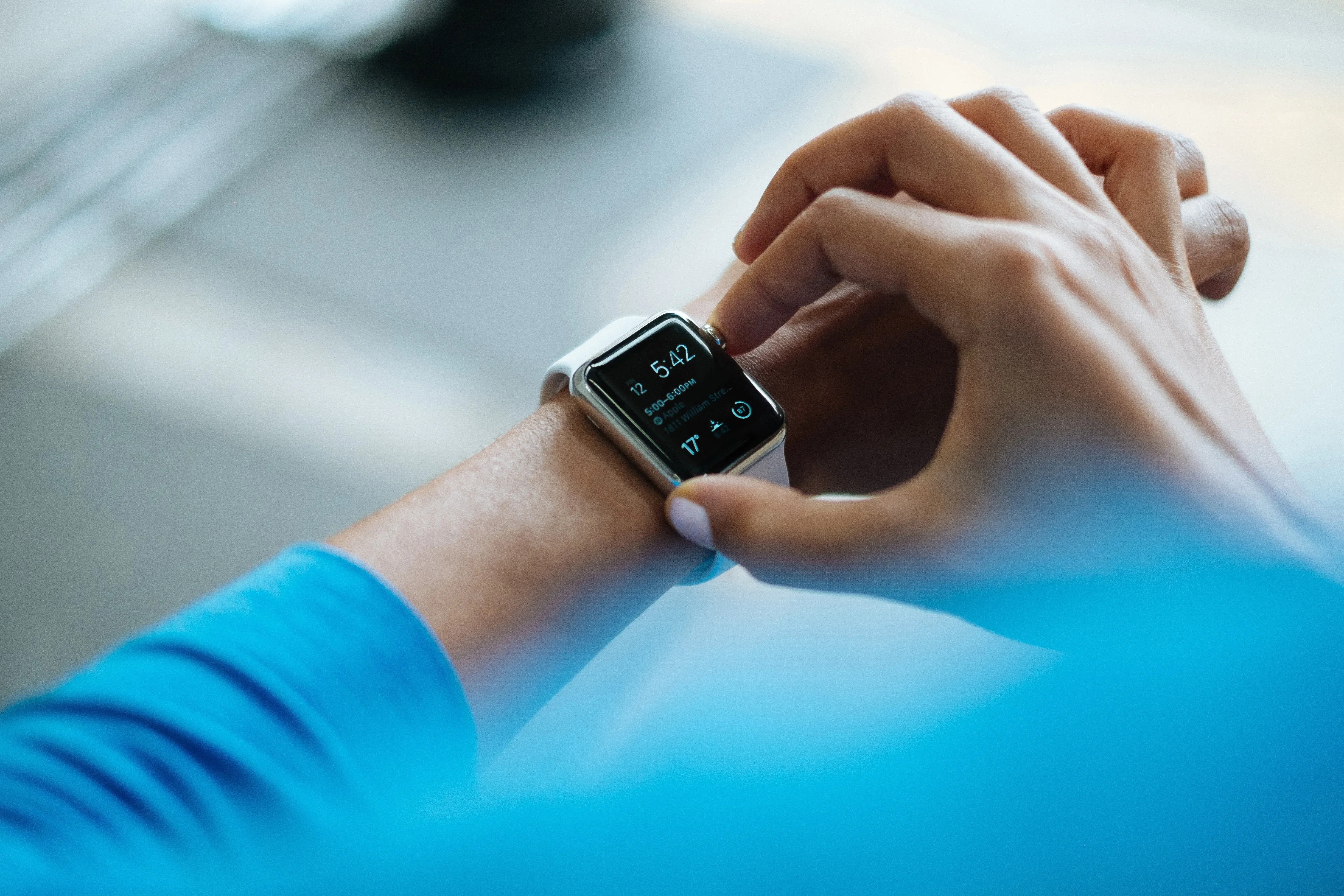
Researchers from the City University of New York (CUNY) have introduced a new approach to measuring the real-time impact of polluted air and extreme heat on people. The method combines consumer smartwatches, smartphone GPS tracking, and brief, momentary status questionnaires into a unified monitoring system that "accompanies" participants throughout their daily lives.
Integration, realized for the first time
The pilot study, published in the journal "JMIR Formative Research," involved participants wearing "Fitbit" smartwatches for approximately one month, while completing short questionnaires about their mood and symptoms several times a day as part of so-called ecological momentary assessment.
The researchers then combined this data with continuous GPS location tracking from smartphones to assess, based on the participants' actual routes, their exposure to high temperatures, nitrogen dioxide, fine particulate matter, and sulfur dioxide.
"By combining wearable sensors, GPS data, and real-time surveys, we can create individual exposure profiles that 'follow' a person throughout the day," explains lead author Yoko Nomura, distinguished professor of psychology at the CUNY Graduate Center and Queens College, and a collaborator at the Icahn School of Medicine at Mount Sinai Hospital.
According to her, this is "the first study in which wearable devices, ecological momentary assessment, and continuous GPS tracking have been integrated to measure the impact of environmental factors and their immediate effect on health."
From pilot project to personalized medicine
The results show that the integrated approach is not only technically feasible but also reveals patterns that stationary air monitoring stations do not capture at all.
Traditional methods rely on fixed monitoring stations or estimate pollution levels based on a participant's home address – approaches that do not account for the vast variability of exposure that people encounter as they move through different urban zones and microclimates throughout the day.
Nomura acknowledges that the scale of the pilot study is limited but emphasizes its significance. "This is a small pilot project, but it demonstrates an integration between consumer technology and environmental epidemiology that could pave the way for personalized approaches in preventive medicine," she says.
Wider application in the context of the climate crisis
The study comes at a time when climate change is intensifying heat waves in cities and worsening air quality in many of them, making the understanding of health consequences at an individual level increasingly urgent.
According to the researchers, the developed methodology could in the future significantly improve the quality of clinical care for patients with conditions sensitive to heat and polluted air – especially people with cardiovascular and respiratory problems.
The system would allow doctors to have access to data on the actual environmental impact on a specific patient in near real-time, rather than just population-level averages based on a few stationary stations or a single address.
Thus, the combination of a smartwatch, GPS, and short surveys could become the foundation for more accurate prevention, more individualized recommendations, and better protection of vulnerable groups in the face of increasingly extreme climate and environmental challenges.



Comments (9)
Добре звучи като идея, да видим как ще го приложат
Ааа, да бе, гениално! Всеки ден откриват нещо ново, за да ни казват колко мръсно е. 🤦♂️ Да видим дали ще има апликейшън за Android, че на iOS няма смисъл. Сериозно, в България със смога, това може и да се окаже полезно, ама кой го ползва... Всеки гледа TikTok. 😂 Надявам се поне да не харчат д
Абе, хора, вие селски ли сте или аз съм? Сега вече ще ни следят и смарт часовниците! Добре де, хубава идея на теория, ама кой ги ползва тия часовници за нещо полезно освен да гледаш час'а и да си пишеш празни съобщения.
Абе тва с умните часовници и проследяването на мръсотията... малко ми идва яко, честно. Разбирам идеята - все пак въздуха ни е пълен със смрад, особено лятоска с тия пожари и жеги. Но да си представям, че всеки мой ход, всяко излизане навън ще се записва и анализира... малко параноично ми се вижда.
абе, вие се майтапите ли? хубава идея, ама малко ме е гъзла направо. все едно ще ни следят като пилци! дали пък няма да започнат