
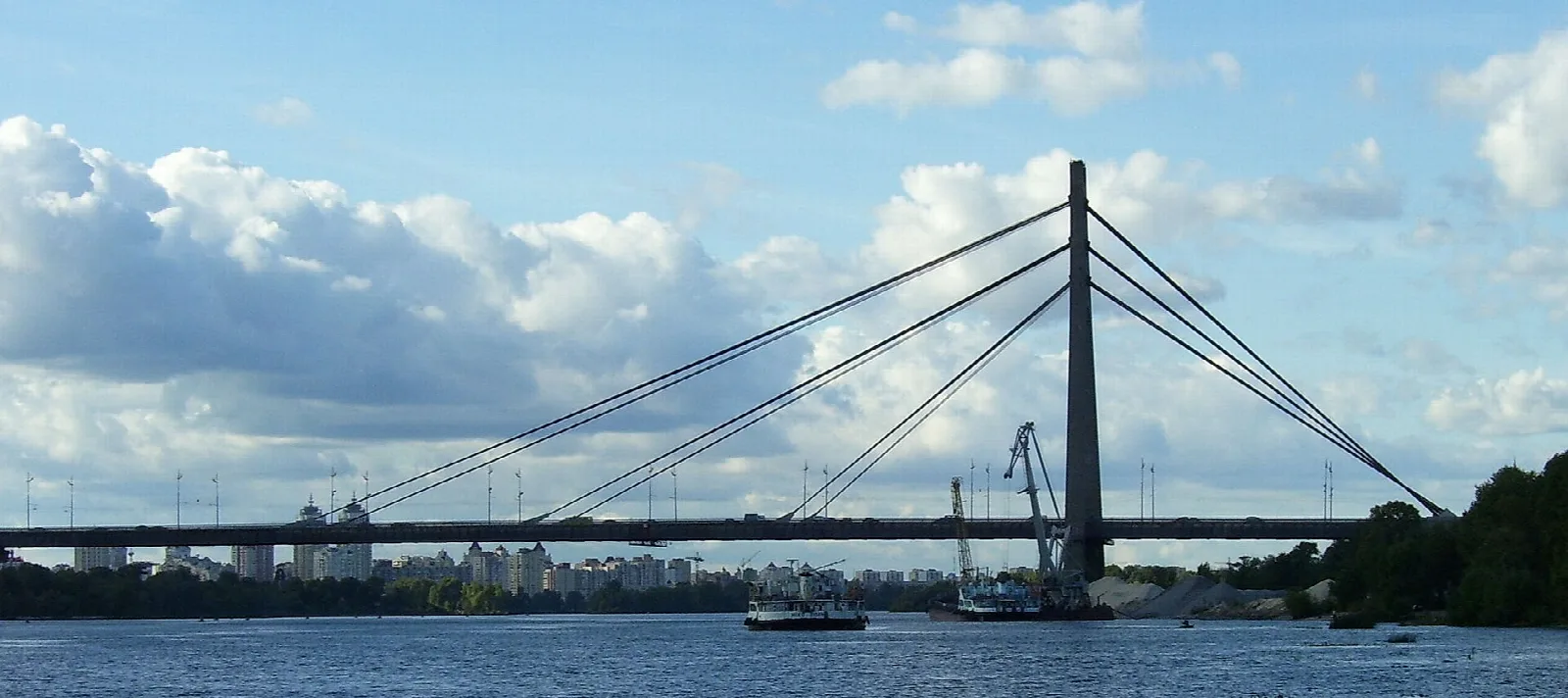
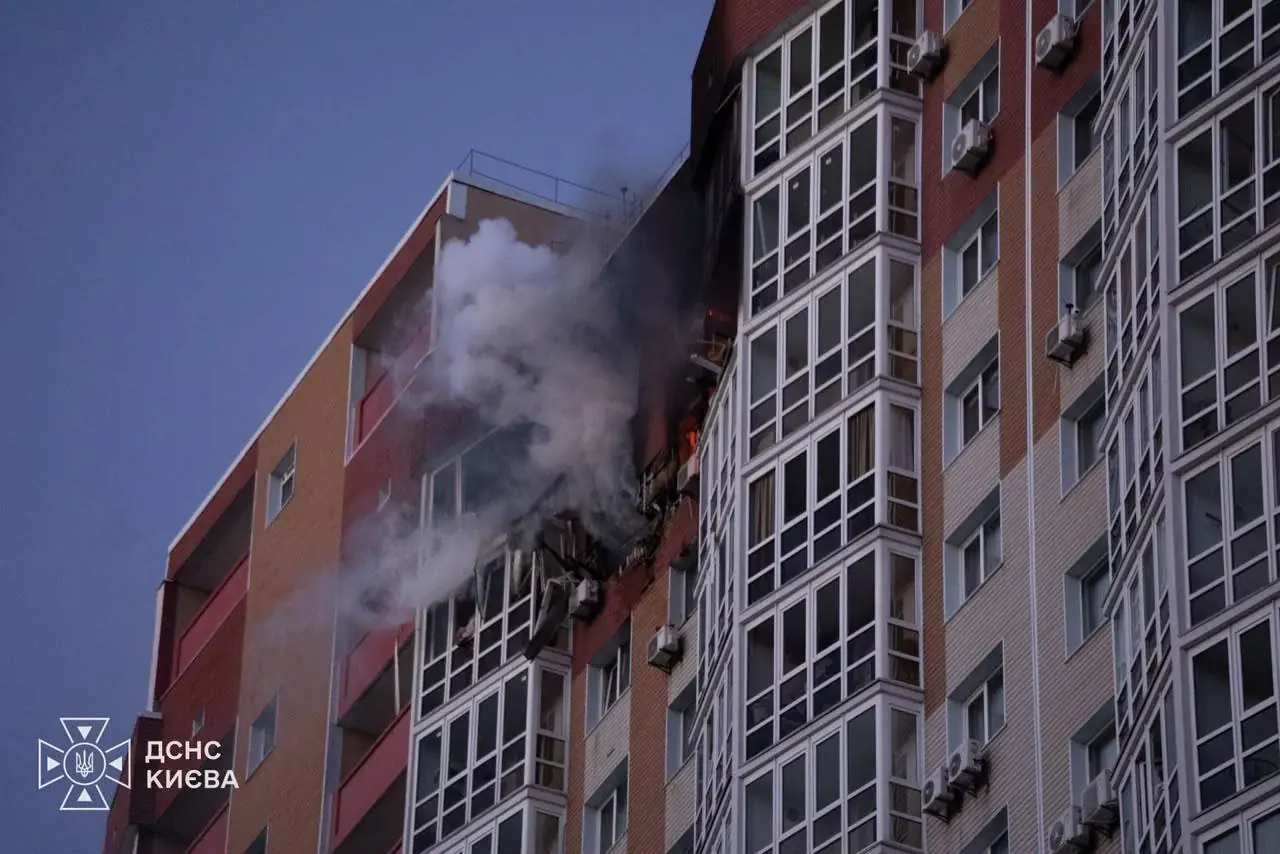
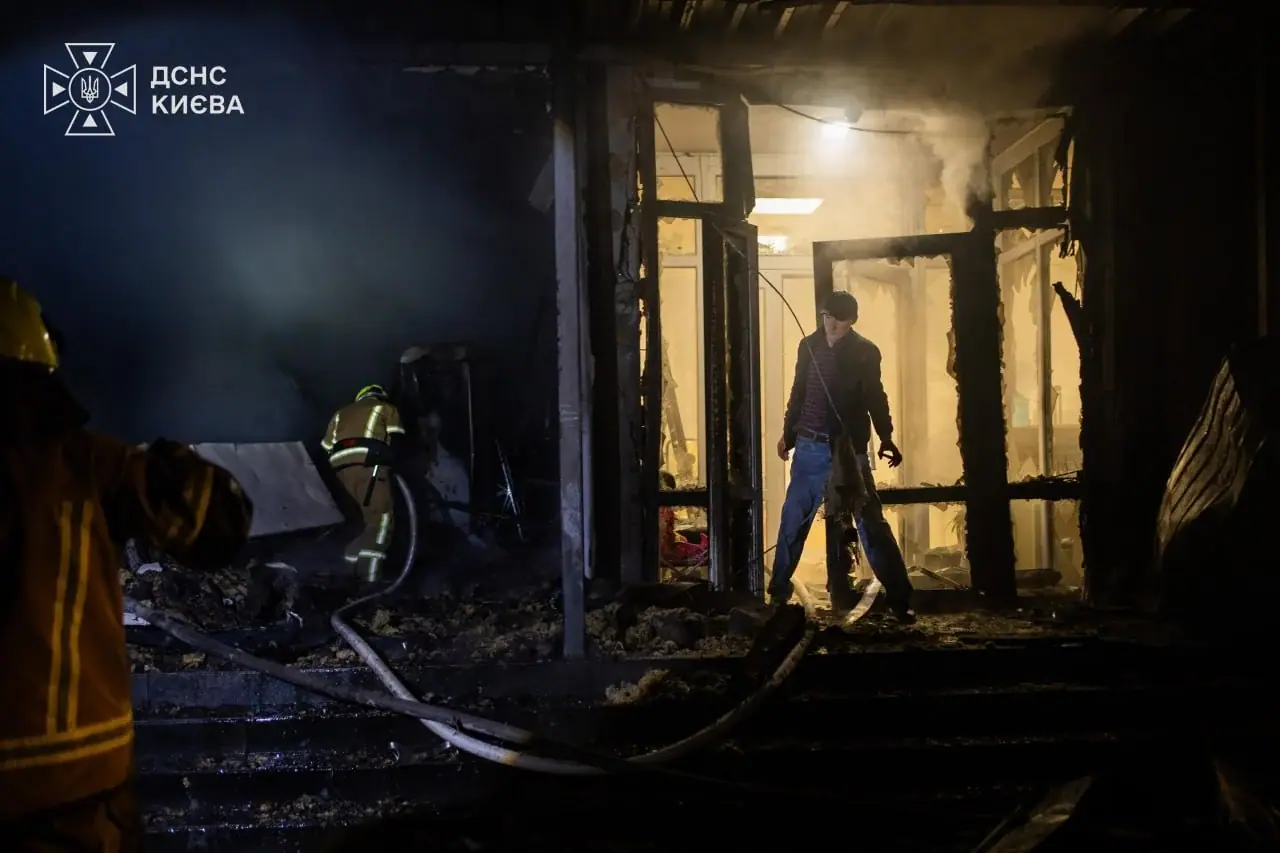
A Russian jet-powered drone hit the Northern Bridge in Kyiv on the morning of Saturday, October 3. The attack came as part of Russia's full-scale war against Ukraine, which has been going on since February 2022. Two people were hurt, and traffic across the bridge over the Dnipro river was restricted, the city's mayor, Vitali Klitschko, said.
Ukraine's air force warned at around 6:37am of a jet drone heading for the Northern Bridge. An explosion was then heard in the capital. A fire broke out after the bridge was hit.
At around 7:00am, Klitschko said: "The road surface and the trolleybus overhead wiring on the Northern Bridge have been damaged. Traffic across the bridge from the left bank to the right bank is closed for now."
At around 11:00am, city officials said the damaged overhead wiring would be repaired. Traffic from the left bank to the right bank resumed on three lanes, with one lane left open in the opposite direction. The city administration said all lanes would reopen once the work was finished.
One of the injured was treated at the scene, while the other was taken to hospital and is now receiving outpatient care, Klitschko said at 12:55pm.
The strike caused huge traffic jams in the capital. Kyivpastrans, the city transport operator, said that because the Northern Bridge was closed, buses No. 21, 73 and 101 were being rerouted via the Podilskyi bridge crossing, Poshtova Ploshcha metro station and European Square. Bus route 114 and trolleybus routes 29, 30, 31 and 47 were also delayed.
This is the second bridge in the capital hit by drones in three days. On October 1 and 2, drones struck the Southern Bridge, which took four hits, and on October 2 it was closed completely to cars and the metro, both during air raid alerts and outside them. The road surface, a bridge pier, a barrier and the metro's protective concrete covering were damaged there. Officials are still assessing the damage, and the city's defense council will decide when traffic can resume.
Four more bridges also have lane and direction restrictions: Metro, Darnytsia, Paton and Podilskyi. On October 2, traffic on the Metro bridge from the left bank to the right bank was reduced to one lane. On the Paton bridge, traffic from the right bank to the left bank was halted completely before later being restored in both directions, said Kateryna Pop, spokeswoman for the Kyiv city military administration. Some buses that normally use the Paton bridge were rerouted via the Darnytsia bridge. On Friday, Kyiv's transport network ground to a halt, with traffic jams and crowds of passengers piling up at bus and trolleybus stops.
The Northern Bridge links the right bank with the Troieshchyna, Voskresenka and Raiduzhnyi residential areas and serves the Obolon district, carrying much of the load that would otherwise fall on the city's other bridges. Hundreds of thousands of Kyiv residents cross it every day. Until the morning of October 3, it was the only bridge crossing in Kyiv that kept working fully even during air raid alerts. When an alert sounds, traffic on it is normally restricted to the direction from the right bank to the left bank.
Russia's defense ministry acknowledged the strike on the Northern Bridge in a statement issued on October 3. The Institute for the Study of War said Russia's military may be using long-range drones fitted with shaped-charge warheads against large, reinforced targets such as the Southern Bridge. Causing major damage to structures like this takes repeated precision strikes within a short time, and the exact type of warhead used is not known, the institute said in its analysis.
The Northern Bridge took five years to build and opened in December 1976. Until 2018 it was known as the Moscow Bridge. It is made up of three sections: an asymmetric cable-stayed span over the Dnipro, a span over the Desenka river, and an approach ramp to Trukhaniv Island. Its A-shaped pylon stands 119 meters tall and is topped with a five-meter copper emblem of Kyiv.

Comments (0)
Все още няма коментари.