
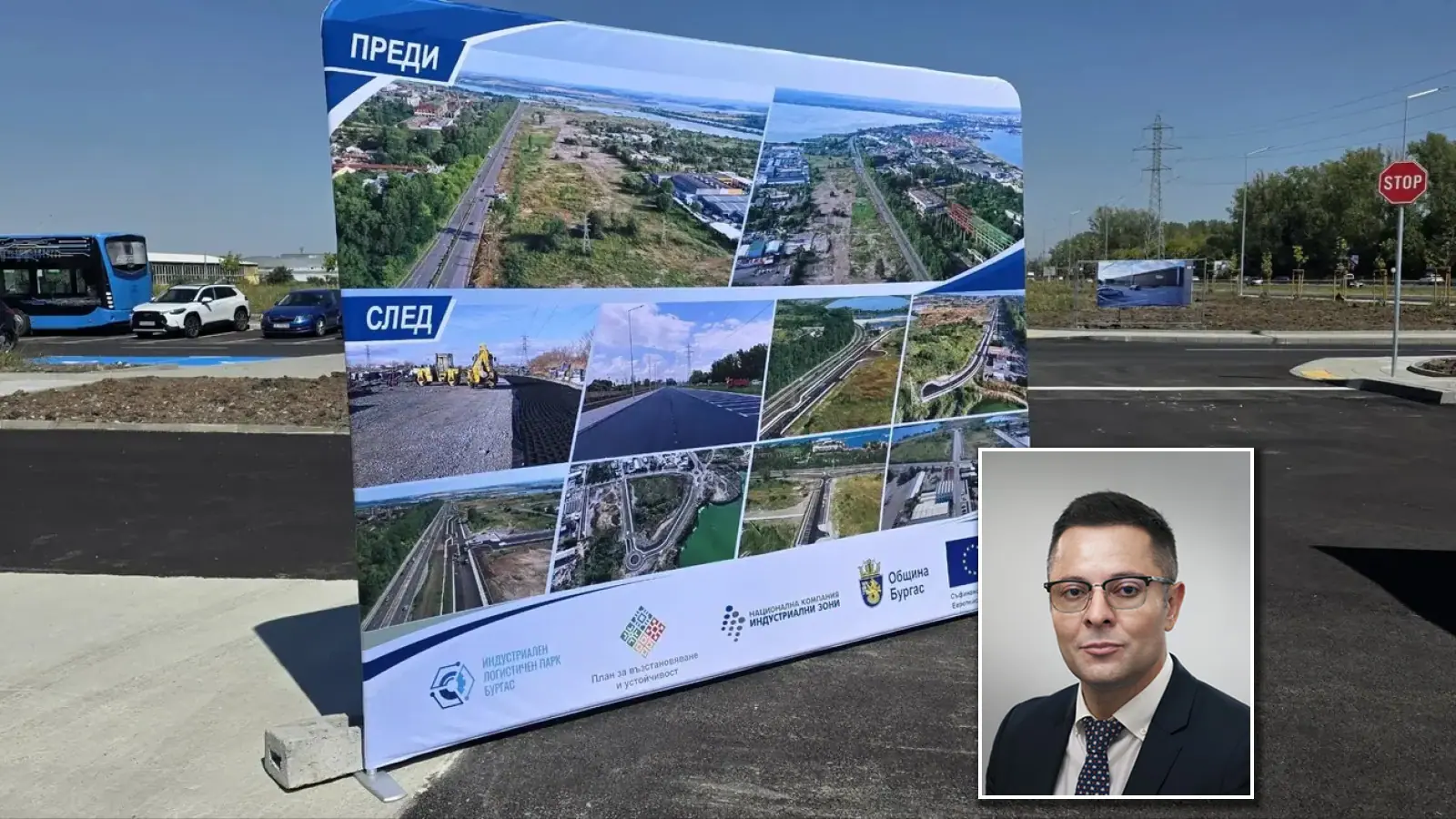
The government plans to help industrial zones in five or six regions, including Burgas, by paying for access roads and power lines. Deputy prime minister and economy minister Alexander Pulev said this during questioning at parliament's economic policy, investment and industry committee.
Besides Burgas, the list covers Plovdiv, Stara Zagora, Shumen and Vidin. Investors chose the regions themselves, and more details will come after 15 October, when work on the new budget begins.
The same day, Pulev also met a delegation from Rheinmetall over a joint project. "In literally an hour I'll be meeting a large delegation from Rheinmetall to lock in all the outlooks we need there," he said.
Lukoil's sanctions waivers from the US and UK run out on 29 October, and no request to extend them has been filed yet. "We haven't formally asked for the extension yet, because we were advised that this needs to go in about two weeks" before the deadline, Pulev said. He added there's no risk to the process, as the paperwork is being prepared and will go in on time.
Pulev recalled that under the extension granted on 13 August, Bulgaria agreed to regularly report statistics and operational data on crude oil purchases, premiums and related matters. He said opposition claims that British partners had found unauthorised imports of Russian oil were unhelpful, and that such talk had put at risk a process the country's security and economy depend on. Contacts with the US and UK remain open and cooperative, he said, and the issue is a daily priority for the ministry.
Together with the energy ministry, the government has rolled out a package worth more than 200 million euros for energy efficiency and to upgrade production in industry. The sectors covered make up 25% of gross value added — the value created across the economy — and close to 250,000 jobs.
A reform to cut red tape for business is also on the way, and trade bodies representing 99% of Bulgaria's economy have agreed to it. Pulev rejected claims that the government is raising taxes on industry overall or hurting small and medium businesses. On the windfall tax, he said the finance ministry has drawn up a 12-page methodology, and only the part of profit classed as windfall gets taxed.
Because fuel prices are high, the government is preparing a 300-million-euro package for businesses and vulnerable groups, with 270 million euros of that going straight to companies and affected sectors. The help will reach at least 1,500 small producers and is aimed at transport, logistics, energy-heavy firms and farmers, because when these sectors struggle, shop prices go up. The goal is to keep food prices under control, Pulev said.
Industry output has fallen by more than 10% over the past year. The decline is slowing, but Pulev said the government is watching the situation closely, with geopolitical factors also playing a part.


Comments (0)
Все още няма коментари.