
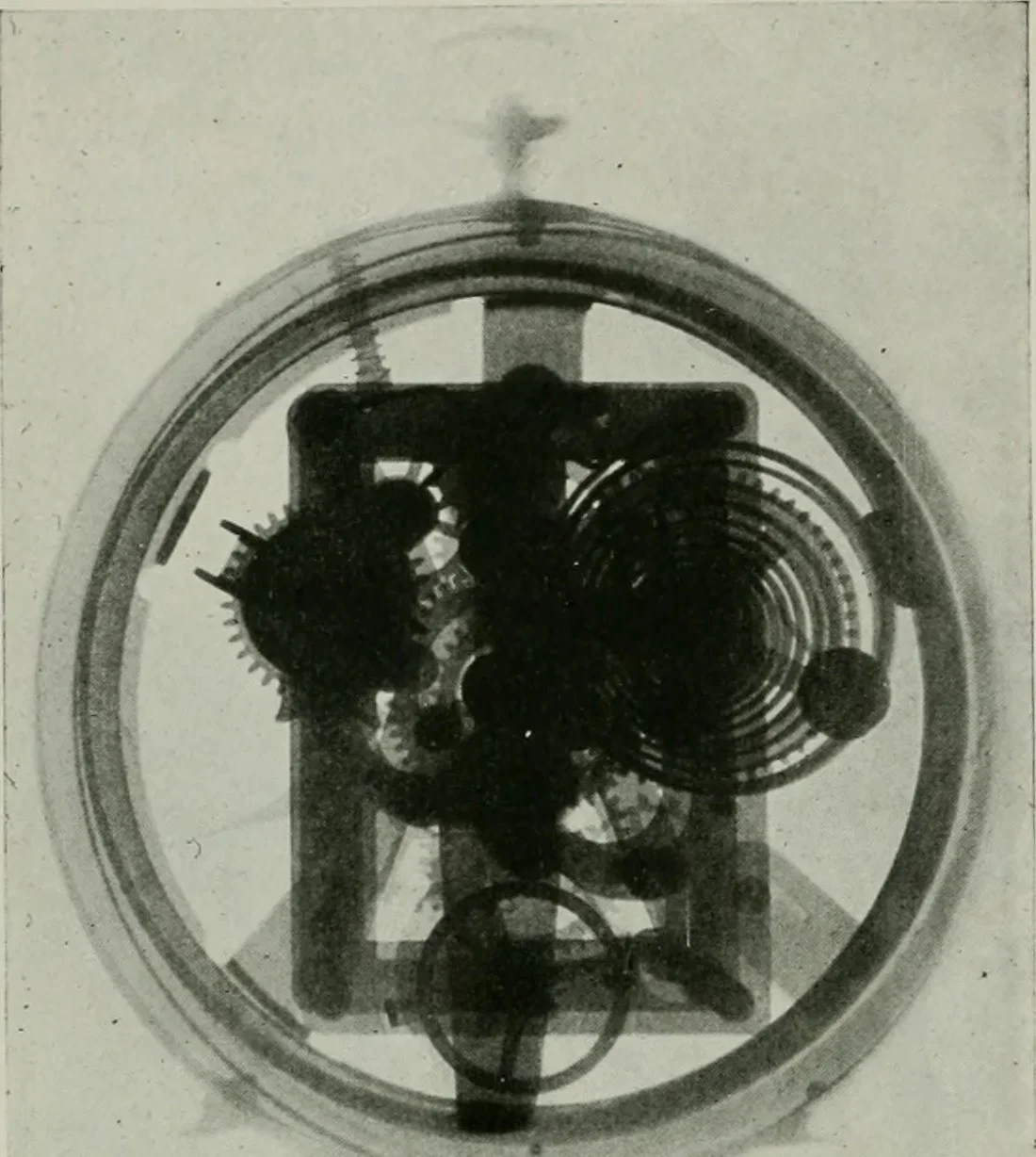
After more than two decades of theoretical and experimental work, two independent research groups have succeeded in realizing the first truly functional nuclear clocks – devices that measure time by tracking "oscillations inside the atomic nucleus" rather than the shell of electrons around it. The parallel breakthroughs, described in preprints published in early June on "arXiv", mark the transition of nuclear chronometry from a "pure concept" to a "working technology".
A long-awaited milestone in development
A European team led by physicist "Thorsten Schumm" from the Vienna University of Technology (Austria), and a Chinese group from "Tsinghua" University headed by "Shiqian Ding" and lead author "Beichen Huang", separately succeeded in stabilizing a laser in the "vacuum ultraviolet" at a wavelength of "148 nm". In both cases, this was achieved by using a nuclear transition in "thorium-229" nuclei embedded in "calcium fluoride" crystals.
Both teams implemented "closed feedback loops" that continuously adjust the laser frequency to match the nuclear resonance. It is this continuous stabilization that is the key difference between a "simple spectroscopic measurement" and "truly functional clocks".
"That was the last missing step, after which the device can rightfully be called a true clock," commented "Lars von der Wense", a physicist at "Johannes Gutenberg" University in Mainz, who was not involved in either project, to "Science News".
Frequency stability without cryogenic conditions
The "Tsinghua" University team achieved a relative frequency instability of "2 × 10⁻¹²" over the square root of the averaging time (measured in seconds), which, during longer operation, reduces to approximately "2 × 10⁻¹⁴". The Vienna group reported an instability of "3 × 10⁻¹²" over the square root of the averaging time, approaching "10⁻¹⁵" during 24 hours of continuous operation in "autonomous mode".
Both setups function at "room temperature" or near it – without extreme cooling and complex vacuum systems, which are necessary for the best modern optical atomic clocks. This is an important indication that future versions of nuclear clocks could be significantly more compact and practical for field applications.
Why nuclear clocks are so important
The atomic nucleus is approximately "10,000 times smaller" than the electron cloud, which makes it much less susceptible to interference from external electric fields, temperature variations, and other sources of noise. This inherent "robustness" could potentially allow for the creation of clocks with "unmatched stability", small enough for use outside the laboratory and accurate enough to verify whether "fundamental physical constants" remain constant over time.
The Vienna team immediately used their nuclear clocks to search for "ultralight dark matter" and reported that the device already outperforms leading atomic clocks in setting limits on the possible ways dark matter could interact with the "strong nuclear interaction" and "quarks". The increased sensitivity is due to the fact that the nuclear transition in "thorium-229" reacts "thousands of times more strongly" to changes in the "fine-structure constant" than the electron transitions used in standard atomic clocks.
First steps and rapid progress
Both research groups acknowledge that the prototypes they currently possess do not yet reach the accuracy of the world's best optical atomic clocks, whose relative uncertainty falls below "10⁻¹⁸". Nevertheless, the pace of development is impressive. As recently as March, about a "dozen teams" from China, Europe, Japan, and the US were racing to assemble the necessary components for the first functional nuclear clocks.
The Vienna group only managed to register the clear nuclear resonance of "thorium-229" for the first time in "2024" – and just two years later, they are already demonstrating a fully functional clock based on this transition. This highlights how quickly a field can move from fundamental measurements to real technological applications when several key technical hurdles are overcome.
"What impressed me most was that the system worked continuously for 24 hours without any intervention from the user," shared "Ekkehard Peik" from the German national metrology institute "PTB", one of the co-authors of the European paper. For future applications – from fundamental physics to navigation and communications – such reliability will be decisive.



Коментари (15)
Абе, наистина ли сме готови за такива технологии? 😅 То като гледам как си губим времето по ДРУГИ теми... Не искам да звуча
Ааа, баси! 😳 Ядрени часовници
Абе хора, ама хайде бе! Ядрени часовници?! Сериозно ли? 🤣 То като гледам колко си закъснявам всеки ден, май ми трябва един такъв, дето да ме дърпа на време... шегувам се, разбира се.
Уау, ядрени часовници?! 🤯 Това не е ли малко прекалено? Дали ще успеем да ги използваме за нещо полезно тук
Абе, хора... сериозно ли? Ядрени часовници... добре де, хубаво е за науката и технологиите, ама на фона на всички проблеми у нас... все едно да си купиш космически кораб като ти тече покрива. 🤷♂️ Да не говорим че Китай и Виена ще ги използват за техните си работи. Ние какво – да гледаме как времето им се синхронизира? Малко ми е тъжно, признавам... Иначе