
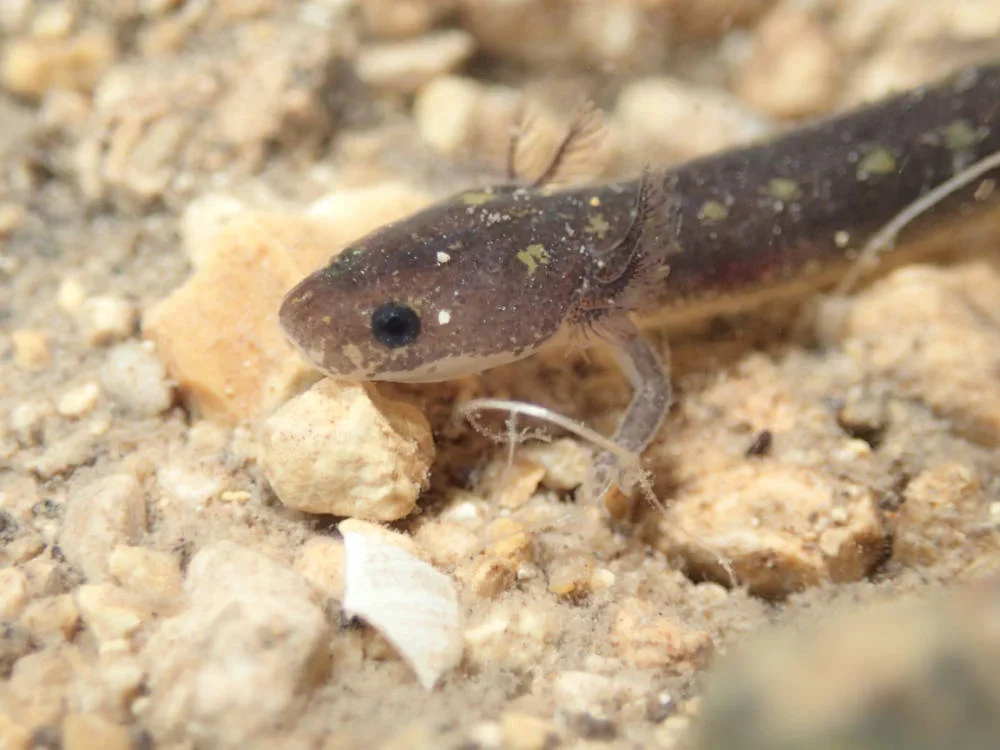
Salamanders and frog tadpoles can completely restore lost limbs after amputation. In mammals, this does not happen. A new study, published in the journal "Science", offers an explanation that does not rely on differences in DNA, but on the way cells perceive oxygen - and shows that changing this reaction can awaken dormant regenerative programs in mouse tissues.
Oxygen as a "gatekeeper"
A team led by Can Aztokin - formerly at EPFL and now at the "Friedrich Miescher" laboratory of the Max Planck Society - compared amputated limbs of frog tadpoles and mouse embryos, cultivated at strictly controlled oxygen levels. When the oxygen concentration is lowered to simulate an aquatic environment, the cells in the limbs of mouse embryos close wounds faster, become more mobile, and switch their metabolism to glycolysis - a combination of features typical of regeneration, not scarring.
At the heart of this mechanism is the protein HIF1A, which acts as a cellular oxygen sensor. Under hypoxia, HIF1A stabilizes and activates genetic programs associated with tissue repair. Artificial stabilization of HIF1A in mouse cells causes the same effects even at normal oxygen levels. In addition, the reduced oxygen content changes the chemical "labels" on the proteins that compact DNA: suppressing signals are turned off and the genes needed for regeneration are turned on.
Species differences
Frog tadpoles, unlike mice, demonstrate sustained regeneration over a wide range of oxygen levels - even at values higher than those in the atmosphere. Their cells maintain stable HIF1A activity because they express fewer genes that normally suppress the hypoxia response. When the analysis was extended to axolotls and available human data, the scientists found that in regeneration-competent amphibians, oxygen sensitivity is permanently reduced, while in mammals it is increased and quickly turns off regenerative pathways shortly after trauma.
Towards regenerative medicine
These results do not mean that limb restoration in humans is "around the corner". Within the study, scientists managed to activate early regenerative mechanisms in mouse embryonic tissues, but not the full growth of a functional limb. However, the work rethinks a long-standing biological question, suggesting that the boundary between species that regenerate and those where healing leads to scarring may be more flexible than previously thought.
"Our results show that regenerative programs can be triggered in mammalian tissues and outline a clear, verifiable pathway to stimulate limb regeneration in adult mammals," says Aztekin.





Comments (12)
Абе, наистина ли има шанс за това? При хората ще стане 👏
Абе хора, к'во става с науката, бре?! Мишки регенерират крайници... ей Богу, все едно си гледам филм направо! 🤯 И как така досега не са разбрали, че кислородът е ключов? Да не би да са били в комбинация с руснаците и умишлено да са ни криели нещо?! 🤨 🇧🇬
Ох, мамка му, тва вече е яко! 🤯 Мишки регенерират... сякаш си гледам фантастика! Сега ще чакам да видят как ще регенери
Абе, сериозно ли? Мишки регенерират...?! 😳 Да видим дали ще го докажат и при хората
Уау, наистина ли?! Мишки си оправят краката сами? 🤯 Ама това накъде отива науката бе хора?? Дали и ние ще можем да си отглеждаме крайници като гущерчета след време? 😂 Яко е, ама ма