
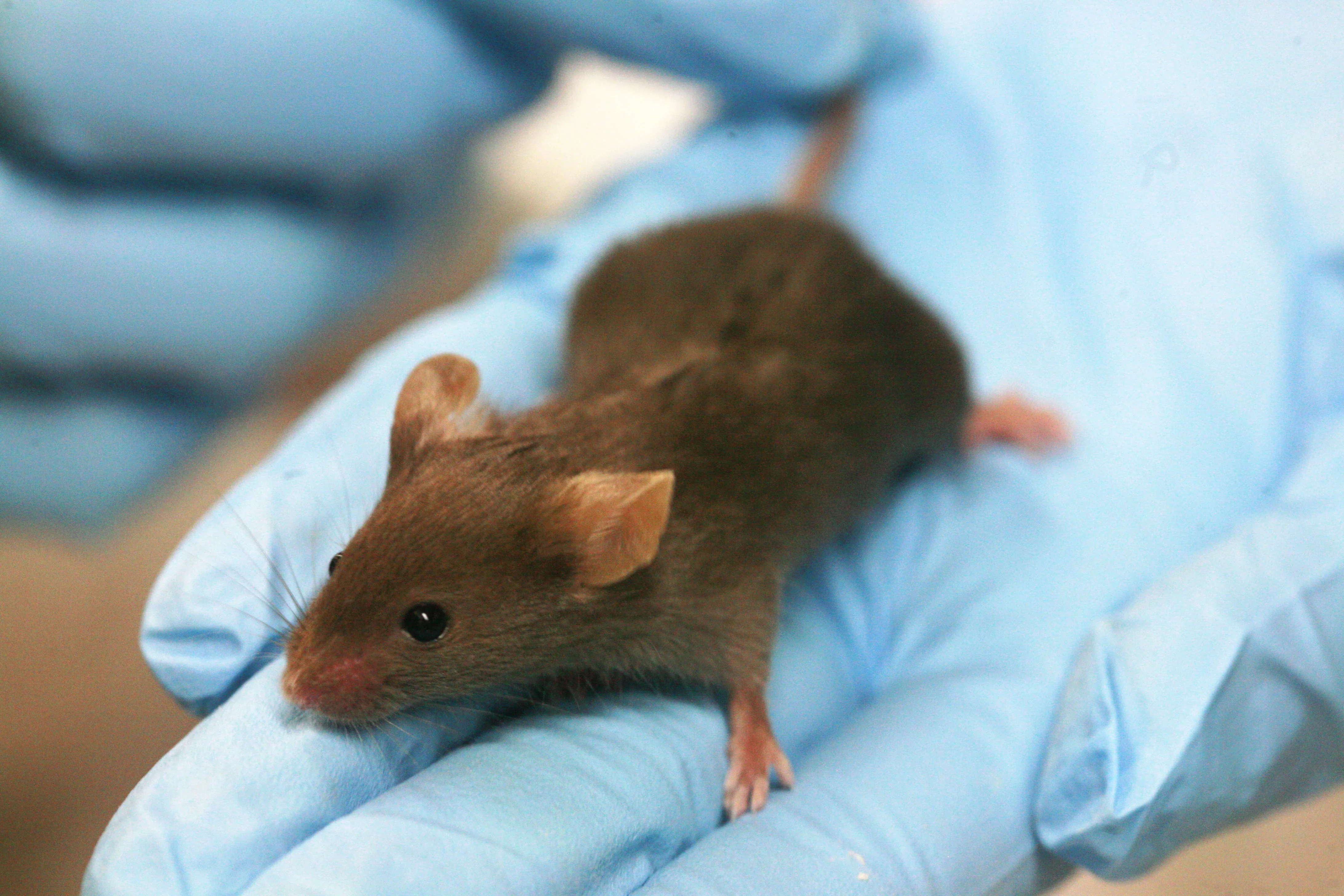
Mice are able to recognize a given odor within the first 50 milliseconds after inhalation - and this happens in the olfactory bulb of the brain, not in the cerebral cortex. This is the conclusion reached by a team from NYU Langone Health in a study published in the journal "Nature Neuroscience". The results call into question the established understanding of how mammals process sensory information and show that the olfactory center in the brain performs much more complex "calculations" than previously thought.
How time filtering works
The team, led by Mursel Karadas, PhD, focuses on the processing of the signals that generate the millions of olfactory sensory neurons in the noses of mice. These neurons connect to groups of nerve endings - glomeruli - in the olfactory bulb, and from there to the mitral and tufted cells (MTC), which transmit the information further.
The researchers found that it is the signals from the glomeruli to the MTCs, originating in the first 50 milliseconds of the respiratory cycle, that determine which odor the mouse's brain "sees". In a process the scientists call "temporal filtering", the earliest activated nerve signals simultaneously identify the odor and suppress later impulses - including the background "noise" from other odors.
The same initial configuration of signals is activated for the same aroma, regardless of the concentration of the odorous substance. This allows mice to recognize the odor at both low and high intensities, without being confused by the change in the strength of the stimulus.
"Our results challenge the fundamental notion of sensory information processing in mammals - namely, that these brain calculations are performed primarily in the cerebral cortex," says one of the lead authors, Dmitry Rinberg, professor of neuroscience at the Grossman School of Medicine at New York University. "The work also shows for the first time how mice, and probably humans, use temporal filtering to distinguish odors."
Wider context and future applications
The study was made possible thanks to precise optogenetics - a method in which light pulses are used to activate or suppress specific neurons - and a new type of microscope for mapping neural circuits developed by Karadas. The device allows the team to stimulate and track nerve signals in the outer layers of the olfactory bulb with high accuracy.
Co-lead author, Associate Professor Shay Shoham, director of the Tech4Health Institute at NYU Langone Health, notes that the results raise fundamental questions about the role of the cerebral cortex in processing sensory signals. He recalls that in vision, the latest discoveries show a similar picture: the retina in the eye participates in the recognition of objects even before the signals reach the cortex.
According to Shoham, the concept of temporal filtering can also find a place in artificial intelligence, accelerating the processing of large amounts of sensory information. Instead of complex calculations at a later stage, systems can "learn" to rely on the earliest and most reliable signals.
In the next stages, the team plans to investigate how temporal filtering helps to distinguish odors that are close in nature - for example, lemon and orange. Such results could clarify not only how smell works in mammals, but also how the brain as a whole turns fast, noisy signals into clear and stable perceptions.






Comments (12)
Абе хора, к'во става с науките бе? Всеки ден някой открива нещо ново... 50 милисекунди?! Мишоците наистина са доста бързи. Интересно ми е как това ще се приложи на практика - дали ще правят някакви нови сензори или не знам. Важното е да не се използва за нещо лошо, както обикновено става ама... Да видим к
Хм, доста любопитно. 50 милисекунди?! Не съм очаквал толкова кратко време за обработка на миризмите. Интересно е как това ново зна
Абе, сериозно ли? Мишките разпознават миризми за половин секунда? Какво останаха мозъците ни тогава, а? Да не би да сме по-бавно от мишоците?! Хммм... интересно
абе, сериозно ли? 50 милисекунди?! мишоците по-бързи от нас явно! 😅 и то за миризми, а аз не мога да си спомня какво ядох преди час... да
Ебати, сериозно ли? 50 милисекунди?! А