
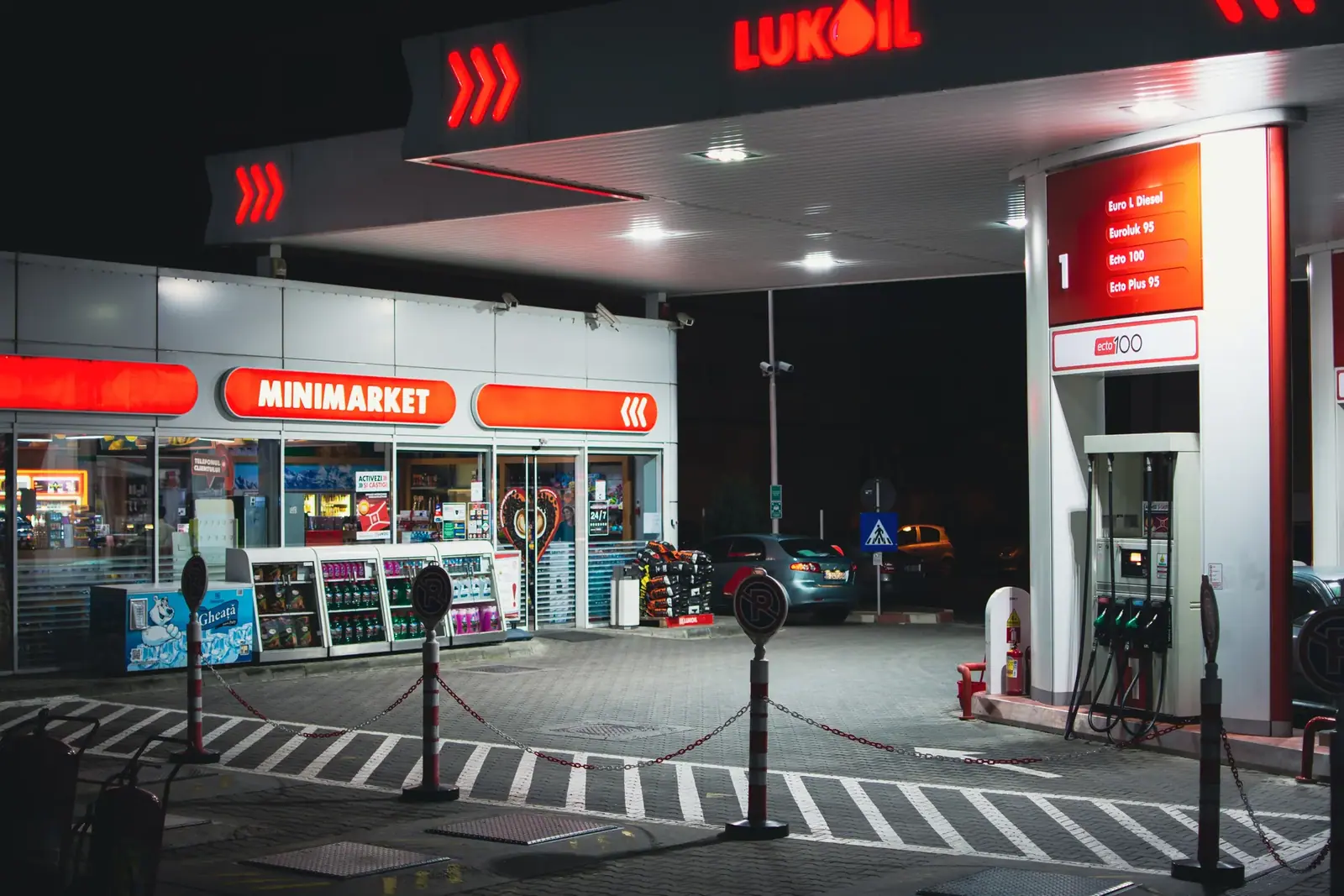
Bulgaria will not face fuel shortages as long as "Neftochim Burgas" is functional and operational, Evgeni Simeonov assured. The Special Commercial Manager of "Lukoil" emphasized that the company has done everything possible through the discounts provided in prices. Regarding the fuel export ban, he noted that it is set to be lifted once the decision—which has already been approved by the Parliamentary Commission on Economic Policy, Investment, and Industry—is voted on in the plenary hall and published in the "State Gazette".
Currently, "Lukoil Neftochim" utilizes 52 types of petroleum, which are imported from various parts of the world—Libya, Iraq, South America, Africa, and Norway—with shipments passing primarily through the Black Sea. According to Simeonov, the refinery's high costs are linked to insurance, "Green Deal" expenses, and other factors. He reminded that 15 years ago, when Europe decided to go "green", heavy regulation led to the closure of over 36 refineries on the continent. This production was shifted to the Persian Gulf, which is currently blocked, leading to the rising prices we are seeing.
In an interview with Bulgarian National Television, Simeonov shared that the company operates with a minimal markup while simultaneously ensuring it achieves a positive financial result. Although the company currently maintains a positive balance, he noted that it is too early to speak of profit and it remains unknown how the year will conclude. The manager also warned that if "Lukoil" were to begin artificially lowering prices, it would lead to decapitalization.
Regarding fuel prices, he emphasized that high costs are a problem affecting consumers not only in Bulgaria but are a general phenomenon. In this context, he assessed the government's decision to reduce the excise duty on propane-butane as a good measure, as this fuel is used by the most vulnerable layers of society.
Коментари (0)
Все още няма коментари.