
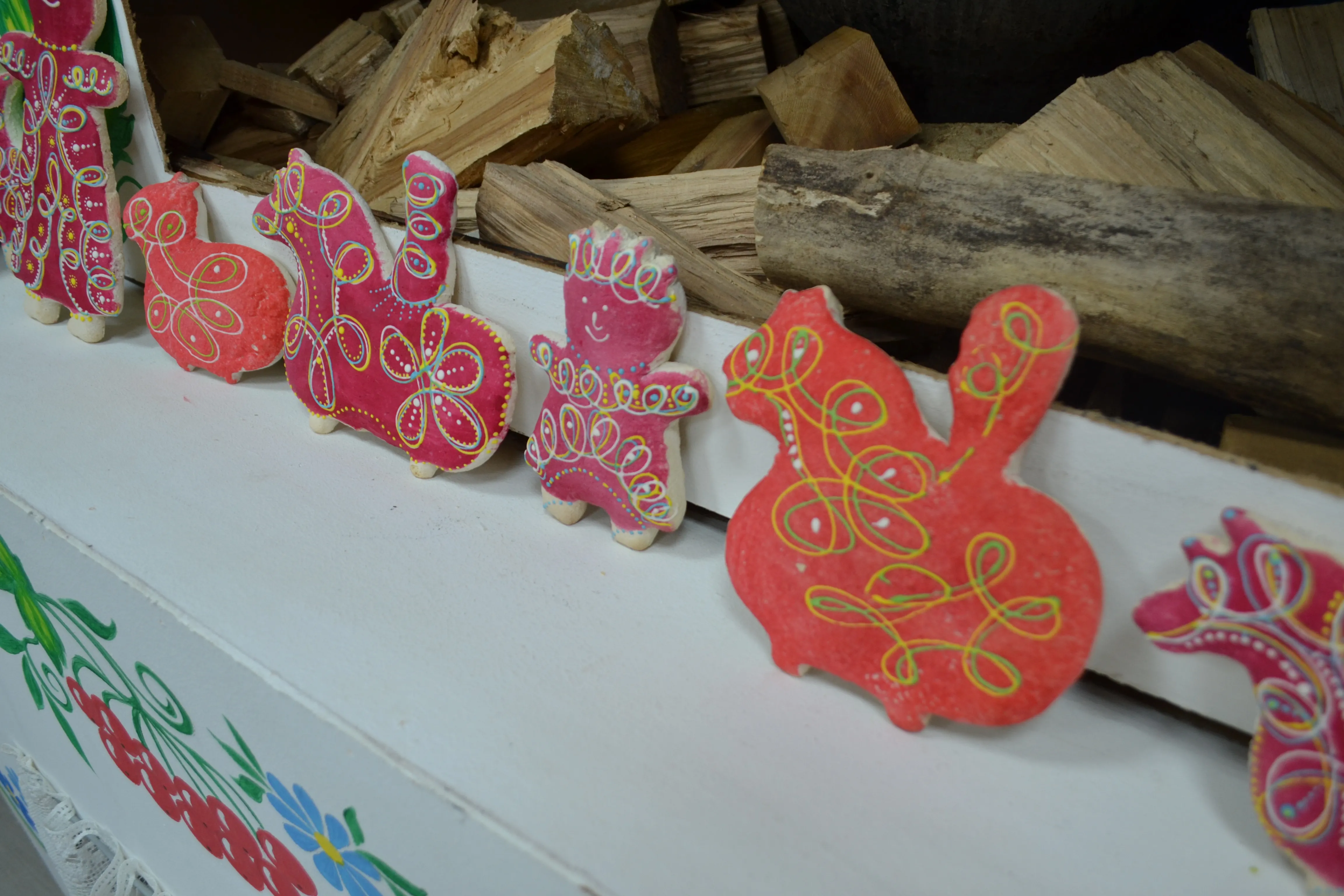
Everything we wish for on Christmas will come true - this is how one of the most popular Christmas beliefs in our country goes. From the old rituals at the festive table to the divination with walnuts and dogwood branches, the folk tradition is filled with beliefs for health, fertility and good luck throughout the year.
The Christmas table, associated with the folk customs of the Nativity of Christ, dates back to very ancient times. It is believed that it has Slavic roots and ethnogenetic conclusions are often drawn from it about the unity of the Slavs and their common culture. Traditionally, a pig's head or a dish prepared from it is placed on the New Year's table - a detail that has not only culinary, but also cognitive significance for the past.
According to ethnologists, this custom, along with other evidence, suggests that the Slavs tamed the wild boar in Northeastern Europe. From here comes the scientific conclusion that the tradition of serving pork on the table for the New Year has its roots in the era of the Slavic homeland. Pork gradually became established as a symbol of abundance and well-being during the winter holidays.
Another important ritual element of the Christmas table is the banitsa with dogwood branches. Old dogwood twigs with buds are hidden in it - a kind of lucky charms: with one bud - for the house, with two buds - for the book and learning, with three buds - for goods and trade, etc. Dogwood branches are carried especially for the banitsa, and it is from them that the traditional survachka for survakane originates.
That is why the most ancient custom dictates that the dogwood survachka should be stuck in the banitsa to transfer its power for health and longevity in the home. Dogwood is known as one of the healthiest trees and in folk beliefs it is perceived as a symbol of resilience, vitality and good health. Thus, through the survachka, people believe that they "invoke" prosperity and success during the new year.
If you celebrate Christmas in the Shumen region, you will traditionally receive three walnuts to "see your luck". The belief is simple: if the nuts are healthy and full, the person who received them will also be healthy and lucky. In the Kotel region, girls wash their hair with water in which dogwood branches have been boiled, so that their hair grows long and healthy.
In other places, girls sprinkle their hair with 12 onion rings, with each ring being "named" after one of the months of the year. In the morning, they look at what has happened to the onion rings to decipher which month will be dry and which - rainy. Thus, nature turns into a kind of calendar and tool for predicting the weather.
According to the most widespread beliefs, whatever we wish for on Christmas will come true. The belief in the power of words and thoughts during this period makes Christmas wishes especially important for people. And along with that, dozens of other beliefs have been preserved in the tradition, which "interpret" the signs of the time, food and objects around us.
One of them states that Christmas Day shows what the weather will be like throughout the year. "Warm Christmas - unhealthy year", say the people, hoping for deep snow and clear, cold days for a good healthy and fertile period. According to these ideas, the cold and snow during the holidays bring strength and purity, which purify and renew everything alive.
If there is frost on the trees at Christmas, it is believed that abundance awaits us in the New Year. The white ѝnѝy is perceived as a good sign for fertility in the fields and a rich harvest. It also symbolizes the purity with which nature "wraps" the earth before the new cycle of growth.
The ashes from the Christmas tree or from the wood of the festive fire also have a special meaning – they are used to predict fertility. The more ashes remain, the more fertile a year is believed to be ahead. In some areas, part of the ashes are scattered in the fields to "transfer" the blessing of the holiday to the land.
Another popular custom is related to the coin in the pastry on Christmas Eve or on Christmas Day. It is believed that whoever finds and "wins" the coin in the bread or banitsa will be alive, healthy and lucky throughout the year. Sometimes the coin is also placed in a product, symbolically separated "for the Mother of God" or "for the home".
When the coin falls precisely in this bread for the Mother of God or for the house, the beliefs promise a particularly prosperous year for everyone in the family. It is believed that in this way the grace is shared equally among the household and is not concentrated only on one person. This underlines the collective character of the Bulgarian tradition, in which common happiness stands above personal.
According to beliefs, the meeting of two groups of carollers is not good luck – it is believed that then there will be a lot of rain in the summer or something else bad will happen. In order to avoid the bad omen, the two teams sometimes enter into a symbolic "fight" with each other or exchange their sticks and gees. Thus, through a ritual action, the tension is "relieved" and the predicted misfortune is banished.
In folk beliefs, in the period from Christmas Eve to Epiphany, demons and the so-called "dirty days" roam the earth. It is believed that unclean forces, karakondzholi and "bad forests" come out and wander until January 6 - the time of the Baptism of the Lord. That is why people put a clove of garlic in their pocket to protect themselves from evil forces, and without it it is considered dangerous to go outside.
Garlic is also used to smear thresholds, doors and sometimes the foreheads of children to serve as protection during the "dirty days". Thorny branches of hawthorn, juniper or other plants are also hung on gates and fences as an additional shield against invisible threats. Thus, the home is transformed into a protected space where evil cannot penetrate.
Some beliefs connect the coming year with the day of the week on which Christmas falls. If Christmas is on a Monday, it is believed that the winter will be harsh, and the spring and summer - rainy. Autumn is then expected to be dry, the grapes not particularly good, as is the wine, and the year will not be favorable for bee families and honey.
For a Monday Christmas, it is also believed that the year will be most successful for rulers, voivodes and rulers. This suggests the belief that natural forces and social power go "hand in hand" and influence each other. In such predictions, it is clear how the ancient people sought meaning and order in the coincidences between the heavenly and human order.
If Christmas falls on a Tuesday, according to the belief, the winter will be snowy, and the spring - rainy. Autumn is then expected to be dry, wheat and fruits will not be particularly good in quality and quantity. Sea travelers should be especially careful, but on the other hand, honey and oil will be in abundance.
When Christmas is celebrated on a Wednesday, it is believed that the winter will be harsh, and the spring - dry. However, the year will be rich in grapes and wine, which pleases the vine growers and winemakers. At the same time, it is believed that enemies will achieve success in peacetime, which suggests a tense social and political background.
With Christmas on Thursday, the beliefs herald a mild winter, but a windy spring and summer. A shortage of vegetables and honey is expected, in exchange for a richer harvest of fruits and oil. The year will not be kind to the strong of the day - it is believed that they will lose some of their positions.
If Christmas falls on a Friday, folk wisdom predicts a very bad winter, a rainy summer and a dry autumn. However, the grapes will be abundant and of good quality, and the princes will praise it, while the warriors will enjoy the fertility and wine. Behind these images, the hope is revealed that despite the difficulties in the climate, the abundance of fruit and wine will compensate for the deprivations.
When Christmas falls on a Saturday, it is believed that winter will bring a lot of snow. Spring will be windy, and summer - rainy, with few but good fruits. The year will not be good for sheep - diseases in the herds are expected, and nature can also present serious challenges in the form of fires and earthquakes.
In such years, older people should be especially careful about their health, the old beliefs warn. The frequent climate changes, storms and disasters are considered a serious test for more fragile organisms. That is why the advice on caution, moderation and self-care comes to the fore.
If Christmas falls on a Sunday, the belief states that the winter will be mild, the summer - dry, and the autumn - windy. The soldiers will rejoice, and the rulers will be overthrown, says folk wisdom. Fruits, honey and livestock will be in abundance, but young people are advised to be careful in their actions.
On Christmas Eve, on Christmas Eve, the walnuts are broken, which earlier - on Ignazhden - were "named" for each person in the home. If the nuts remain whole, white and large when broken, this is taken as a sign that the person will be healthy and will be successful throughout the year. If the walnut is empty or spoiled, it is considered a warning for possible difficulties.
Ivy leaves placed on the table and then placed under the pillow also serve to predict health. If the leaf remains fresh and green until morning, according to the beliefs, the person will be healthy throughout the year. If it withers, this is interpreted as a sign of the need for more care and attention to the state of health.
From the dogwood survachka in the banitsa to the walnuts for good luck and the garlic against evil forces, Christmas beliefs and rituals keep alive the memory of the generations before us. They intertwine the Christian holiday "Nativity of Christ" with much older, pagan layers, aimed at fertility, health and the protection of the home.




Comments (16)
Абе, хора, я да питам... сериозно ли още се връзваме на ти 🤬
Абе, хора... като чета коментарите, все едно си говорим за нещо от друго време. Не е лошо да се придържаме към традициите, де, ама ей Богу, сериозно ли още вярваме на орехите и дряна? 😅 💩
ей, здравейте на всички! четох коментарите, ама... ох, хора! наистина ли се вживяваме толкова много във всичко? аз лично намирам за хубаво да помним старите традиции и поверия - все пак са ни останали от бабите и дядовците. не е лошо да си пожелаем нещо хубаво на коледа, нали?
Абе, хора, спокойно! Баницата със сушени плодове е вкусна, без значение дали има дрян или не 😂. Да си пожелаем
Абе, здравейте! Четох новината и коментарите... ама вие хора изобщо живеете в 21-ви век ли? 😂 Не казвам да сме забравили традициите - напротив, хубаво е да помним откъде сме дошли. Бабите са го правили, дядовците също, и аз сигурно ще метна едно дрянче в баницата за по старческа традиция.