
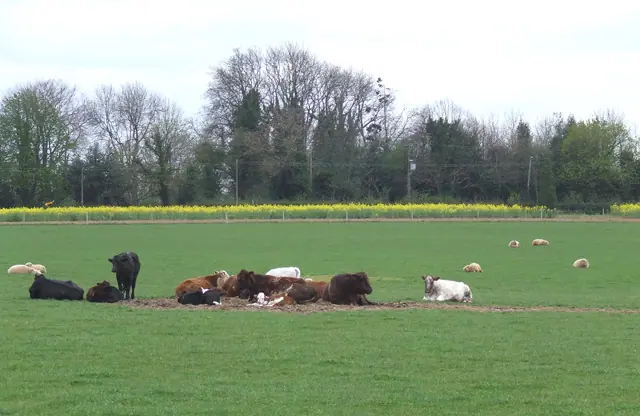
The State Fund Agriculture will pay out up to €1.8m to small ruminant farmers whose farms sit in zones restricted because of sheep and goat pox, the fund said. The money will cover part of the cost of feeding the animals.
The rate is up to €8 per animal. The aid falls under the EU's "de minimis" rule, which caps what a single farmer can get at €50,000 over three years.
The fund's board approved the budget for the scheme. The aid covers 2026 and will go to farmers registered under Ordinance No. 3 from 1999 whose livestock holdings lie in towns and villages placed under restrictions by the Bulgarian Food Safety Agency. The list of affected farmers and the number of animals come from the agency's own data.
The food safety agency has found a number of primary outbreaks of the pox among small ruminants and has culled the animals at those sites in a humane way. Around each outbreak site, the agency has set up a 5km protection zone and a 15km surveillance zone.
Outbreaks have been recorded in eight regions — Plovdiv, Haskovo, Stara Zagora, Kardzhali, Blagoevgrad, Kyustendil, Yambol and Sofia. They were confirmed in June, July, August and September 2026. The fund said the agency imposed the restrictions because of the worsening animal disease situation.
The fund will use an approach that cuts paperwork and gets the money to farmers fast.
The fund paid similar aid in 2025, when nearly 2.245m levs — 2,244,480 levs — went to 732 farmers under the same de minimis rule for the same disease.
Rules on how to apply for the aid will be drawn up by the relevant departments at the fund and at the agriculture ministry, and the agriculture minister will sign them off.

Comments (1)
осем области? сериозно ли, толкова са засегнати. жалко за стопаните наистина.