
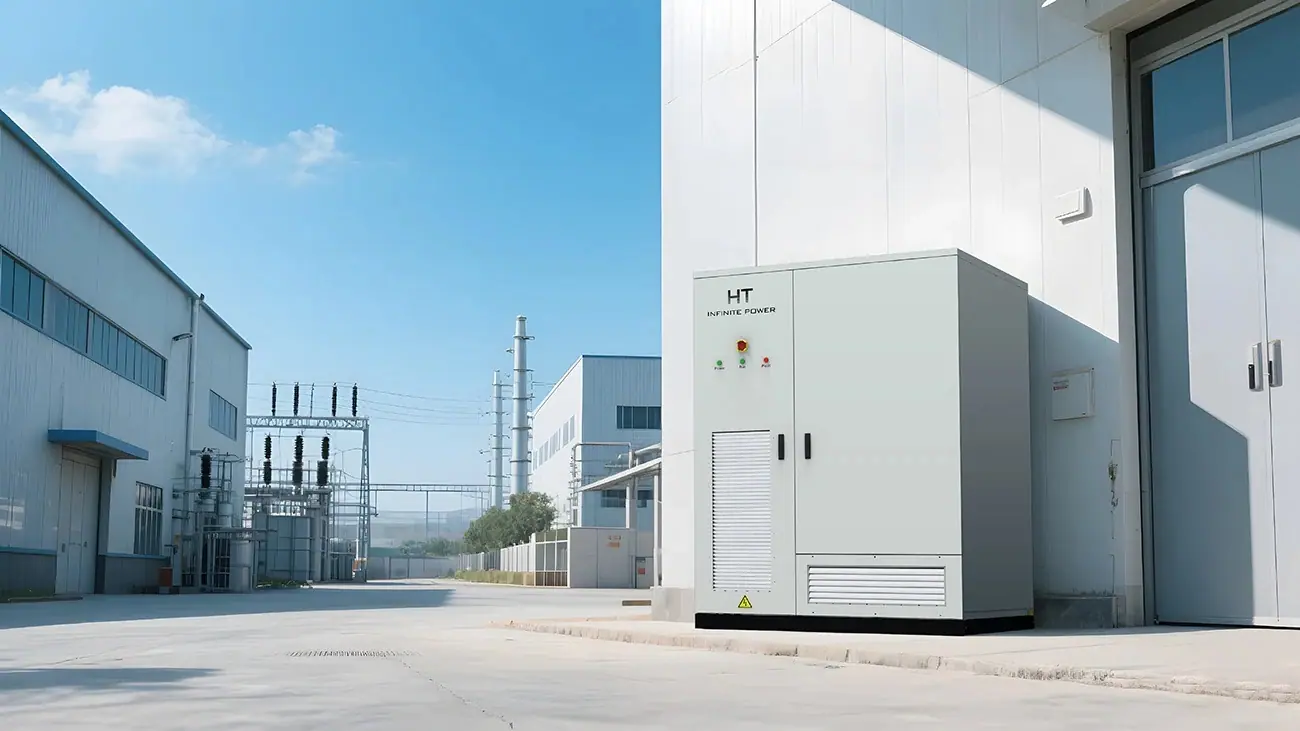
Battery storage firms in Bulgaria have asked the government to scrap a new 5% levy in next year's draft budget. The Association for Production, Storage and Trade of Electricity (APSTE) said the charge, paid into the Electricity System Security Fund (ESSF), would hit operators of stand-alone battery systems.
The levy applies to the operators' entire revenue. APSTE says the real burden will therefore be many times higher than 5%. Batteries do not make power, the association explains. They buy it when it is cheap, store it and sell it at peak demand. The levy deducts neither the cost of the electricity they buy nor the technical losses.
If the measure passes, APSTE will ask the European Commission to check whether it complies with EU rules.
The association's chairman, Nikola Gazdov, noted that in two years Bulgaria has attracted billions of euros and become "the battery of the Balkans". "Instead of carrying this success over to other sectors, we risk wiping it out with an unfounded measure, proposed without any analysis of its benefits and impact," he said.
According to APSTE, investment in energy storage in Bulgaria has topped €3bn in two years, and installed battery capacity is above 6.3 gigawatts.
Most systems have been running for only a few months. The financial models and bank loans used to build them did not plan for such a burden, the association says, so the levy threatens projects that are already built. It could eat up a large part of the money owners use to repay their loans. That could breach the terms agreed with banks. Some projects face a risk of insolvency. The industry also says the measure damages trust in Bulgaria as a predictable place to invest.
The association cites data from the Electricity System Operator (ESO) for 1 January to 15 November 2026. It shows that power supplied by batteries rose almost 9 times. Over the same period, wind and solar output grew by 22%, and net electricity exports rose by 94%, or almost doubled. In summer 2026, heat and limited output in neighbouring countries put pressure on regional markets. APSTE says Bulgarian batteries then eased evening price peaks and helped keep power exchange prices here lower than in Romania and Greece.
The association also sees a risk that the same electricity would be taxed twice: once when the producer sells it, and again when the battery sells it on. The levy will also hit balancing services, where batteries switch on at the ESO's request. This will make balancing more expensive for the whole electricity market.
Under the National Recovery and Resilience Plan, Bulgaria received more than €600m in EU money for storage systems. Changing the rules gives grounds for a new check on whether the terms meet EU law and the European Commission's requirements, APSTE warns. Such a check could lead to financial corrections, including repayment of money. Gazdov says it makes no sense for the state to encourage battery investment with EU funds and then, right after the batteries are built, change the economic terms for operators.
The proposal was submitted without public discussion and without talks in the National Council for Tripartite Cooperation, the association says. There is no impact assessment and no public estimate of how much money the fund expects to collect. APSTE therefore says the revenue for the ESSF is not justified, and the risks for investors are high.
The association believes that a sudden change in terms for investments already made sends a strongly negative signal to foreign and local investors, just as the country is looking for money for factories, power capacity and data centres. APSTE warns that the state risks scaring off the next wave of investors.
Comments (0)
No comments yet.