
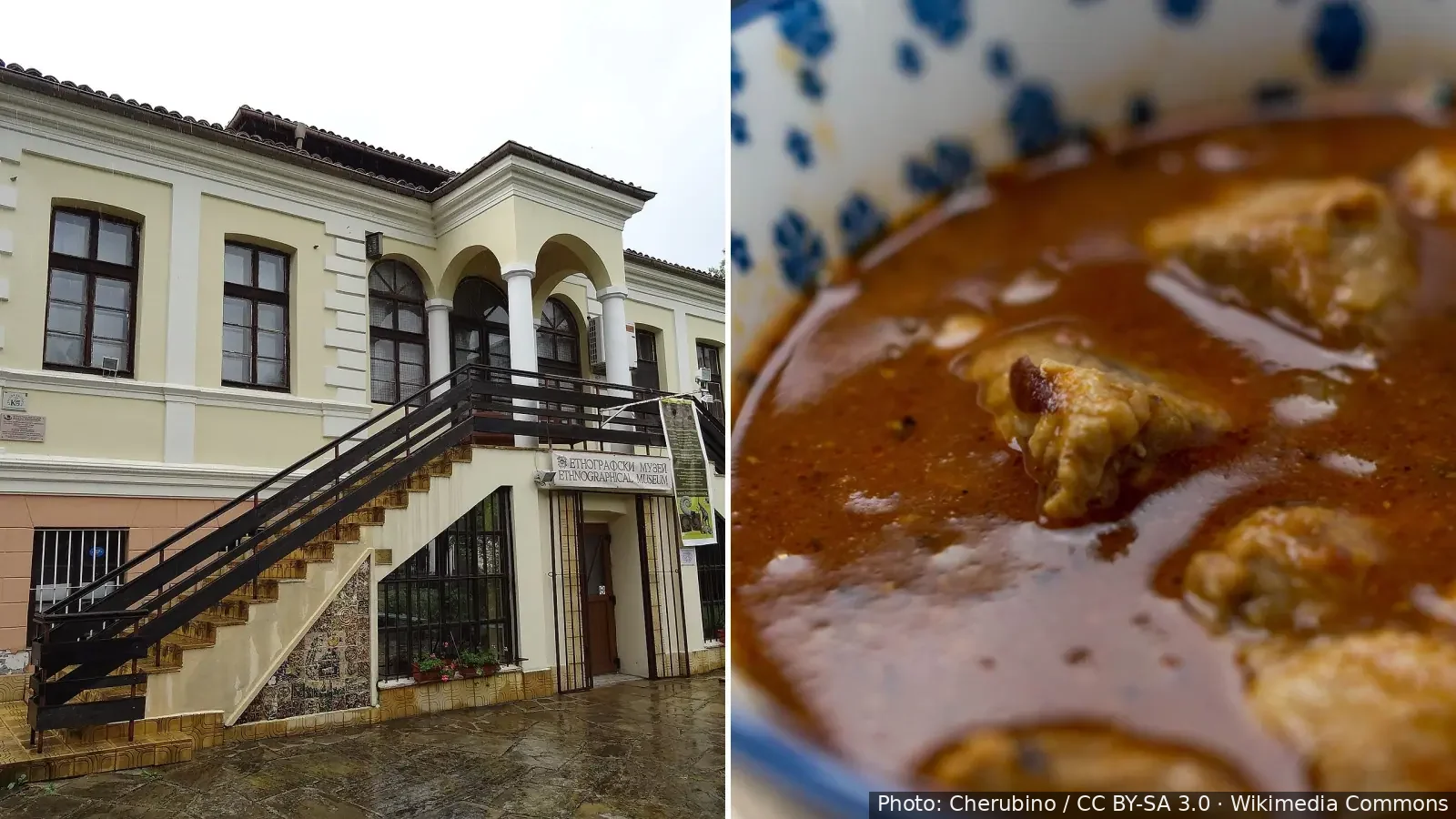
Hot head cheese, crispy pig's ears and pork cheek dishes were on offer at a food festival in the yard of the Ethnographic Museum in Burgas. The event, called "Delicacies of the Pig's Head", was organised by Culinary Festivals of Bulgaria and the Regional History Museum (RHM) in Burgas. Chefs Ivan and Stefan cooked in front of visitors, and the yard looked like an open-air kitchen.
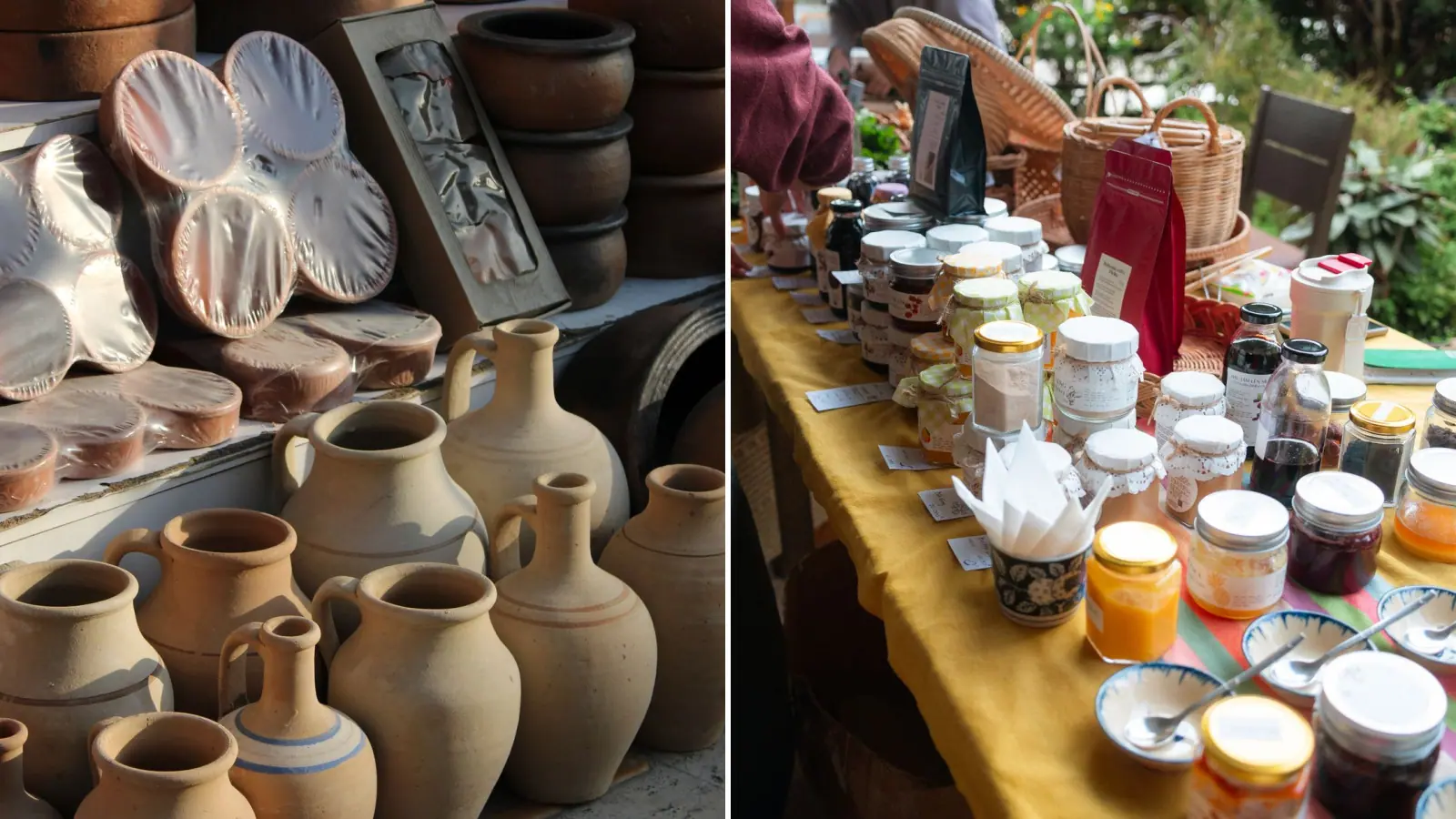
On Saturday, 28 November, the organisers said local cooks from Burgas region and visiting chefs cooked live. Besides Bulgarian specialities, the tables also had Middle Eastern and Asian dishes.
More on this story: Pig ears, snouts and cheeks on the menu at festival in Burgas Ethnographic Museum yard
On 12 December, Culinary Festivals of Bulgaria will hold another event in Burgas, called "Tasty Dishes of the Eastern Stara Planina". It is devoted to the north of Burgas region, and the menu will have dishes from Kotel, Zheravna, Sungurlare, Nesebar and Byala.
Culinary Festivals of Bulgaria created the project itself and dedicates it to home recipes and respect for food. So far it has visited 15 towns and villages across Bulgaria. The Burgas event was for fans of winter cooking. As well as the food, visitors heard stories about old traditions and the place of the pig in village life.
Ivan and Stefan made kavarma from pigs' heads, using a traditional recipe with some extras. The pot held a pig's head, crispy pig's ears and smoked pork jowl, which gives a stronger flavour. They added leek, porcini mushrooms, peppers, thyme, rosemary and red wine to the meat. The chefs said the base of the recipe comes from relatives and friends, who told them how the dish was cooked in the past.
Milen Nikolov, director of the RHM in Burgas, said the pig once had a central place at the table. It was fairly cheap to raise, put on weight fast and gave a lot of meat that kept for a long time. Nikolov said the slaughter was a celebration for the family, and often for the whole village. People fattened the pig for a year, and in many places slaughtered it before Christmas.
In some places the animal was called "koladnik", Nikolov added. The meat and fat were processed and stored, and nothing was thrown away. Stoyan Stoyanov of Culinary Festivals of Bulgaria pointed to the ears, snouts, cheeks and other parts, which he thinks are unfairly forgotten even though they are nourishing. He said pig's ears were prized in the past for their collagen. Stoyanov also spoke about "etarnik", a sausage from the Strandzha area made with pork offal.
It contains liver, spleen, heart, kidneys and sometimes fat. Cooks cut them into small pieces instead of mincing them, and season them with leek, onion, savory, and black and red pepper. The leek gives the sausage its typical aroma, Stoyanov said.
The etarnik tradition is still alive in Malko Tarnovo and in the villages of Brashlyan, Gramatikovo, Slivarovo, Stoilovo, Kosti, Balgari, Kondolovo, Mladezhko and Izvor.




Comments (0)
No comments yet.