
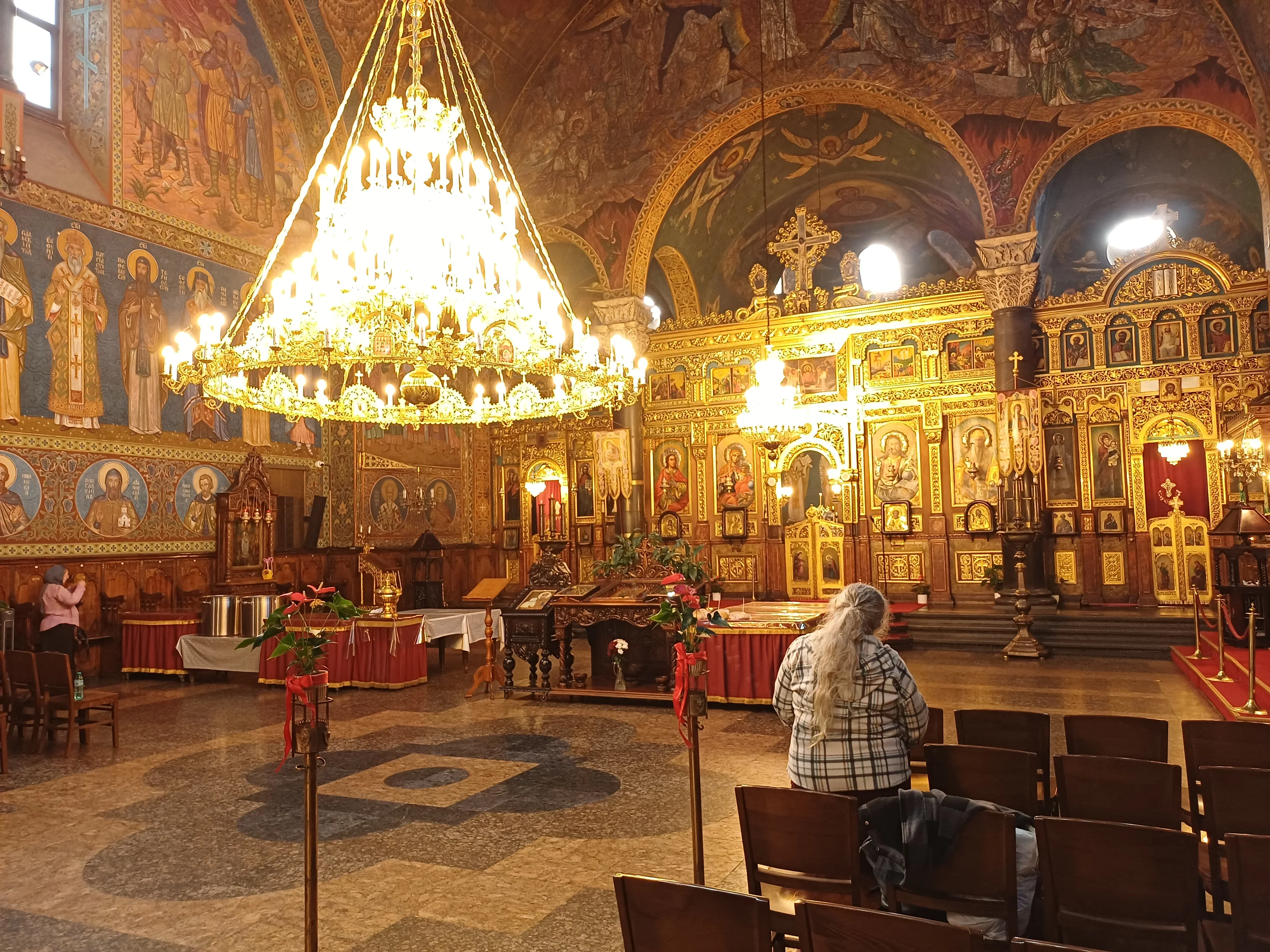
Saint Nedelya – a martyr from Asia Minor and spiritual protector
On July 7, the Orthodox Church honors the memory of "Saint Great Martyr Nedelya", also known by her Greek name "Kyriakia", which means "Lord's day", Sunday. Her parents Dorotheus and Eusebia were Christians from Asia Minor who prayed for a child for a long time and received her as an answer to their prayers. From an early age, Nedelya decided to dedicate herself to God and refused to marry, saying she was "betrothed to Christ".
Her life took place during the cruel persecutions against Christians under Emperor Diocletian. Nedelya was arrested, subjected to torture and fire, but according to her hagiography, her wounds miraculously healed. At the end of her suffering, on July 7 around 289 AD, at just 22 years old, she prayed and surrendered her spirit to God before being beheaded.
The relics in Tarnovo and a strong cult in Bulgaria
During the reign of the Asen dynasty, the saint's relics were moved to Tarnovo, which contributed to her being accepted as the protector of the Orthodox Bulgarian people. Since then, the cult of Saint Nedelya has strengthened in our country – today there are dozens of churches in Bulgaria dedicated to her, most of them in the southern and mountainous regions. Her hagiography was copied and distributed by Bulgarian clergymen, including Patriarch Euthymius.
Great Saint Nedelya: folk beliefs and prohibitions
In folk tradition, the holiday on July 7 is known as "Great Saint Nedelya" and is especially revered in Strandzha, Sakar, the Pirin region, and the Rhodopes. The saint is also called "Saint Most Holy", "Great Nedelya", "Short Nedelya", "Opala Nedelya". It is believed that "Great Nedelya is the mother of all Sundays in the year" and the patron of the Sunday day.
On this day, in many regions, work is strictly forbidden, especially for women – sewing, washing, heavy labor. According to superstition, if someone "starts work" on the holiday, the saint gets "angry" and can punish them with illness or misfortune. The day is considered especially powerful for prayer and personal vows.
Rituals, sacrificial offerings (kurban), and healing water
For Great Saint Nedelya, housewives knead ritual loaves of bread, which they bring and distribute in churches, chapels, and shrines dedicated to the saint. In some villages, kurbans for health are made – the sacrificial meat is prepared and shared at communal village tables. The holiday is often associated with local gatherings and traditional dances (horo).
There are also customs for sick people to wash or bathe in "healing springs" and holy wells associated with Saint Nedelya. In the tradition, there are beliefs that the seriously ill sleep outside so that "Grandma Nedelya might tread upon them" – a symbolic hope for miraculous healing.
Superstitions about the weather on July 7
The folk calendar also links the holiday with forecasts for the winter. If the weather on July 7 is "very hot", a "long and cold winter" is expected. If the day is "cool and rainy", people believe that the winter will be "milder". Thus, the holiday is also part of the agricultural cycle and observations of nature.
Who celebrates a name day on July 7
On July 7, everyone bearing the name of the saint and its derivatives celebrates their name day. Among them are "Nedelya, Nedelcho, Nedyalka, Nedyalko, Neda, Nedyo, Nedka, Nedko", as well as newer forms such as "Neli, Nelina, Nenka, Nenko, Nencho". In some traditions, names like "Delyan, Delyana, Delcho, Delyo" are also associated with the holiday.
Although there is no single official register of name days, the name Nedelya and its derivatives are widely spread in the country, and the fact that dozens of churches bear the saint's name shows how strongly she is present in Bulgarian spirituality and culture.
Why we honor Saint Nedelya today
Saint Nedelya is an example of a young woman who "was not afraid" of torture and death in the name of Christ. Because of her firm faith, chastity, and willingness to suffer for her convictions, she is perceived as the protector of women, the family, and the Sunday day, and through the transfer of her relics to Tarnovo – also as a special protector of the Bulgarians.
On July 7, the church and believers remember her feat, and folk tradition adds prohibitions on work, sacrificial offerings, gatherings, and communal tables. For many, the holiday is not just a name day, but an occasion to seek a blessing, health, and spiritual support "from Saint Nedelya" – the martyr who, according to old legends, "guards the Sundays and the people throughout the whole year".
Коментари (15)
Сериозно ли, наистина толкова хора са Недели? И как така все още някой кръщава децата си на това име
Абе хора, сериозно ли?! Честно казано, ми е много интересно да видя колко души празнуват на 7 юли! Не съм си представял, че има толкова много Недели...
Абе, наистина ли такава буря от Недели?! Кога успяха да се множат толкоз? 😂 Интересно
Аааа, Неделя... Явно доста хора са родени в неделя, логично де. 😂 Ей, празник
Ех, интересна статия! И наистина, толкова "Недели" имало... А защо точно на 7 юли я празнуваме? Да не е някаква стара традиция, забра