
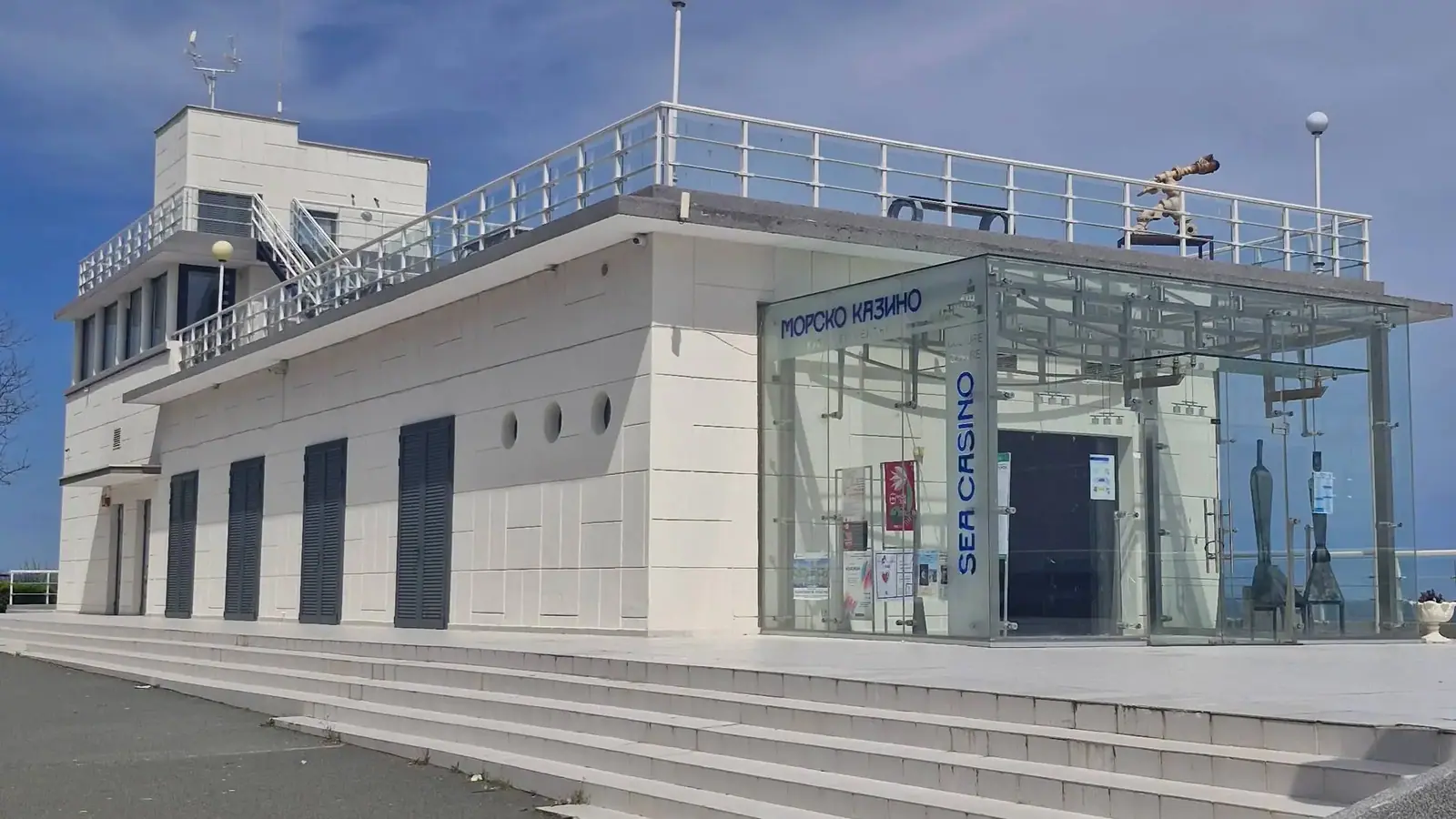
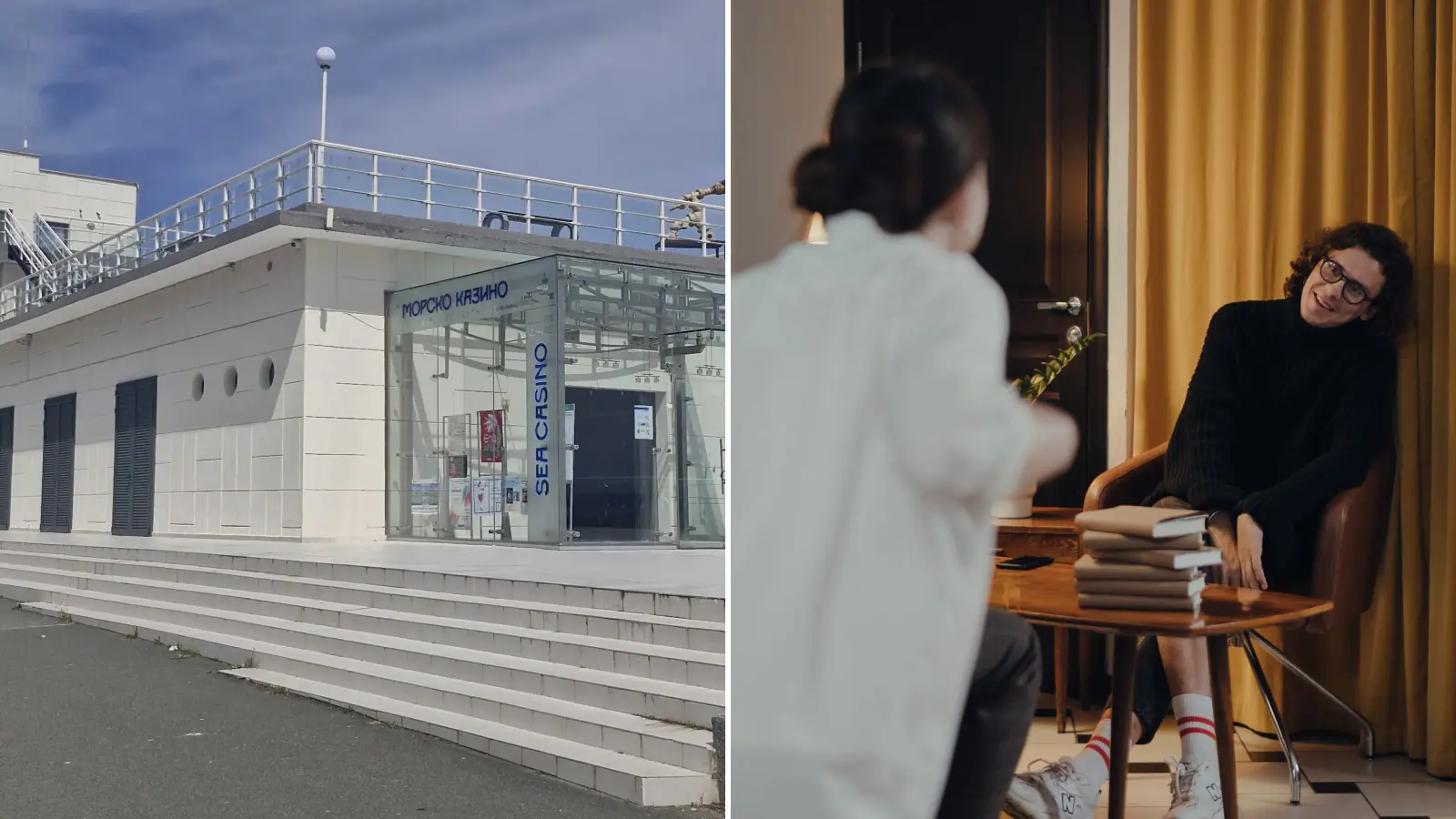
Poet Diana Savateva, Burgas deputy mayor for culture and religious affairs, says her new book is for now called "Making Peace with the Apocalypse". She gave the title at the Sea Casino Cultural Centre, where she talked with fellow poet Ina Ivanova as part of the 30th Autumn Literary Festival in Burgas.
This report follows our earlier story about the event at the Sea Casino, which said the two poets would read their work on 17 October.
The first poem Savateva read has the same title as the book. She said the title comes from asking where the world is heading. She believes collective memory helps us see what stage of civilisation we have reached.
The evening, called "Poetic Replies", carried the theme "Unspoiled Worlds and Bright Apocalypses". Ivanova's collection "Unspoiled World", the occasion for the event, is nominated for the national Pero literary award in the poetry category. Ivanova won the national Hristo Fotev poetry award in 2024 for her book "The Things We Keep Silent About".
The two talked about memory, the creative process and the poetry collection as a finished whole. Savateva asked how a poet decides which poem to open with and how to order the poems in a book. Ivanova compared arranging poems to choosing music for a concert and called it a personal creative process. She said the author draws a path for the reader to walk with them, and what matters is the concept that ties the poems into one story. "There is always a backbone in a book," Ivanova said.
Savateva matched the three sections of "Unspoiled World" with pairs of ideas: "Invisible Pilgrims" is about "purity and devotion", "Potential Landscapes" about "solitude and contemplation", and "What We Lost" about "the past and sacrifice".
Savateva said a poetry collection should carry one overall message, but each poem should also work on its own. At her readings she asks the audience to open the book at a random page and take the poem as a personal message. She likes the oxymoron for the contrast it sets up and the harmony that comes out of it.
Ivanova said memory is essential to Savateva's poetry, and so is metaphor. Savateva spoke about a triptych by Georgi Bozhilov – Slona, which she saw in an art gallery in Varna and sees as an image of fragmentary human memory. "We do not remember our lives as a film, but put together and take apart pieces of what we lived through," she said.
The talk also recalled Aksinia Mihaylova, general editor of some of both poets' books, and her French Guillaume Apollinaire poetry prize. Savateva said an editor's view is a kind of "crooked, and sometimes more accurate" mirror of what was written. Ivanova described Mihaylova as strict, consistent and fair.
Ivanova said awards help books reach readers among the many new titles. Savateva called on young people to read contemporary Bulgarian literature.
The sea, the mountains and the wind came up in the talk. Ivanova called the wind her element, because it crosses geographic borders. The meltemi appears in the poetry of both: for Ivanova it is a "strong, transforming wind", and for Savateva it is "a symbol of the processes in life that take us out of the familiar and carry us somewhere else".
Female students from the Burgas branches of the Krastyo Sarafov National Academy for Theatre and Film Arts (NATFIZ) and the Lyuben Groys Theatre College gave the staged readings. Pupils from the Prof. Pancho Vladigerov National School of Music and Dance Arts played the music. At the end, people from the audience read poems by Ina Ivanova.


Comments (0)
No comments yet.