
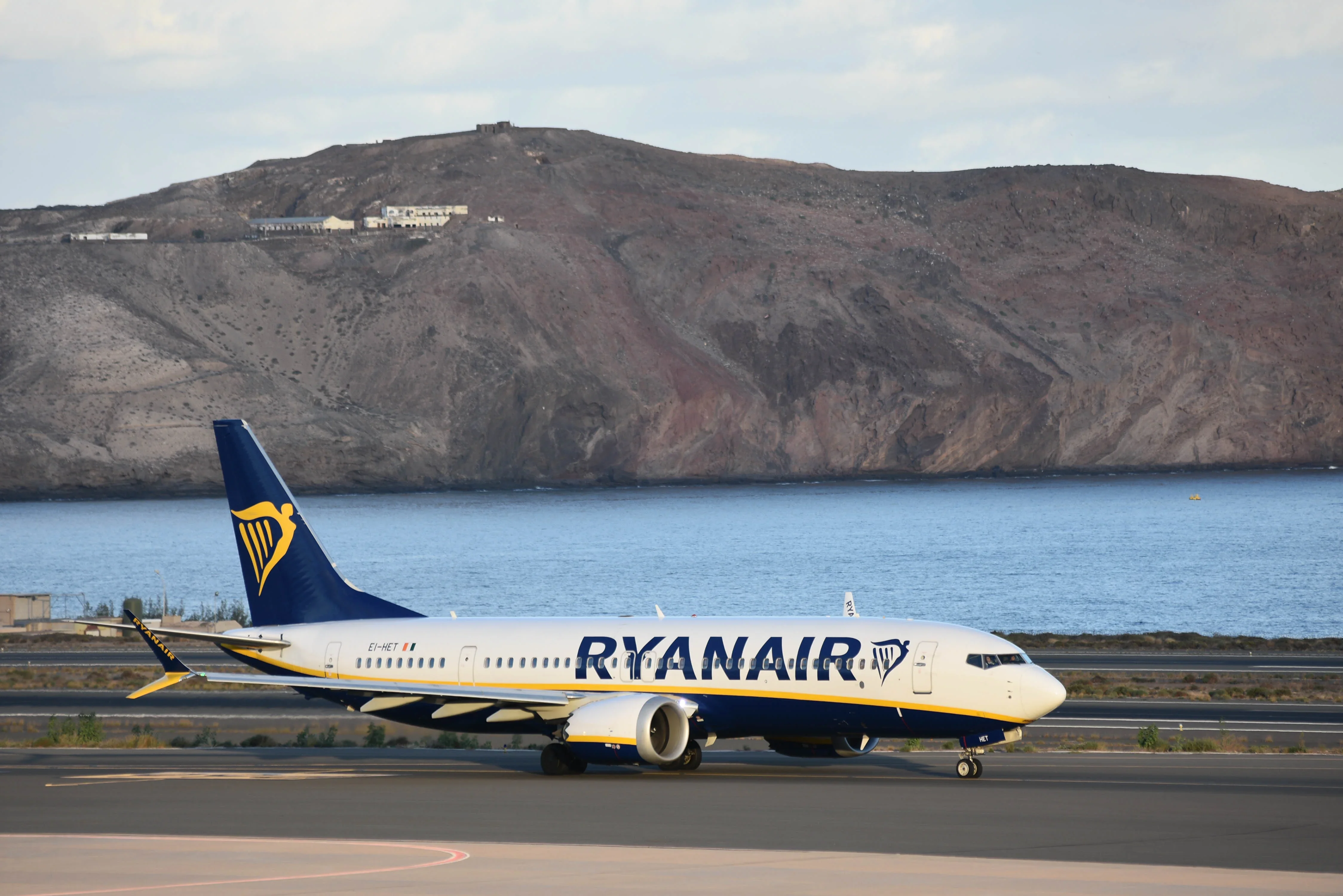
"Ryanair" has been the emblem of ultra-low-cost flights in Europe for years – tickets for a few dozen euros, numerous destinations, and aggressive pricing policies. Behind this attractive price, however, lies a harsh set of rules, fines, and conditions that for many passengers become a source of chronic stress.
Fines and strict rules: where the tension begins
In recent years, "Ryanair" has repeatedly tightened conditions for passengers – from luggage and online check-in to behavior on board. The company has introduced heavy fines for violating order during a flight, including fixed amounts in the range of hundreds of euros in cases where a passenger is removed from the aircraft due to aggressive or dangerous behavior.
In parallel, luggage restrictions have also been tightened: free carry-on luggage is strictly fixed in size and weight, and any minimal deviation often leads to an additional charge at the airport. Passengers recount situations in which they were charged dozens of euros for a bag that was "just a few centimeters" over the permitted dimensions.
Another source of tension are cases where tickets purchased through third-party aggregators or unauthorized sites turn out to be a problem at check-in – passengers report additional fees and complicated booking processing when they were not made directly through the airline's official website.
Luggage, check-in and "hidden" surcharges
The business model of "Ryanair" is transparent in theory: an extremely low base price and almost everything else – for an extra charge. In practice, this means that every additional service is calculated separately: checked luggage, larger carry-on luggage, seat selection, priority boarding, ticket changes, and even printing a boarding pass at the airport.
Many passengers share that an initially cheap ticket gradually "fattens up" with every additional option. Often, when one adds luggage, a specific seat, and standard flexibility, the final price approaches the fares of traditional airlines, but without the same level of comfort and service.
Here, the feeling of a "trap" arises: until you get familiar with all the conditions in detail, you can easily underestimate the real cost of the trip and face unexpected expenses at the airport – exactly where time and nerves are most valuable.
What passengers say: divided into two camps
Reviews for "Ryanair" on booking sites and forums can be roughly divided into two camps. The first includes passengers who accept the company's model as a fair deal: "I know the rules, I play by them, and I pay little." They emphasize that they have never had a problem because they always check in online on time, travel only with small carry-on luggage, and do not expect special amenities.
These people often say: "For this price, it's more than okay," "it's important that I get from point A to point B," or "if you follow the terms, there are no surprises." The praise is also for the rich network of direct flights, including to smaller airports, which makes short trips more accessible.
In the second camp are passengers who describe their experience as a "nervous nightmare": last-minute surcharges, boarding denials due to confusing luggage rules, failed attempts at compensation for canceled or severely delayed flights, and a feeling of rude treatment by the staff. Phrases like "never again," "better to pay more but know what I'm paying for," and "the cheap ticket turned out to be my most expensive flight" dominate there.
Discipline on board: safety or excessive pressure?
From the airline's point of view, the strict measures are justified by the need for safety. Any serious violation of order on board – aggression, refusal to follow crew instructions, alcohol abuse – threatens not only the comfort but also the safety of the flight. In this context, high fines and zero tolerance for problematic behavior seem logical.
Critics, however, emphasize the risk of subjectivity: the line between an "inconvenient" and a "dangerous" passenger can be blurred, and decisions made under pressure can lead to unfair sanctions. For a person who is already stressed by a delay, a transfer, or personal circumstances, such a system can add even more anxiety.
Added to this is the purely human aspect: some passengers share that they feel like they are "on an exam" – they are afraid of making a mistake with their luggage, the check-in line, or their behavior because any deviation could lead to a financial blow.
Rights and compensation: theory versus practice
As a European airline, "Ryanair" is bound by EU Regulation 261, which guarantees passengers certain rights in case of canceled and delayed flights – including monetary compensation when the airline is liable. In theory, this is a strong protective mechanism for consumers.
In practice, however, many passengers share that getting to an actually paid compensation is not always easy: the process requires time, documents, and persistence. Some people give up along the way or resort to intermediary companies that withhold significant commissions.
This gap between the "ideal" scenario of European legislation and the passenger's real experience contributes to the feeling that in a conflict with the airline, the company has significantly more resources and experience to defend its interests than the individual customer.
Is the cheap flight worth the nerves? How to decide for yourself
Ultimately, the assessment depends on the traveler's profile. If you are disciplined, travel light, read the terms carefully, and don't expect comfort above the minimum, "Ryanair" can be a rational choice for short flights – especially if the price is several times lower than that of the competition.
However, if you are traveling with children, with a lot of luggage, have a limited tolerance for stress, or rarely have time to review the fine print in the terms, the low initial price can become a trap – both financial and emotional. In this case, the higher but more transparent fare of another airline may turn out to be the better investment.
The "tough policy" of "Ryanair" is not a mistake, but part of the business model: the company sells a minimalist service at a minimal price and expects passengers to take responsibility for staying within the limits. Whether this suits you is a question of not only budget, but also nerves.




Comments (11)
Аби, к'во да кажа... 🤦♀️ Евтини билети - факт. Нерви – също факт! Ама като искаш да стигнеш до някъде набързо и без много пари, се правят компромиси, а
абе, сериозно ли? толкова ли е трудно да предложиш евтин билет без да те е страх да не те глобяват за нещо?!? 🤷♀️ иначе, супер като опция
Ахахах, я ЦИЦА! 🤣 Ryanair... Ама верно, за тия пари да го духаш, ясно е. Все едно си плащаш за
Абе хора, гледам коментарите и си казвам - верно е това за нервите с Райънeр! Ама пък, к'во да правиш? По принцип съм съгласен с доста от написаното тук – евтино е, ама има цена. Не може да хванеш само хубавото, нали?
Ами факт е - ниската ЦЕНА има цена. Както казва баба – "Безплатна риба я 😜